Every February, Black History Month invites Americans to honor the giants of the civil rights movement. We commemorate them in speeches and street names, reassuring ourselves that their struggles belong safely to the past. But history tells a less comforting story.
We tend to celebrate Black moral courage only after it has been stripped of urgency — after its disruptions have been neutralized and its challenges to power rendered harmless. The figures we now hold up as national icons were once dismissed as dangerous or destabilizing by moderates and institutions that claimed to support equality while resisting its consequences.
This pattern is not accidental. It is structural.
Today, Martin Luther King Jr. is remembered as a unifying voice and a moral prophet. In his lifetime, he was widely unpopular. Polls in the mid-1960s showed that most Americans viewed King unfavorably. He was surveilled by the federal government, criticized by major newspapers and condemned by politicians who warned that his protests were reckless and divisive.
What is often forgotten is that King’s sharpest criticism was aimed not only at overt racists, but at what he called the “white moderate” — those who preferred order to justice and who urged patience in the face of inequality. King understood that moderation, when it delays justice, becomes a form of complicity.
Many institutions that now proudly invoke King’s legacy insist that protest today be carefully managed and, above all, non-disruptive. Yet King’s campaigns were effective precisely because they disrupted daily life, strained political alliances and forced confrontations that polite consensus could not.
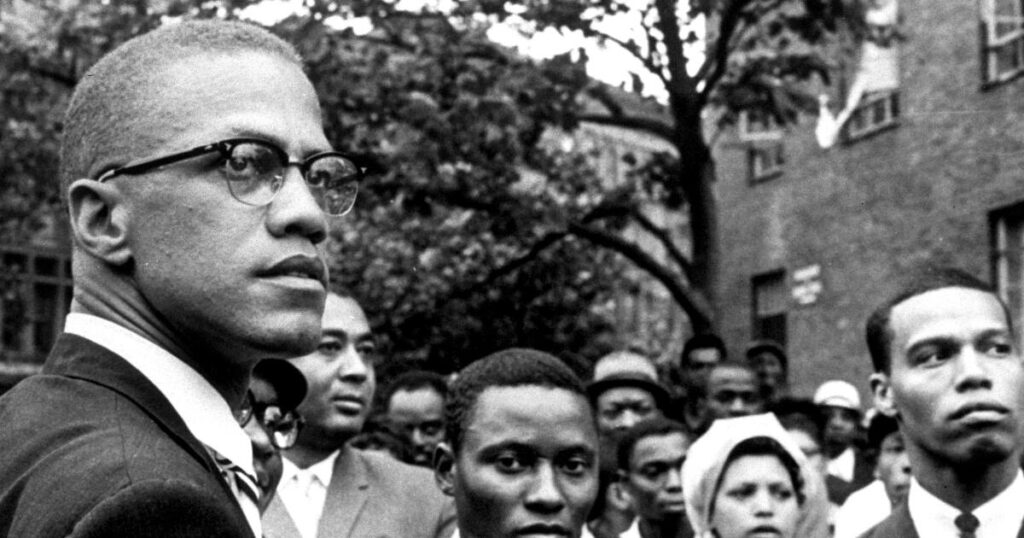
A similar dynamic shaped the life of Malcolm X, who remains widely misunderstood. He is often portrayed as King’s opposite — angry where King was conciliatory, divisive where King was unifying. That framing is convenient, but misleading.
Malcolm X offered a penetrating critique of liberal hypocrisy. He challenged the idea that symbolic inclusion could substitute for structural change. He warned that proximity to power often pacifies dissent rather than advancing justice. Late in his life, his views evolved, but his insistence on naming oppression directly never softened.
That insistence would almost certainly be labeled reckless in today’s political culture. Yet history suggests that moral clarity — not cautious moderation — is what most often forces societies to confront uncomfortable truths.
The same is true of Muhammad Ali, whose refusal to fight in the Vietnam War cost him his heavyweight title and years of his career. At the time, Ali was vilified as unpatriotic and selfish. He was not widely admired for following his conscience. That admiration came later, after the war itself became discredited.
His choice was not easy or universally applicable, but Ali argued that conscience matters, even when the law and public opinion disagree. Today, his words — that “there are only two kinds of men, those who compromise and those who take a stand” — are quoted approvingly by people who might have condemned him had they lived through the controversy.
What unites these figures is not that they were embraced in real time. It is that they were repeatedly told to be quieter, more patient, more respectful and accommodating of existing institutions. These men were warned that their methods threatened stability. They were accused of undermining their own cause. This pattern is not confined to the past.
In recent years, American institutions have enthusiastically adopted the language of racial justice while growing increasingly uneasy with its implications. Public statements of solidarity are common. Tolerance for sustained, disruptive dissent is not.
Protest that interferes with routine operations is often treated as illegitimate because it is inconvenient, rather than because it is unlawful. Speech that unsettles donors, boards or political alliances is reframed as a threat to community values. Neutrality is invoked as a procedural shield — a way of avoiding accountability while maintaining reputational control.
California offers no exception. From university campuses to city halls to cultural institutions, leaders regularly invoke the legacy of civil rights while struggling with how to accommodate protest, disagreement and moral urgency in practice. The tension between symbolic inclusion and substantive change remains unresolved.
History suggests that this posture is familiar. It is how societies manage moral challenge while persuading themselves they are on the right side of it.
The irony is that the very qualities once condemned in civil rights leaders — their urgency and their willingness to unsettle and to insist that justice delayed is justice denied — are now celebrated in retrospect. We praise their courage after it no longer costs us anything.
Black History Month should prompt more than commemoration. It should force a harder question: whether we recognize the logic of the civil rights movement when it reappears — in contested spaces and inconvenient demands.
America has no shortage of heroes. What it struggles with is inheriting their courage before time makes it safe.
Faisal Kutty teaches at Southwestern Law School and is a contributing opinion writer for the Toronto Star and Newsweek.
The post We celebrate civil rights heroes only after they stop making us uncomfortable appeared first on Los Angeles Times.