A BETTER LIFE, by Lionel Shriver
Melania Trump has her Hamburglar hat. Lionel Shriver is sticking to the sombrero. A decade after the author clapped on foreign headwear for a controversial talk about cultural appropriation, she has written a sour and hectoring novel, “A Better Life,” about southern border control. It portrays migrants as canny, opportunistic invaders and their well-meaning sponsors as suckers.
Shriver’s breakout book, “We Need to Talk About Kevin,” which included a school massacre, remains depressingly relevant. But the trouble with much else of her ever more topical fiction is that the topics are changing so quickly. (My favorite of her novels remains the time-bending 2007 snooker story “The Post-Birthday World.”) GLP-1 drugs have transformed American obesity, the subject of “Big Brother.” And “A Better Life” arrives with a louder screech since two American citizens protesting immigration raids were shot to death by federal agents in Minneapolis last month.
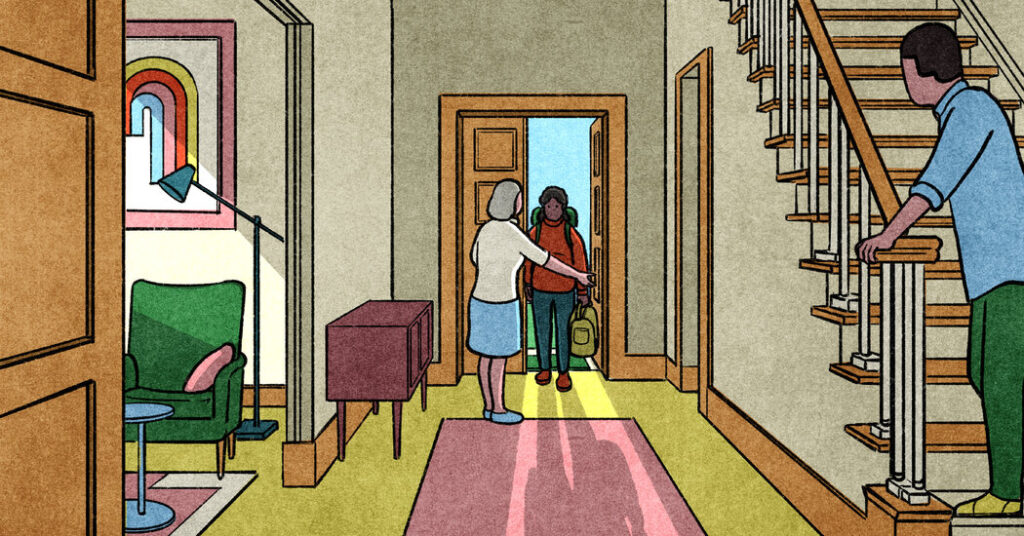
The novel is set in New York, specifically the Ditmas Park neighborhood of Brooklyn, the soft heart of Sanctuary City. There, in a turreted five-bedroom Queen Anne house (six if you count the basement), live Gloria Bonaventura, a politically progressive divorcée in her early 60s, and her boomerang son Nico, a Gen Z-er who majored in engineering at Fordham before realizing he didn’t want to be an engineer, or anything, in a world where “pity conferred a higher status than achievement.”
Nico is what used to be called a slacker, a condition not only enabled but optimized by the internet (at least, per Jordan Peterson, he makes his bed). Fear of being #MeTooed has delayed his sexual maturity. He has two clucking, less dependent older sisters who don’t really come into focus.
Their father, Carlin, a journalist who split from Gloria after being accused of harassment by an intern at The New Republic, is now thriving with a second wife and a website called Sanity.com that resembles Unherd (to which Shriver, a prolific columnist, contributes). But Gloria, despite her house being worth $2.5 million and an online craft business called Toys & Trinkets, is cash-poor and wanting to do good.
She decides to participate in “Big Apple, Big Heart,” inspired by an actual program then-Mayor Eric Adams proposed but never implemented in 2023 that would pay residents to board asylum seekers. Gloria is matched quickly with a Honduran woman named Martine, who is herself either a mother of three, escaping a violent husband and corrupt government, or a total scam artist preparing to drain the Bonaventuras of their resources.
At least Martine has a way with a hedge trimmer, leaving “flowers mounded on the lawn like Ukrainian corpses in Bucha” after she tackles the landscaping. And maybe, just maybe, she can awaken Nico’s screen-numbed manhood.
Shriver’s vision of guilty limousine (or Lyft) liberals is cousin to “Portlandia,” Northeast edition. Toys & Trinkets’ top-selling product is a hand-knit cashmere “packer” to pad out the underwear of trans boys. Carlin takes Nico to a deconstructed Thanksgiving dinner at a “chichi Upper West Side restaurant” — oxymoron alert — called Autopsy. Bike lanes hum perilously with electric vehicles steered by Hispanic riders, less so “the pale-skinned variety keen to get their precious exercise.”
After Martine moves in, more countrypeople start showing up, including her supposed brother, named Domingo (no, not the wildly popular “Saturday Night Live” character), and his business partner, Alonso. Their gradual annexation of the house — with takeout garbage, punta music and declarations like “I glad for help with English. Funny language” — is dehumanized enough to suggest Alfred Hitchcock’s “The Birds.” But it’s blood-spattered Quentin Tarantino movies that are name-checked, more ominously.
“A Better Life” is not a heavy lift, and there is cringing amusement in seeing how far its author is willing to go to pierce leftist pieties under the protective tent of fiction, but it’s more playground taunt than brave truth.
One prepublication reviewer compared the book to Jean Raspail’s racist 1973 immigration novel “The Camp of the Saints,” an adjacency Shriver seemed to anticipate (“I don’t want to sound like some paranoid French reactionary …,” Carlin says at one point).
But “A Better Life,” for better and worse, is not that ambitious, a handbook for no one. It’s less dystopian than dyspeptic, a faintly stale corner-store sandwich dripping with corrosively sarcastic italics. Pass the Pepto.
A BETTER LIFE | By Lionel Shriver | Harper | 304 pp. | $30
Alexandra Jacobs is a Times book critic and occasional features writer. She joined The Times in 2010.
The post In This Sour Satire, Liberals Open a Door, Not Always Their Hearts, to Migrants appeared first on New York Times.