Electricians are getting harder to find, and some construction projects are on hold. Smartphones are expected to get pricier for potentially years to come. And promising innovations are being starved of investment funding.
Those are just some of the domino effects from the technology industry’s insatiable spending on artificial intelligence, which is diverting resources and attention from other sectors of the economy.
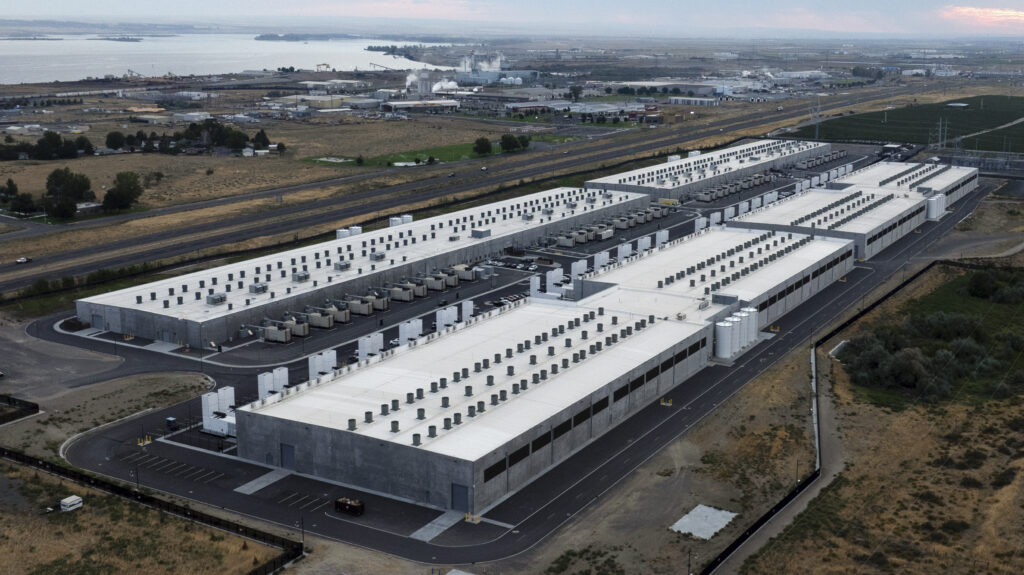
Five leading public AI companies are collectively on track to spend about $700 billion this year on big-ticket projects, as they splurge on building and outfitting data centers stuffed with powerful computer chips to turbocharge AI calculations. That outlay by Amazon, Google, Microsoft, Meta and Oracle will nearly double what they spent in 2025 and be equal to three-quarters of the recent annual budget for the U.S. military. (Amazon founder Jeff Bezos owns The Washington Post.)
Tech companies say that spending or borrowing a fortune to develop AI is already delivering higher revenue from businesses and consumers eager to use the technology. But critics worry that the up-front costs to develop AI have become so mammoth that the investment can possibly pay off only if AI reshapes life, work and the economy in a way that uncorks massive new profits for these technology firms.
JPMorgan calculated last fall that the tech industry must collect an extra $650 billion in revenue every year — three times the annual revenue of AI chip giant Nvidia — to earn a reasonable investment return. That marker is probably even higher now because AI spending has increased.
OpenAI, which unleashed the nation’s AI mania with the public debut of ChatGPT in late 2022, expects to lose more than $100 billion through the end of the decade, the technology news publication the Information reported in September. (The Post has a content partnership with OpenAI.)
It won’t be clear for some time whether AI will continue improving as quickly as it has in the past few years, and makes people and business much more productive. What is clear is that every dollar spent now on its development raises both the potential reward and the risks for its backers.
“It is possible that the amount invested in AI in the U.S. since the middle of 2022 exceeds all prior investments in the entire tech industry,” Roger McNamee, an early backer of Facebook in his 40-year career as a technology investor, said in an email. “That alone should give everyone pause.”
While the potential payoff is years away, the massive spending on AI is creating scarcity today — even for companies that aren’t primarily focused on it.
Apple told its investors last week that the company is having trouble buying enough of two different types of computer chip that are essential for iPhones and Mac computers.
AI companies also need gobs of some of those same chips to build out data centers, and there aren’t enough for everyone. That insatiable demand has escalated the price of the memory chips that make smartphones and computers feel zippy, according to industry analysts and manufacturers. The added cost is set to translate into higher sticker prices for consumer electronics.
Francisco Jeronimo, an analyst with the industry research firm IDC, expects smartphone and personal computer manufacturers will either raise prices by 5 percent or more later this year, release less-capable devices or perhaps do both. He said that higher prices could persist for years if the AI boom continues, potentially forcing some smaller phone makers out of business.
Apple CEO Tim Cook said last week on an earnings call that he “wouldn’t want to speculate” about whether Apple might increase iPhone prices as a result of higher chip costs. The company didn’t respond to a request for further comment.
The data center construction boom is sucking up people as well as computer chips. In U.S. communities where the facilities are being erected, construction firms and their workers are raking in money. But that activity has probably sidelined other types of building projects that the U.S. needs, said Anirban Basu, chief economist for Associated Builders and Contractors, a construction industry trade group.
There are not enough skilled electricians and other specialized trade workers for both data center projects and other complex construction, Basu said, such as apartment buildings, factories and health care facilities. AI data centers tend to be more lucrative for construction firms, which relegates anything else to a lower priority.
Based on government figures, Basu’s group calculates that spending on construction of new data centers rose 32 percent in 2025 through October compared with the same 10 months of 2024. For other types of commercial real estate, construction spending is barely growing and in some cases is declining.
Basu said that a decline in U.S. manufacturing of homes, offices and factories would probably occur even without the AI data center construction boom, because of factors including climbing costs for building materials, zoning restrictions, higher tariffs and stricter immigration policies. But he notes that AI data center demand is probably worsening chronic capacity shortages in construction.
OpenAI told the White House in October that its planned data centers in coming years would require roughly 20 percent of the existing workforce of skilled tradespeople, such as specialized electricians and mechanics. It urged the Trump administration to strengthen the training pipeline for workers with those skills.
Associated Builders and Contractors says that the construction industry will be short nearly half a million workers next year.
The push for AI is also worsening a class divide in Silicon Valley between a relatively tiny number of AI superstar start-ups and everyone else, which could stifle the emergence of new ideas.
About one-third of the investment money into U.S. start-ups last year went to the top 1 percent most valuable companies, according to an updated analysis this week by Silicon Valley Bank. Funding for a less elite tier of start-ups reached a decade low, the report said. “The ‘middle class’ of start-ups is hollowing out,” said Roy Bahat, who leads the start-up investment firm Bloomberg Beta.
The skewed funding threatens to stall development for some promising technology start-ups, the bank warned. “Companies without the supercharged star power of a repeat founder or an AI phenom faced a sober landscape in 2025,” the report said.
Darrell West, a senior fellow who specializes in AI at the Brookings Institution, a Washington think tank, said the AI boom could soak up so much attention and resources that it threatens American dynamism.
“There are so many parts of the economy that are not dependent on AI,” West said. “Are we going to create problems in other sectors being able to raise money and hire the workers they need?”
The post The AI boom is so huge it’s causing shortages everywhere else appeared first on Washington Post.