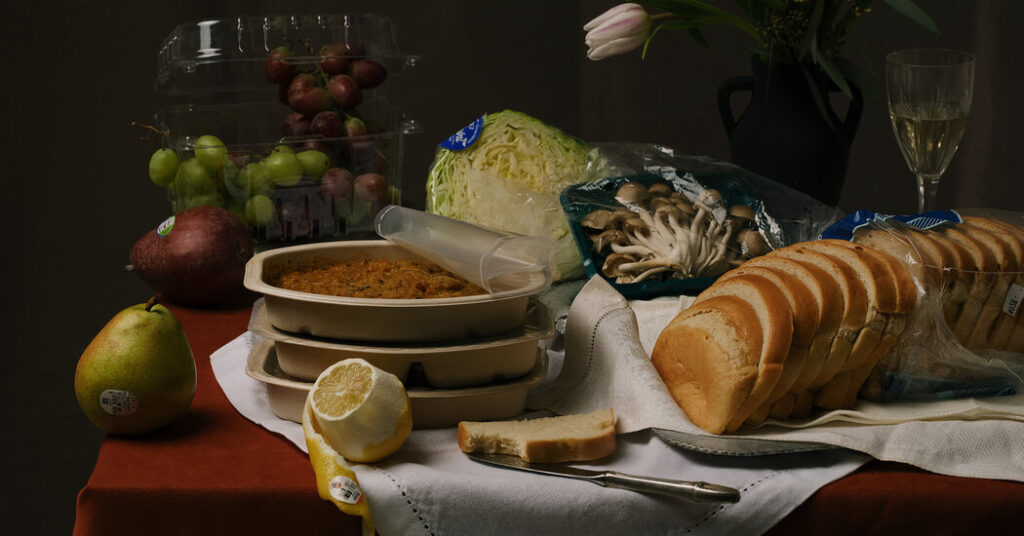
Between the social media influencers extolling the benefits of local, organic and natural food, and the government’s new dietary guidelines commanding Americans to “eat real food,” ideally cooked from scratch, it’s easy to look at your beloved morning bagel with cream cheese and see only a minefield of ultraprocessing and refined carbs.
But before you hurl that bagel into the trash, consider that it represents much that is good about our food system: It is affordable, convenient and nutritious. Virtually all the food we eat, junk and vegetables alike, is part of an industrial system. Acknowledging that fact and embracing the system’s scale, reliability, safety standards and abundance is a far better path to improving it than chasing a fantasy of Edenic premodern food that never existed.
Your morning bagel is, in fact, a small miracle made possible by conventional, mass-produced and enriched ingredients, like flour and salt. At the turn of the 20th century, when our great-great-grandparents had no choice but to eat “real food,” malnutrition was rampant. Anemia was common, as was iodine deficiency, which could cause a disfiguring swelling of the thyroid gland known as a goiter; in one Michigan county on the eve of World War I, nearly a third of potential Army recruits were rejected because of such thyroid problems. Enrichment — such as the addition of iron to wheat flour and iodine to salt — and easier access to grain and fresh produce, made possible by productive industrial farming, reduced anemia and virtually banished not only goiters but also illnesses like rickets, scurvy and pellagra.
Perhaps you want a slice of tomato on that bagel? If it’s January on the East Coast, it won’t be local. Your tomato will come from Florida or, more likely, Mexico, where it will have been grown on high-yield farms using conventional fertilizers and pesticides. Want it organic? It will still take industrial supply chains to get it to you. Shunning those globe-spanning supply chains in favor of sparse and often more expensive local and seasonal alternatives is likely to result in everyone eating less produce.
Adding fruit will make your breakfast even healthier. Here, too, modern food technology can help. Half a century of worry about the safety of genetically modified organisms, or G.M.O.s, often derided as “frankenfoods,” has not yielded a shred of compelling evidence that they endanger human health. The genetically modified Rainbow papaya, which is resistant to the ringspot virus, saved Hawaii’s papaya crop. Arctic apples from Washington State, genetically modified to brown more slowly, reduce food waste.
It’s true that the bagel’s cream cheese, made velvety with carob bean gum and shelf-stable and mold-free with potassium sorbate, is considered ultraprocessed. But the idea that ultraprocessed foods are categorically unhealthy is an oversimplification. While eating too many highly processed sugary and fatty foods is bad for you, research has also shown that many ultraprocessed foods, such as yogurt, whole-grain bread or ready-to-eat plant-based burgers, are not linked to worse health outcomes and may even be beneficial.
How we produce food in America has many problems. The food system — mostly because of how much meat we eat — is a major driver of climate change, pollution, deforestation and biodiversity loss. Food landscapes dominated by fast-food joints and grocery store shelves lined with colorful boxes of junk food have led to widespread heart disease, obesity and diabetes. Nearly 14 percent of American households are food-insecure.
But dumping industrial food from your plate would do little to change things for the better and, in some cases, would actually make it worse. Food that is local, organic and low-tech is vastly more expensive than food grown through conventional methods. There is little evidence that it is healthier. And when it comes to environmental impact, it matters much more what is produced than how it is produced; tofu is going to have a smaller ecological footprint than beef. That holds true even if the tofu comes from soybeans grown on giant farms using pesticides, and the beef is grass-fed and organic.
Many Americans simply don’t want to or don’t have time to cook all their foods from scratch (a task that involves unpaid labor and tends to fall disproportionately on women). They don’t need to: There are plenty of premade options you can grab that are just as nutritious as the fresh-cooked version, like Starbucks egg white bites, Trader Joe’s palak paneer or frozen microwavable vegetables. We know what the problems with the American diet are: People need less red meat, fat, sugar, and more vegetables, fruit, legumes, grains. Consumers should make better choices when they can and eat less of the obvious junk. And we should use the best delivery mechanism we have (the industrial food system) to get them more of the good.
That means investing in the development of better food technologies that can be used to transform nutritious whole foods into even more nutritious processed and prepared foods. This should include embracing plant-based meat alternatives and supporting the development of cellular agriculture (sometimes called lab-grown meat, although that’s a bit of a misnomer) to combat the terrible environmental and animal welfare harms of our current system. Agricultural subsidies should be revised to encourage the production of fresh nutritious foods for human consumption, not soy and corn for animal feed and ethanol. We should support more generous SNAP benefits to get good food to those facing food insecurity.
Policies like taxes on sugary drinks and removing soda machines from schools discourage unhealthy habits. We should carefully regulate food corporations and improve nutrition labeling and fully fund and staff the federal agencies we rely upon to make sure the food supply is safe.
The policy tools exist to minimize the harms and maximize the benefits of a system that provides food, much of it healthy, in abundance. But first we need to stop demonizing industrial food, and instead think about how to make it better.
Jan Dutkiewicz is an assistant professor at Pratt Institute and a contributing editor at The New Republic. Gabriel N. Rosenberg is an associate professor at Duke University and a senior research scholar at the Max Planck Institute for the History of Science in Berlin.
The Times is committed to publishing a diversity of letters to the editor. We’d like to hear what you think about this or any of our articles. Here are some tips. And here’s our email: [email protected].
Follow the New York Times Opinion section on Facebook, Instagram, TikTok, Bluesky, WhatsApp and Threads.
The post We Shouldn’t Want to Eat Like Our Great-Great-Grandparents appeared first on New York Times.