Members of Congress were briefed this week on a whistle-blower report about an intelligence intercept of a call between two foreign nationals discussing a person close to President Trump, according to people familiar with the material.
It is not clear what country the two foreign nationals were from, but the discussion involved Iran. The whistle-blower report was drafted last May, around the time the Trump administration was deliberating about a strike on Iran. Mr. Trump ordered a military attack on Iranian nuclear facilities in June.
The identity of the person close to Mr. Trump could not be immediately determined, nor could the content of what the two foreign nationals were saying about the person.
The existence of the whistle-blower report, which came to light after a Wall Street Journal report, has led to debate on Capitol Hill about the significance of the report as well as the underlying intelligence.
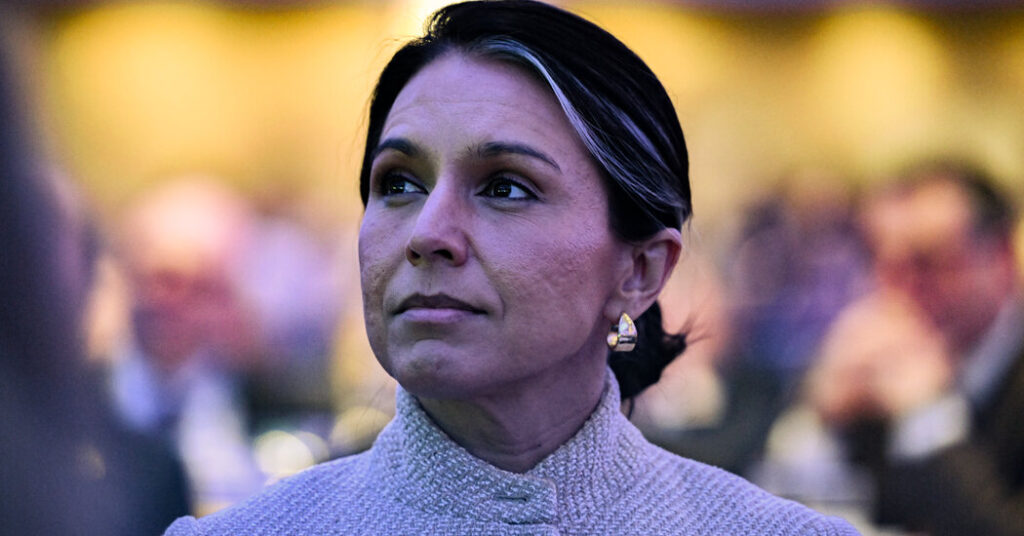
The whistle-blower accused Tulsi Gabbard, the director of national intelligence, of limiting who could see the report and of blocking wider distribution among the nation’s spy agencies, according to people familiar with the complaint.
People who have reviewed the whistle-blower report have differed about the importance of the underlying intelligence, which was collected by the National Security Agency.
The people interviewed for this story spoke on the condition that their names not be disclosed because much of the intelligence around the whistle-blower complaint remains classified.
One official said there was no other intelligence that led officials to think the two officials had been speaking truthfully. Some intelligence analysts concluded the two foreign nationals were either gossiping or deliberately spreading misinformation.
As a result of those doubts, Ms. Gabbard moved to restrict the report’s visibility. She also provided the information to Susie Wiles, the White House chief of staff, according to people briefed on the events.
The acting intelligence community’s inspector general cleared Ms. Gabbard of wrongdoing after she responded to questions about her actions.
It is not clear when the inspector general cleared Ms. Gabbard. But inspectors general are typically supposed to make a determination about a whistle-blower complaint within two weeks.
And some people, including administration critics, who have reviewed the report and have considered the underlying intelligence to be significant, agreed that Ms. Gabbard did not act improperly by restricting distribution of the report.
While inspectors general are required to notify Congress only about complaints they find credible, some of the administration critics said Ms. Gabbard erred in not alerting the congressional intelligence committees or members of congressional leadership about the whistle-blower report or the underlying intelligence soon after it was lodged.
Congressional officials learned about the complaint, but not its contents, when Andrew Bakaj, a lawyer for the whistle-blower, sent a letter to the intelligence committees in November.
The Guardian earlier reported that the intelligence involved an intercept by the National Security Agency.
Congressional leaders have been pushing the N.S.A. and Ms. Gabbard’s office to provide them a copy of the underlying intelligence report so that oversight committees could review it. A heavily redacted copy of the inspector general’s report was provided to Congress.
Julian E. Barnes covers the U.S. intelligence agencies and international security matters for The Times. He has written about security issues for more than two decades.
The post Whistle-Blower Report Involved Intelligence About a Trump Contact appeared first on New York Times.