On a July afternoon in 1971, two boys riding a minibike in the Maryland countryside came upon a half-naked woman lying injured in a field.
She was unconscious and had trouble breathing. Her hair and fingernails were dirty, perhaps from crawling, and her sunburn indicated she’d been there for hours. She wore only a blouse and bra. Her underwear and slip were in weeds nearby but the rest of her clothes were missing. Howard County police found no handbag, no wallet, nothing with her name, and in the miles of farmland surrounding the field, they could find no witnesses.
The woman was rushed to a hospital, where doctors noticed bruises darkening across her abdomen, apparently from a beating. She also had suffered a stroke. A blood clot lodged in her right carotid artery had starved her brain of oxygen.
She would linger in a coma for 54 days before dying, her identity an enduring mystery.
In 2024, a Howard County cold-case detective, Wade Zufall, took a fresh look at the old homicide, hoping DNA analysis and forensic genealogy would reveal the woman’s name and lead him to a suspect.
Zufall soon figured out who she was. And in the process, he stumbled onto something else — a “case within a case,” he called it — involving a long-lost brother and sister who’d grown up in an orphanage and hadn’t seen each other for 62 years.
Lab tests showed that the elderly siblings were genetically linked to the woman in the field, which proved crucial to Zufall’s investigation. Meanwhile, the saga of their childhoods touched him deeply, and the more he delved into it, the more fascinated he became.
“It’s one of those cases I’m going to remember for the rest of my life,” the detective said.
The siblings’ story begins in the steel and coal country of Southwest Pennsylvania. Mildred Marie Sharkey, who goes by Marie, and Charles “Chuck” Sharkey were born in 1944 and 1946 in an industrial burg on the Allegheny Plateau. In 1947, a third sibling, Judith Sharkey, was born.
Old records show that their father, Gabriel, toiled in Appalachian mills and mines while their mother, Sarah, stayed home with the kids. Starting in the late 1940s, the couple had three more babies — all of whom died in infancy. As the parents’ marriage crumbled, Marie, Chuck and Judith were packed off to a Catholic orphanage in Ohio called Parmadale Children’s Village, where they lived under the stern gaze of the Sisters of Charity of St. Vincent de Paul.
Not all of the 400 boys and girls at Parmadale were orphans; some had parents who couldn’t care for them, or didn’t want to. The orphanage, an enclave of Tudor-style group houses in a suburb of Cleveland, has since been bulldozed, and the Cleveland Catholic Diocese said few records remain. Marie thinks she was about 8 when the siblings arrived, meaning it was around 1952, when Chuck was about 6 and Judith a year younger.
The nuns’ stewardship of Parmadale has become a focus of lawsuits, with former residents alleging they were routinely abused there, physically and mentally. Chuck and Marie aren’t plaintiffs in any of the cases, but that doesn’t mean they fondly remember the village.
Of the two, Chuck hated it more.
“I was a bad kid,” he said. “I’m not going to lie.”
He was a rule-breaker, a back-talker, a chronic truant and runaway. He said he served a brief stint on an Ohio farm where juvenile petty offenders baled hay and slopped pigs. In his Parmadale group house, big enough for more than 20 boys, “they had a paddle at the bottom of the stairs with my name on it,” he said, adding, “my social workers used to tell me all the time, ‘You’re going to be a criminal.’ ”
Marie, on the other hand, was a good girl.
She and Chuck said they don’t recall seeing each other in the village, where boys and girls were housed separately. Their earliest common memory is of landing in an awful foster home together, probably in the mid-1950s. At the same time, their kid sister, Judith, practically vanished from their minds. There’s some indication she was adopted out of Parmadale. Chuck and Marie said it got to where they couldn’t remember Judith’s face.
“The nuns used to tell me, ‘You were left in a basket on the doorstep, and we just took you in,’” Chuck said. Or they’d “tell me I was born in Pennsylvania … that I was a Pennsylvania hick.”
At the foster home, in Cleveland, the husband and wife were cruel taskmasters, Marie and Chuck said. The siblings said they were poorly clothed, ill fed and constantly put to chores. “We always wondered what we did wrong” to deserve such a life, Marie recalled.
“I ran away from there,” Chuck said, and he wanted Marie to go with him. But she was afraid.
“I still have scars on my back from where they beat us,” she said.
“They had a belt,” said Chuck. “And a cat o’ nine tails.”
In time, the siblings forgot who their parents were. Before the foster care abuse came to light and they went back to Parmadale, Marie and Chuck said, they had only themselves to rely on. They said they’d sneak out of the foster home at night and sleep in nearby woods, pushing two overturned galvanized trash barrels together, top to top, and nestling inside. It made Marie feel safe, huddling with her brother.
He was “ornery” and “a hellion,” she said, but “he was my comfort. … Him and I used to be inseparable. He was mean to me, but I loved him.”
Marie was 14 when she left the orphanage, in 1958. A social worker got her an after-school job as a carhop in Cleveland and a tiny apartment above a hardware store. Chuck kept running away from Parmadale until the early 1960s, when he turned 15 and the nuns stopped looking for a boy full of the devil. He said he quit school, found a cheap place to stay and worked on a Cleveland loading dock. Now and then he’d visit Marie.
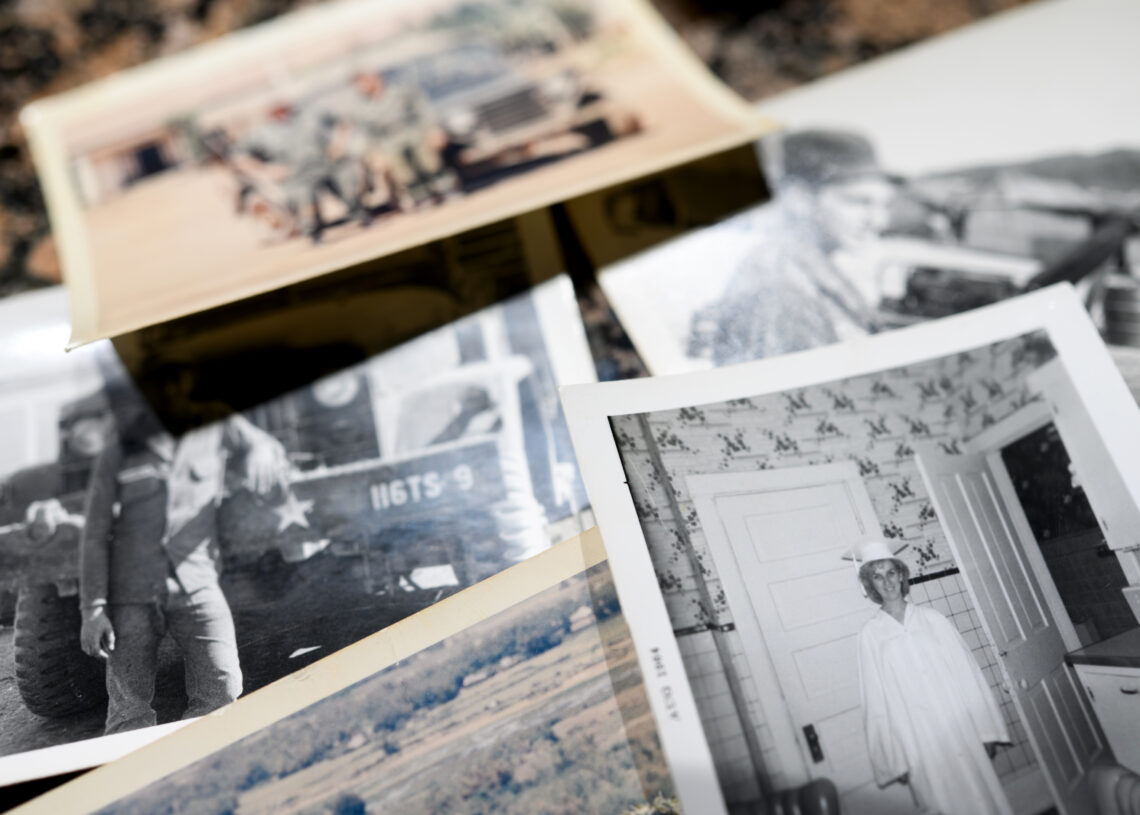
Her lone keepsake from those days is a black-and-white headshot of Chuck as a teenager with greaser hair. Chuck’s only mementos are three snapshots of Marie at 19, smiling in a cap and gown for her 1964 high school graduation.
Chuck joined the Army in 1964 and flew helicopters in combat. He said he came back from Vietnam with what he now knows was post-traumatic stress disorder, and he blocked out much of his past. Marie married a regional manager for a steakhouse chain in 1965, moved far from Ohio and started a family.
By 1971, Marie, Chuck and Judith were in their 20s, scattered and disconnected.
On July 15 that year, about 4 p.m., the two boys in Maryland saw the woman in the field, and she was taken by ambulance to Baltimore’s St. Agnes Hospital.
A teletype went out from Howard County to police departments far and wide, asking about missing people matching her description: White, in her 40s, about five-feet-tall and 115 pounds, with blue eyes and graying, light-brown hair. The inquiries led to nothing. The FBI told detectives that her fingerprints were nowhere in its vast collection. Police released a sketch of her face to the press, but a few small stories produced no leads.
Jane Doe became her name.
There were no rape kits in 1971. Nurses weren’t trained to gather trace evidence of sexual assault from a patient’s body. Police surmised that the woman had been sexually assaulted based on her seminude condition. They shipped her blouse, bra, underwear and slip to the FBI’s crime lab, and the FBI returned the garments with a report: Lab techs had found semen on the slip.
Nowadays, DNA might be extracted from the semen, yielding the unique genetic profile of the man who left it. In 1971, though, the advent of DNA analysis as an investigative tool was years in the future. Without knowing details of her lifestyle, her habits, her relationships, it was all but impossible for detectives to discern why she’d come to harm.
Doctors at St. Agnes operated on the woman’s brain that summer, but the damage was irreversible. She developed pneumonia and needed a breathing tube. For reasons that aren’t clear, her left arm was amputated at the elbow. Seven weeks after being discovered in a patch of weeds, Jane Doe died on Sept. 7, 1971. She weighed 86 pounds. The Maryland medical examiner’s office, which conducted an autopsy, ruled her death a homicide.
Records show her body was delivered to the State Anatomy Board, housed at the University of Maryland medical school. Today, as it did back then, the board handles the bodies of people who donate their remains to be used as cadavers. It also disposes of unclaimed corpses. The ashes are poured into unmarked holes in a memorial field on the grounds of a state mental hospital.
The burial yard is a peaceful three acres studded with oaks and evergreens. A stone monument commemorates the dead. As best as anyone can tell, this is where her remains lie.
Chuck, struggling with PTSD, never went looking for Marie after he returned to Ohio from the Army in the late 1960s.
In his mind, the young woman in the cap-and-gown snapshots ceased to be a sibling and became someone else — a long-ago orphan he’d met in foster care, a kindred spirit whose name he didn’t recall. He remembered her only as a girl he’d been deeply fond of, even if he hadn’t always shown it.
“I pushed everything out when I came home from Vietnam,” Chuck said. He said he coped with his psychic war wounds by starting life anew. The once-incorrigible denizen of Parmadale’s detention hall earned a GED and became a contractor. Before he retired in 2010, he said, “I did roofs, I did siding, I did gutters, I did electrical.”
Still, it was hard not to wonder: “Where the heck did I come from? Who am I?”
One day in the early 1970s, Chuck drove to Parmadale and asked to see his records. “The priest came out and told me that there was a fire and everything got burned up,” he recalled. After that, he said, he mostly stopped wondering about his backstory, even when pieces of it occasionally surfaced.
When he and his wife, Linda, married in 2004, their wedding was in a Catholic church, and the two had to produce baptismal records. The Diocese of Pittsburgh gave Chuck a certificate from the church where he’d been baptized. The document reads, “Child of Gabriel Sharkey and Sarah Miller,” her maiden name. He said that was how he learned who his parents were.
Chuck and his wife settled on a cul-de-sac in Mentor, Ohio, near Cleveland. They have no children together. As for those snapshots he saved, Chuck recalled that he and the nameless orphan girl had suffered side-by-side. But what had become of her, he had no idea.
Marie knew that the greaser teen in the photo she kept was Chuck, and through the decades, she felt a part of her was missing. But she didn’t know how to look for him.
In time, she said, “I just accepted my life,” and tried letting go of her brother.
She and her husband moved around the Upper Midwest before they divorced in the late 1980s. Marie owned a day care business for 28 years; she was a fast-food employee; she worked with disabled adults. Now she’s a receptionist at a senior center and shares her house in Springfield, Illinois, with a Shih Tzu named GiGi.
Her daughter Lynn Heimberger said that over the years, Marie “mentioned a few times, ‘I didn’t know my mother, didn’t know my father,’ and she talked about Chuck quite a bit. There were a few times she’d get down and be like, ‘I just don’t know what I did wrong.’ So I think she’s always thought it was her fault.”
Lynn, 55, and her two sisters grew up knowing that their only uncle had been a handful as a kid. When the girls misbehaved, their mother would scold, “You’re just like Chuck!” They knew that she still loved him and that she’d resigned herself to not seeing him again.
“She may have given up,” Lynn said, “but we didn’t.”
In the 1990s, the sisters went to libraries and pored through phone books from all over the country. They made lists of Charles Sharkeys and wrote letters. When they told Marie that apparently none of the mail had reached Uncle Chuck, they could see her disappointment. The sisters later searched online, Lynn said, but their uncle remained a ghost.
“I didn’t want to tell my mom about any of it,” she recalled. “And when I did tell her, it kind of broke her spirit a little bit.”
Marie’s birth certificate lists her parents’ names, but Sarah and Gabriel are of little interest to her. “I didn’t know them,” Marie said flatly, adding, “I didn’t think about my sister, either, because I didn’t know her.”
She said, “I knew Charles.”
Zufall, a county police officer for 24 years, teaches in the forensic science department at Loyola University Maryland. In the cold-case business, he tells students, it’s important to have great patience, a high tolerance for tedium and a knack for seeing things others overlook. He likens his unsolved files to the jigsaw puzzles he enjoyed working on as a kid.
Before Zufall became a one-man cold-case squad in 2019, the Howard County Police Department paid retired detectives to peruse languishing homicide files and look for loose ends. One of the former investigators, Nick DeCarlo, noticed in 2014 that nobody had seriously revisited the Jane Doe case in the DNA era.
“So, I contacted the medical examiner, and I said, ‘Hey, by any chance do you have anything left from the autopsy?’” DeCarlo recalled.
“And by chance, they did.”
For 43 years, tiny remnants of Jane Doe’s heart, liver, lungs and kidneys had been sitting in cold storage, with each sliver of tissue chemically preserved between glass. After DeCarlo collected these histology slides and put them in a police evidence refrigerator, a DNA expert told him that nothing could be done with them. Chemical preservatives wreak havoc on genetic material, and technology for getting DNA from the slides didn’t exist.
In 2020, when Zufall first opened the file, the tissue samples, listed in an evidence log, gave him hope.
Although DNA labs still couldn’t develop genetic profiles from histology slides, the science was advancing rapidly. Zufall, who typically juggles several cases at a time, thought the slides might someday prove to be crucial. It was all he could cling to in the Jane Doe case, he said, because the other evidence — the blouse, bra, underwear and semen-stained slip — had been lost.
In the fall of 2024, Othram, a private lab in Houston, told Zufall that it was finally possible to extract DNA from chemically preserved tissue. Zufall then launched his investigation. He shipped the slides to Texas, and the company produced a genetic profile of Jane Doe, the first real thaw in the case in more than half a century.
“I was excited, but guarded,” said Zufall, because if the profile didn’t lead to her name, what good would it be?
Othram’s scientists began looking for partial genetic matches between Jane Doe and millions of customers whose DNA was in commercial ancestry databases. They found a few people who were distant relatives of the woman. Using public records, the company’s genealogists charted a family tree dating to the 19th century. Researchers knew Jane Doe had to be part of this extended family.
From among the victim’s living relatives in the chart, Orthram identified a man it thought could be a second or third cousin of hers.
His name: Charles Leroy Sharkey.
Zufall cold-called him in Ohio last winter. He wanted to ask this man if he knew of a female relative who’d gone missing in the early 1970s. Chuck hung up on him twice, figuring it was a scam. When the two finally spoke at length, Chuck said he was sorry, but he’d grown up in an orphanage and didn’t know a thing about his original family.
“I remember being so devastated,” Zufall said. “I was thinking, like, ‘Wow, we got this far!’”
But then Chuck provided a saliva sample so his DNA could be compared with Jane Doe’s. And in June last year, an Othram official called Zufall at home with an urgent update.
Charles Sharkey wasn’t a cousin of the victim. He was her son.
Zufall was dumbstruck. He soon found 4-year-old Charles in the 1950 census, living near Pittsburgh with his sisters, Mildred and Judith; their father, Gabriel; and their mother, whose name was Sarah Belle Sharkey.
After 54 years, here she was at last — the woman in the field, no longer Jane Doe. When the detective phoned Chuck to break the news, Chuck recalled, “I was kind of shocked,” though more in amazement than distress.
Mildred Sharkey was harder to find; Zufall didn’t know she’d been living under her middle and married names, Marie Cantwell, for decades. Nor could he find Judith at first. As for Gabriel, he had moved to Louisiana in the late 1950s and died there in 1968. Zufall was pleased to tell Chuck that his father wasn’t a suspect in his mother’s death.
In July, Zufall located Marie in Illinois. Over the phone, as he unspooled the story of Sarah, he told her that he’d already spoken with her brother, which stunned her.
“And then I burst out crying,” she recalled. “I didn’t know what else to do. … I said, ‘Really!?’ I said, ‘He’s alive!?’ I said, ‘Oh, my God!’ ”
On July 18, she texted him:
Hi Charles this is your sister Mildred Sharkey (Marie is my name now) I would like to call you can you text me a good time to do that so we can talk.
They’ve been messaging and FaceTiming ever since, and a lot of Chuck’s dormant memories have awakened. He knows who Marie is — the orphan in the snapshots, the girl in the trash barrels, his older sister — and Marie feels whole again, reaching out to her brother whenever the mood strikes.
She’ll just up and text:
I’m at work but I wanted to say good morning. It’s still raining here. We need a nice sunny day. Love you
Marie, 81, has severe arthritis and uses a walker. Chuck, 80, has respiratory illnesses and a portable machine that helps him breathe. Neither is comfortable flying. As they chatted into the fall, they set Oct. 19 as the date they’d meet in person. Marie’s daughters would drive her to Chuck’s house, 550 miles away.
Sarah, who died on her 47th birthday, is still a mystery.
What became of her after her kids went to Parmadale — where life took her in the 1950s and ’60s, why she was in Maryland on July 15, 1971 — Zufall doesn’t know. He acknowledged he might never identify a suspect. Sarah would be 101 if she were alive today. He hasn’t found a soul who remembers her or any report of her being missing.
As for reuniting Chuck and Marie, Zufall said: “I’ve always believed in karma, right? I’ve always believed that if you do good things for people, then it comes back to you” — and maybe it’ll rub off on a stubborn case. He had restored Sarah’s name and part of her family. Next, he wanted to locate Judith.
While the fate of the youngest long-lost Sharkey had no direct bearing on his homicide investigation, Zufall had become invested in the siblings. Late last summer, after Marie and Chuck filled him in about the orphanage, Zufall plumbed databases for hours, looking for traces of their sister. But she’d scarcely left a mark.
Then one day an old classified ad popped up in a newspaper archive.
ANYONE knowing the whereabouts of Mildred Marie Sharkey or Charles Leroy Sharkey please contact Judith Ann Sharkey Johnston, 504-729-6511, 2-10 p.m.
The ad ran for a week in April 1975 in the Cleveland Plain Dealer. Zufall scrutinized it like a Talmudic scholar. He traced the phone number to a long-gone diner near New Orleans. Maybe “2-10 p.m.” meant Judith worked the dinner shift back then and didn’t have a home phone. Maybe a family named Johnston had adopted her out of Parmadale. Maybe she knew her siblings’ full names because she’d been in touch with their father after he moved to Louisiana. Or maybe not.
“I guarantee you, if we put boots on the ground down there, we’d know her whole story within two weeks,” Zufall said. But caseloads and budgets would never allow it.
Eventually he learned that Judith was the widow of a man named Sanchez. That was how he found her, Judith Sanchez, deceased in Louisiana. A cold-case detective there helped Zufall gather a few bare facts: In 2020, after Judith succumbed to a heart ailment at 72, her body went unclaimed in a local coroner’s morgue. Zufall said he was led to believe that her ashes had been deposited in a pauper’s field.
In September, he called the coroner’s office in Louisiana to ask if anyone knew where Judith’s ashes were buried. He said he’ll always remember that call, when the woman on the phone told him: “Well, according to my records, she’s still here. … She’s on a shelf.”
Zufall personally paid $100 to have her ashes shipped to Chuck’s house in time for the siblings’ reunion, which took place on a rainy autumn evening.
Chuck, in jeans and stockinged feet, waited on a stool in his finished basement, his oxygenator whirring, as Marie and her daughters came in through the garage. Leaning on her walker, Marie crossed the room in the furry slippers she’d worn for the long ride, and Chuck greeted her with a white rose.
“You look good,” she said.
“You look great!” he replied.
“Oh, I’m a mess,” said Marie, the weather having ruined her curls. When the two were done smooching cheeks, they fell silent for a moment, taking each other in.
Chuck hugged his crying nieces; Chuck’s wife ordered pizzas and brought out snacks; and Marie declared, “You’ve got a whole family right here … a family we haven’t seen for 62 years.”
Then a burly man with a crew cut and hoodie walked in, and Marie gasped.
“Detective Zufall,” she said softly. Chuck hadn’t told her that he’d invited him. He wanted it to be a surprise.
“Hi, sweetheart!” Marie said, sinking into Zufall’s arms. She looked up at him. “You don’t know … oh, thank you, thank you so much. …” Patting Chuck on a shoulder, she half-whispered, “He’s my baby brother.”
Zufall, who had put off a long-planned vacation with his wife to drive to Ohio, told them, “I had to be here.”
The next morning, Chuck and Marie sat in the kitchen reminiscing. The mortuary box that Judith’s ashes had arrived in was on the counter a few feet away. The siblings glanced at it from time to time.
“It would have been nice for all three of us to be together,” Marie said, but she didn’t dwell on a sister she doesn’t recall.
She has her brother now.
“You’re not as ornery anymore,” she said.
“I’m still ornery,” he insisted, though “not that ornery.”
She reached for his right arm and squeezed it. He squeezed her left hand and smiled. She teared up just then as her daughters stood by their Uncle Chuck.
“I’ll never lose him again,” she said.
If you have information about the 1971 homicide of Sarah Sharkey, or knew her in the years before her death, please contact Detective Wade Zufall of the Howard County police at 410-313-3324 or [email protected]. There is a reward of up to $30,000 for information that leads to the closing of the case.
About this story
Audio by Elana Gordon. Story editing by Lisa Grace Lednicer. Illustration by Anna Lefkowitz. Design editing by Chloe Meister. Photo editing by Kaitlyn Dolan. Copy editing by Gaby Morera Di Núbila. Research by Razzan Nakhlawi. Additional support by Tara McCarty.
The post How an unsolved 1971 homicide led to a surprise DNA connection appeared first on Washington Post.