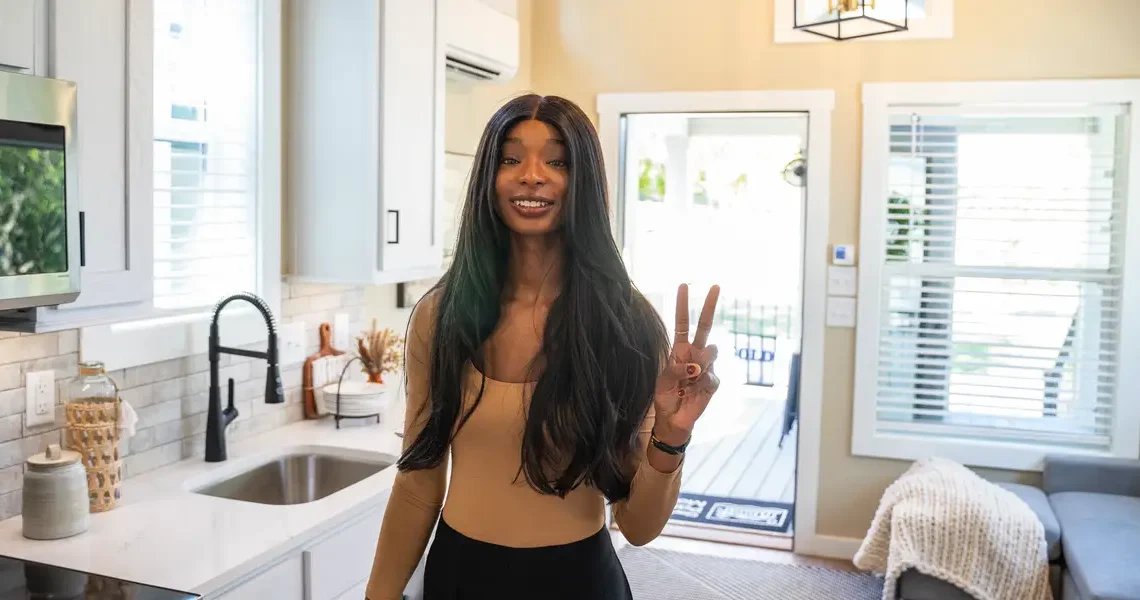
When I arrived at Liberty Tiny Village on a warmer than usual day in November, I thought I knew exactly what to expect.
The resort-style, 55-and-older tiny home community in Aubrey, Texas, markets itself as an upscale community for retirees or soon-to-be retirees ready to shed decades of belongings in exchange for a smaller, freer way of living.
But that’s only part of the story.
That afternoon, I sat with two neighbors, widows Debbie Giamalva a retired intensive care nurse, and Sherry Miller, a retired English teacher. They told me that what they’d really found at Liberty wasn’t just a smaller and more manageable home, but a caring group of friends who look out for one another.
It left me thinking about how much community matters as you age, especially when the house is quieter — when your partner is gone, and your children have lives of their own. In the moments that count, who do you turn to?
Liberty is part of a wave of new housing in North Texas.
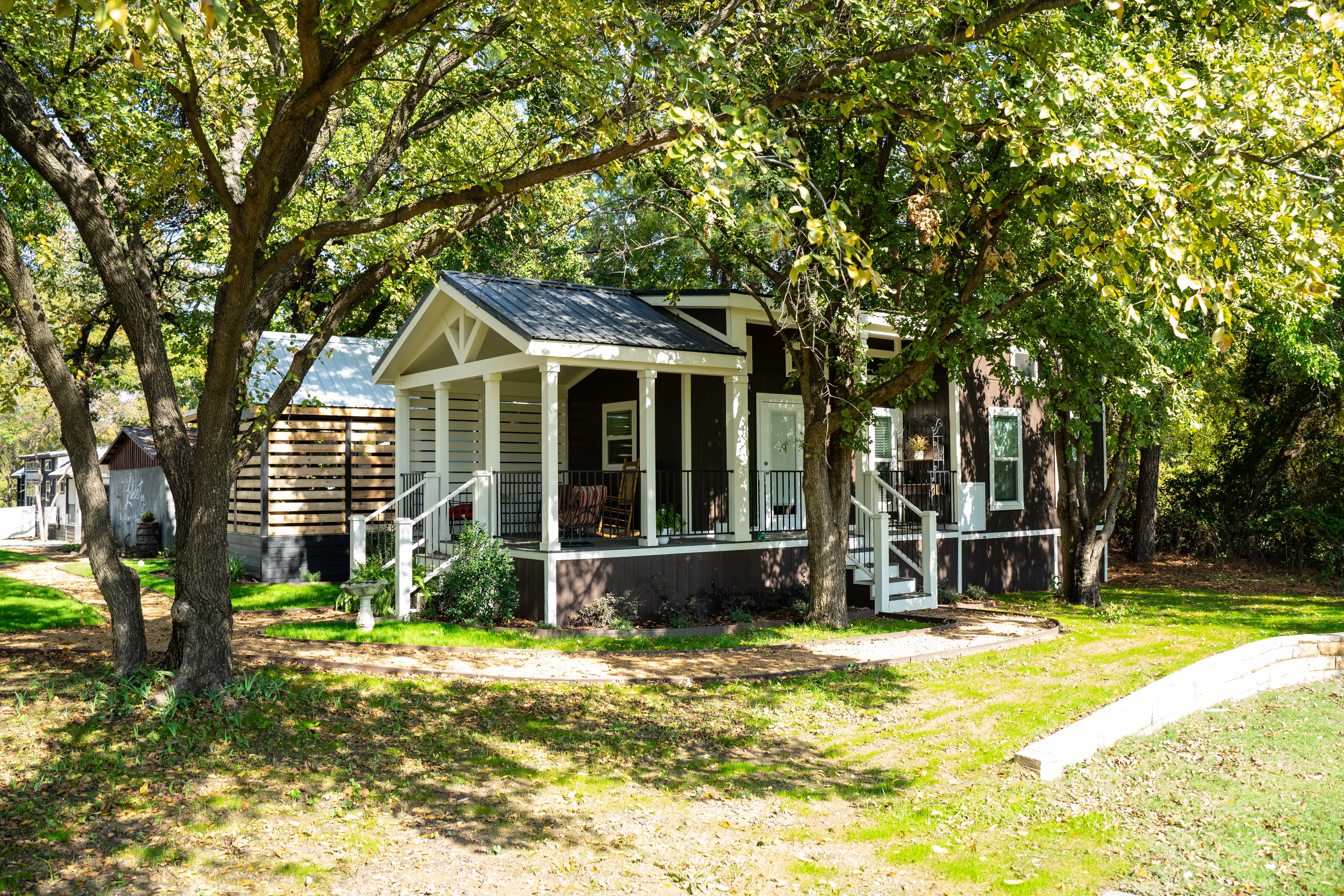
Like many Texas cities and suburbs, Aubrey has been growing as people from nearby areas and high-cost states like California and New York move there seeking more affordable homes, lower taxes, and a lower overall cost of living.
Those newcomers have fueled demand for every kind of housing, from apartment complexes and single-family homes to smaller, more affordable options like Liberty’s tiny homes.
Liberty sits on 7.5 acres between sprawling master-planned subdivisions and family farms.
Liberty Tiny Village was founded in 2022 and is owned by Melissa Hayes and her husband, Phillip. So far, it has 11 occupied lots.
Liberty is one of several tiny-home communities that have sprung up across North Texas over the past decade, but it comes with a major perk: Because the homes are classified as recreational and can be moved, residents don’t pay property taxes on them.
The homes are small but pricey.
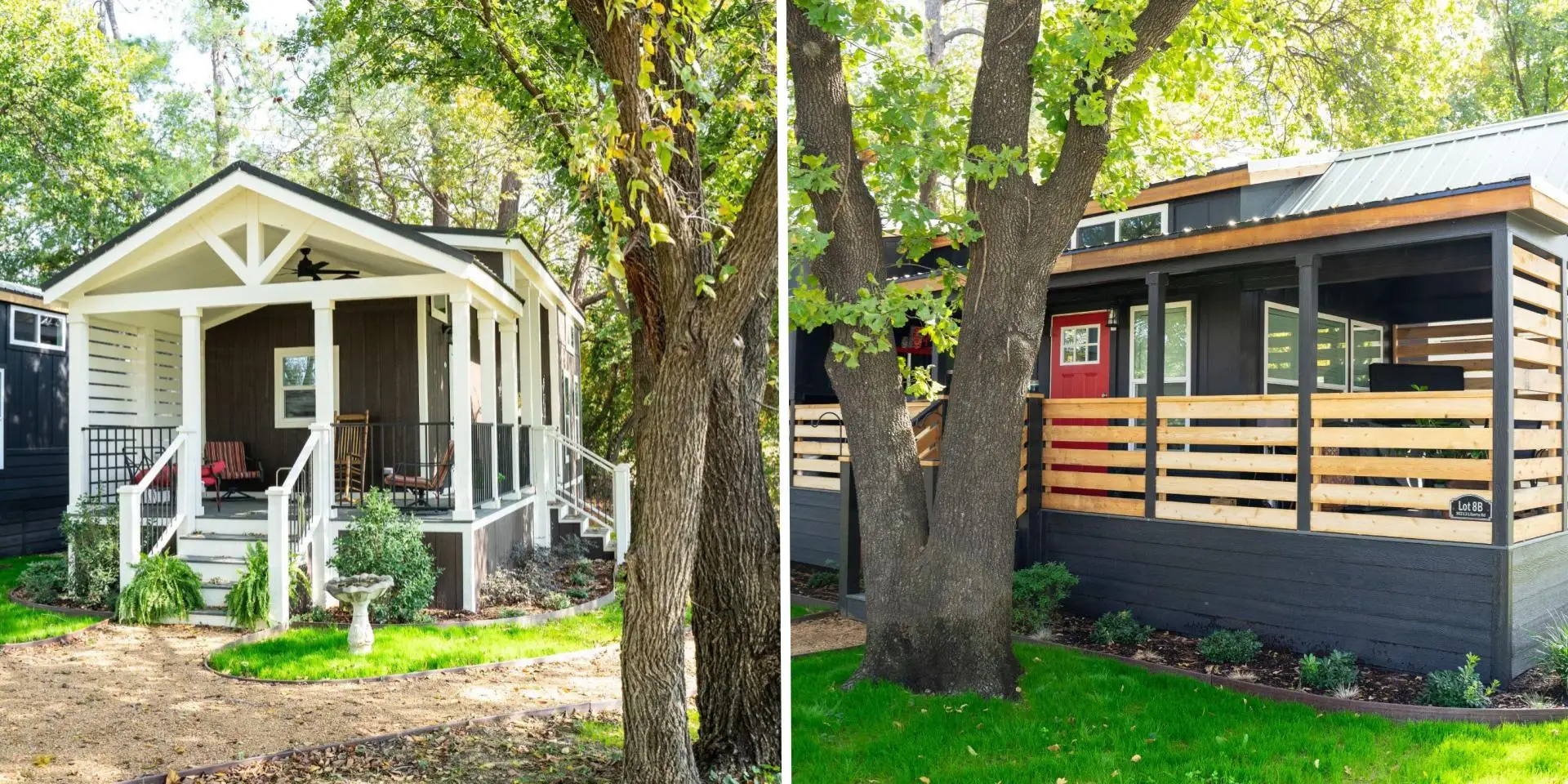
The village’s homes are small — under 400 square feet — but not cheap; each costs between $75,000 and $160,000. Still, that’s far less than the going rate in Aubrey, where Zillow put the median home-sale price at $303,550 and typical rent at $2,267 in December.
Kristene Newton, the village’s tiny home designer, told me that most residents buy their homes outright. After that, their main monthly expense is $950 in lot rent, which covers water, sewer, trash, landscaping, and WiFi. For residents living on a mix of savings, investments, and Social Security, that kind of low and predictable bill can feel like a game changer.
“The senior community can get into one of these homes, pay for the home, and the lot rent is going to be cheaper than moving into an apartment—or sometimes even assisted living,” Newton said.
She added that she’s been shocked to see people sell million-dollar houses to get into the village’s tiny homes.
A dealership just outside the community lets would-be buyers tour Liberty’s model homes.
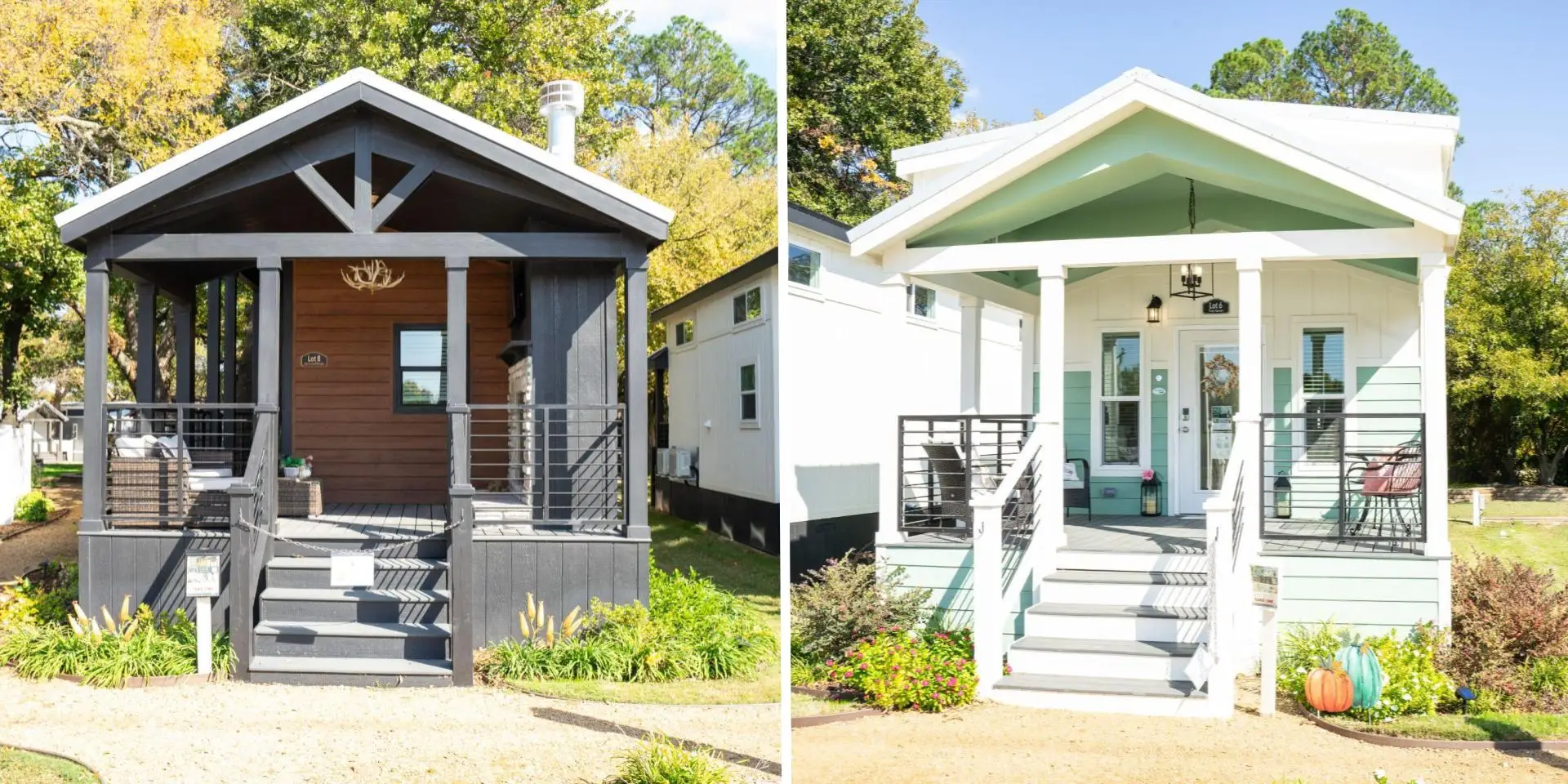
Hayes and Newton pitch Liberty as a luxury tiny-home village. And unlike many communities I’ve visited around DFW, I have to agree — Liberty’s homes look and feel deliberately upscale.
Newton took me on a tour of the village and its model homes.
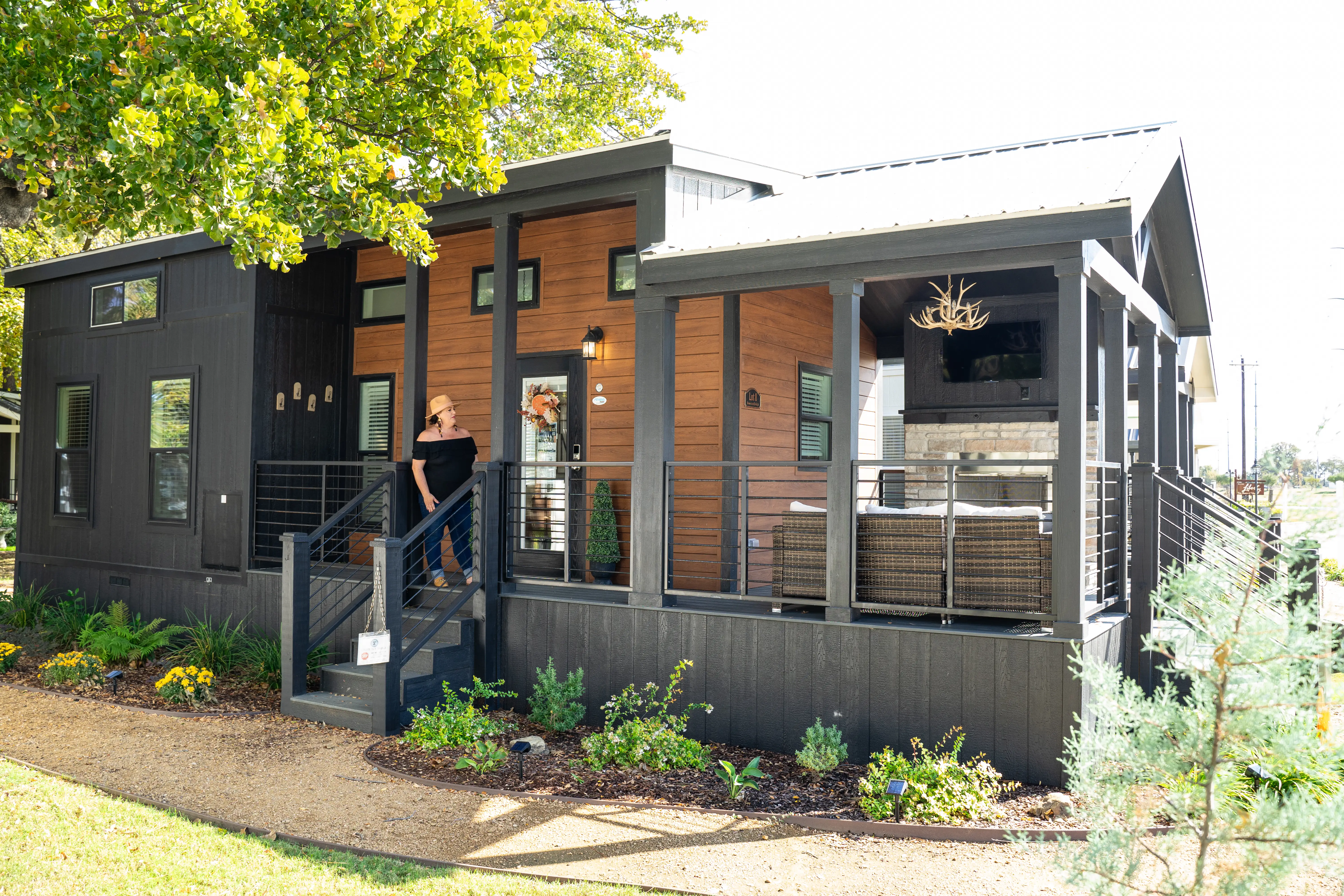
Each of the village’s homes has one to two bedrooms and one to one-and-a-half bathrooms. The primary bedroom, bathroom, kitchen, and living area are always on the first floor — a design choice that makes sense for a 55+ community.
Hayes told me the homes typically have stairs up to the elevated entry, but owners can add a ramp.
“Even if they want to add it at the very beginning, or decide later as they get older, they can add it,” she said.
The homes are pretty swanky.
I wanted to get inside the tiny homes to see how they actually feel — and, honestly, to see whether I could picture myself living in one.
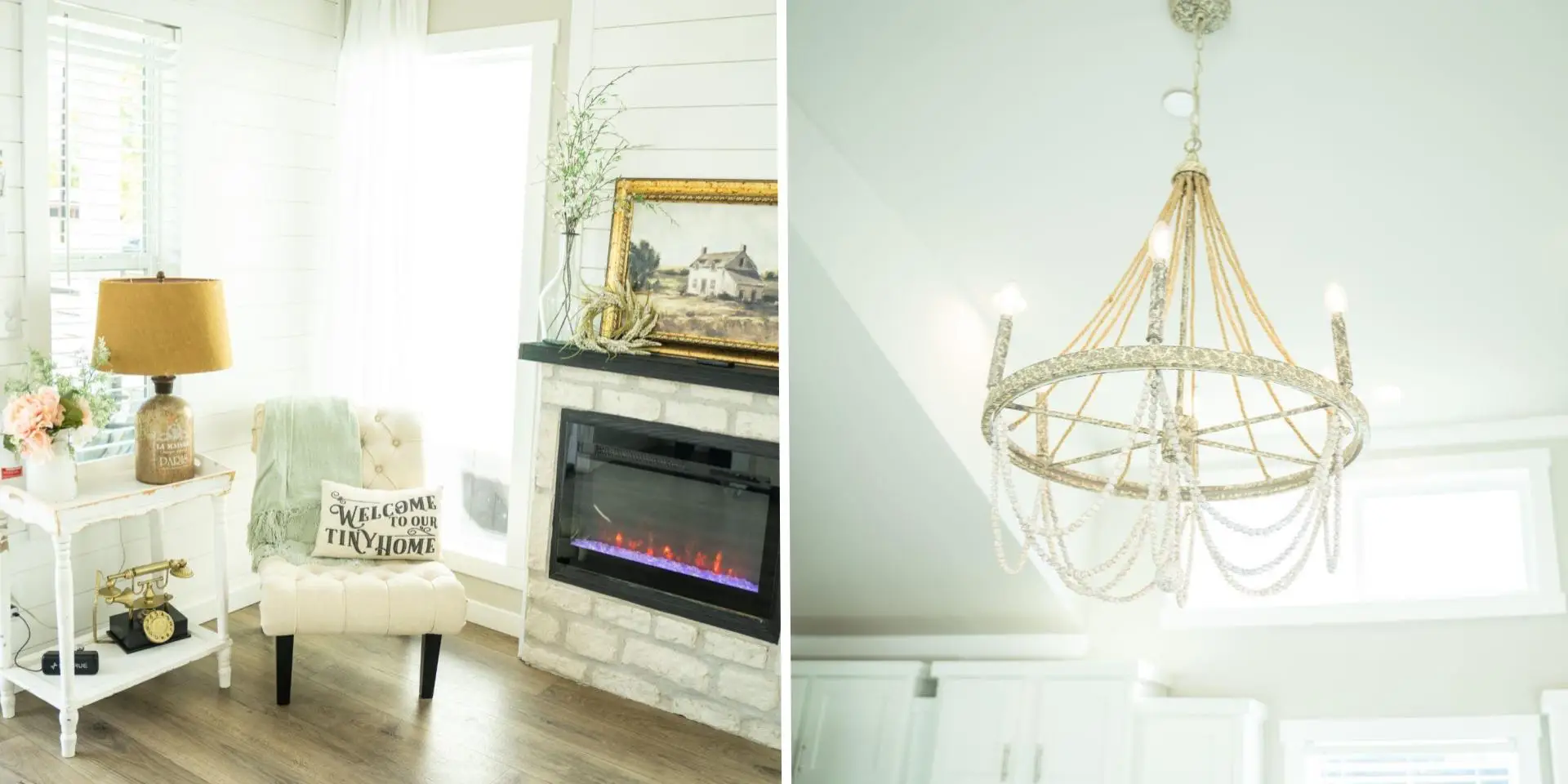
What surprised me most was how upscale Liberty’s tiny homes looked: high ceilings, granite countertops, gleaming gold or silver faucets, chandeliers, hardwood floors, and even electric fireplaces.
The homes are designed to feel luxurious.
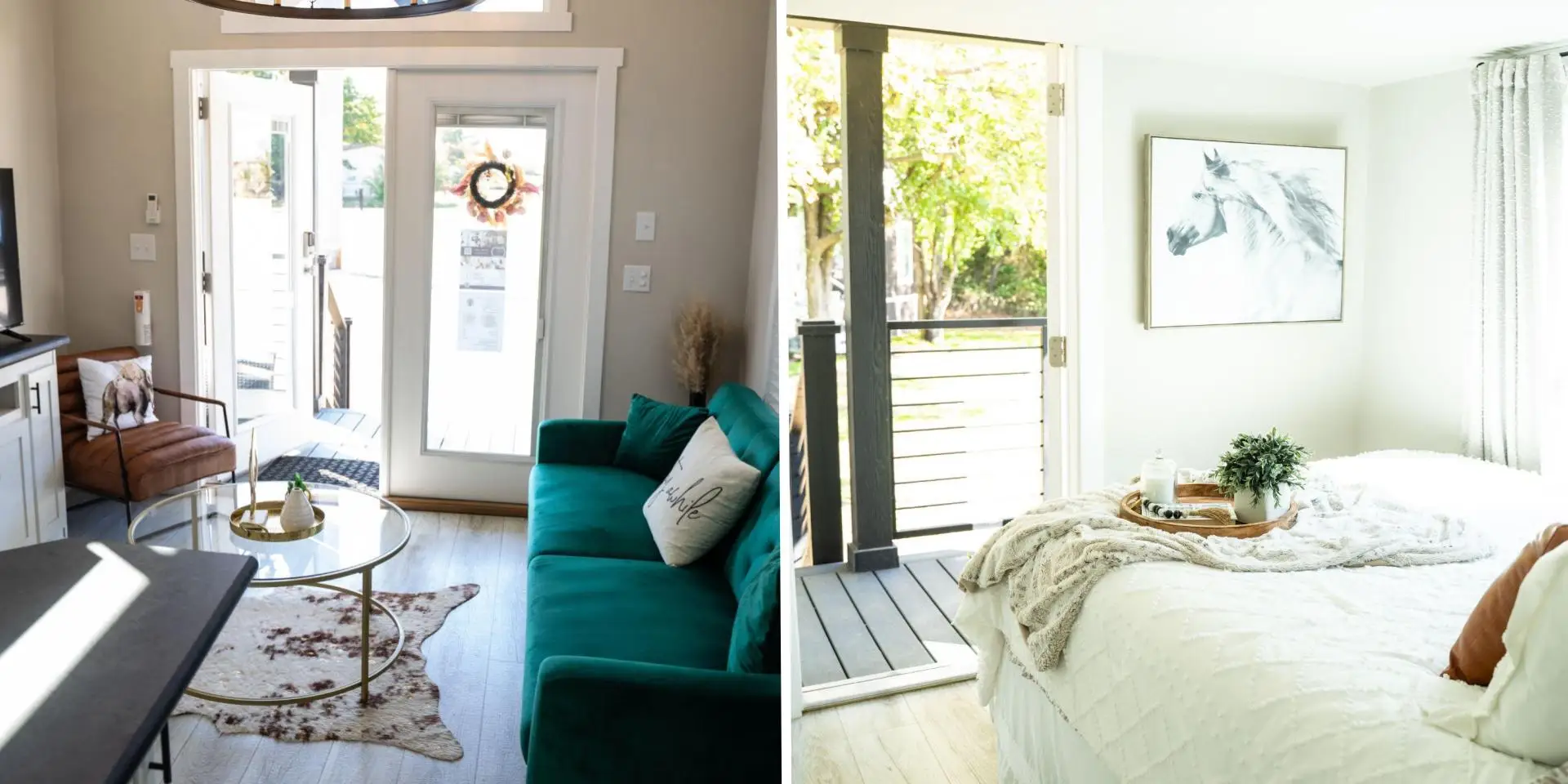
The living rooms and bedrooms felt about as big as some of my first apartments right out of college — just not nearly as well decorated.
Who do I ask for a refund?
Each home has a full-sized walk-in closet.
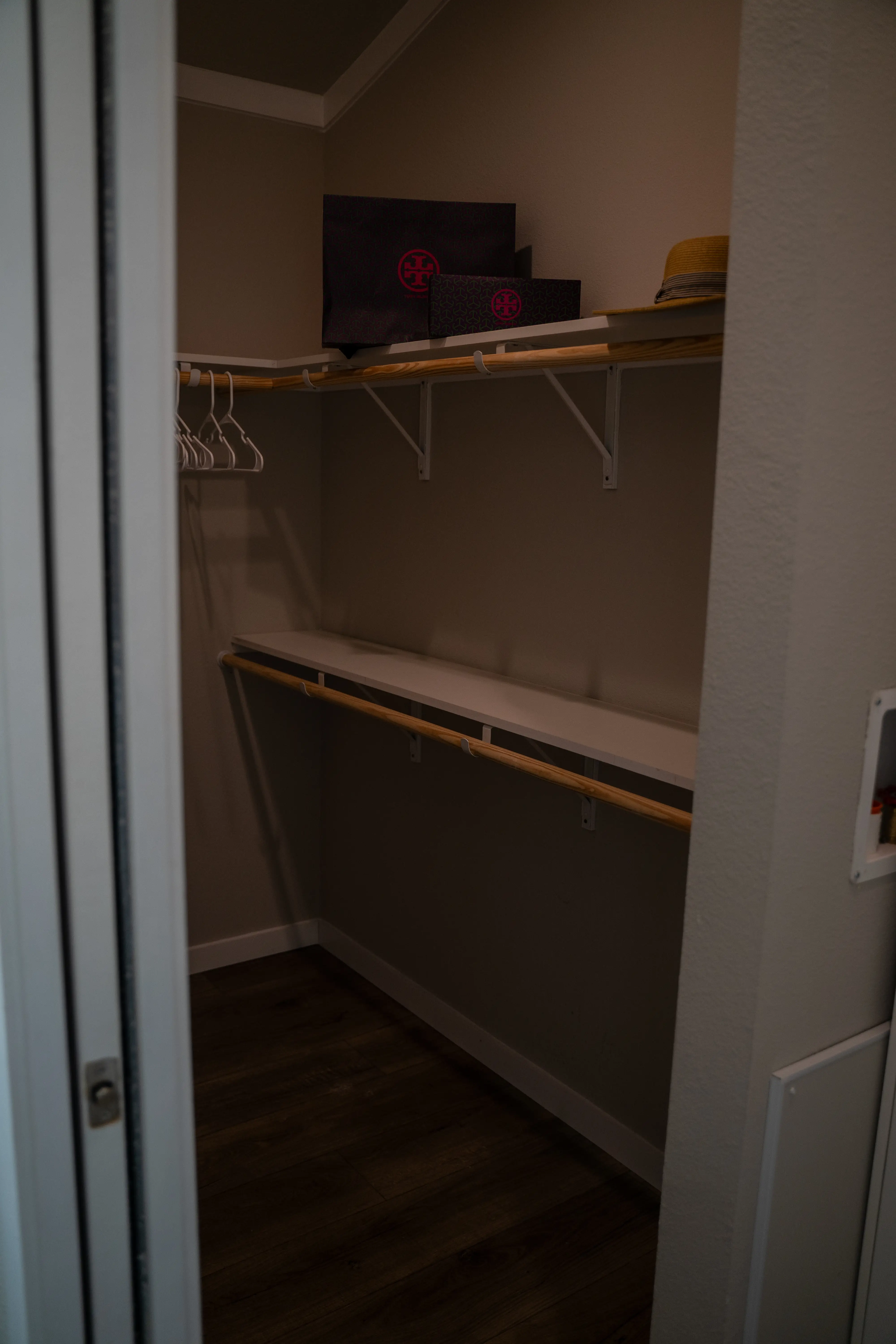
This closet is definitely bigger than the one I had in college, but I still don’t think all the things I’ve collected since then would fit in here.
Liberty designs each unit to fit its owner’s style.
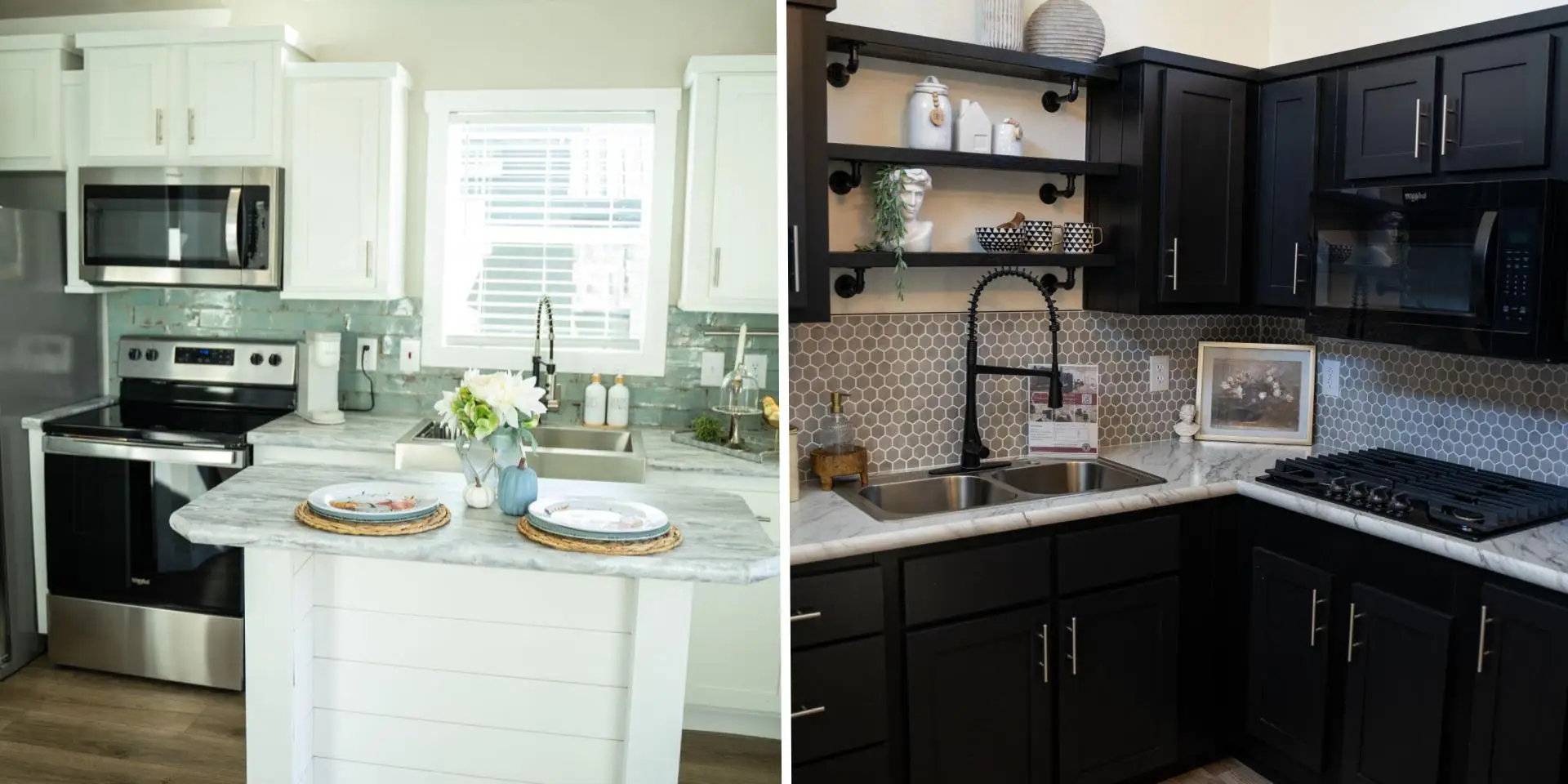
I toured about five different model homes. Two of the kitchens stood out, but my favorite was the one on the right, with darker cabinetry and appliances.
The bathrooms have full-size showers.
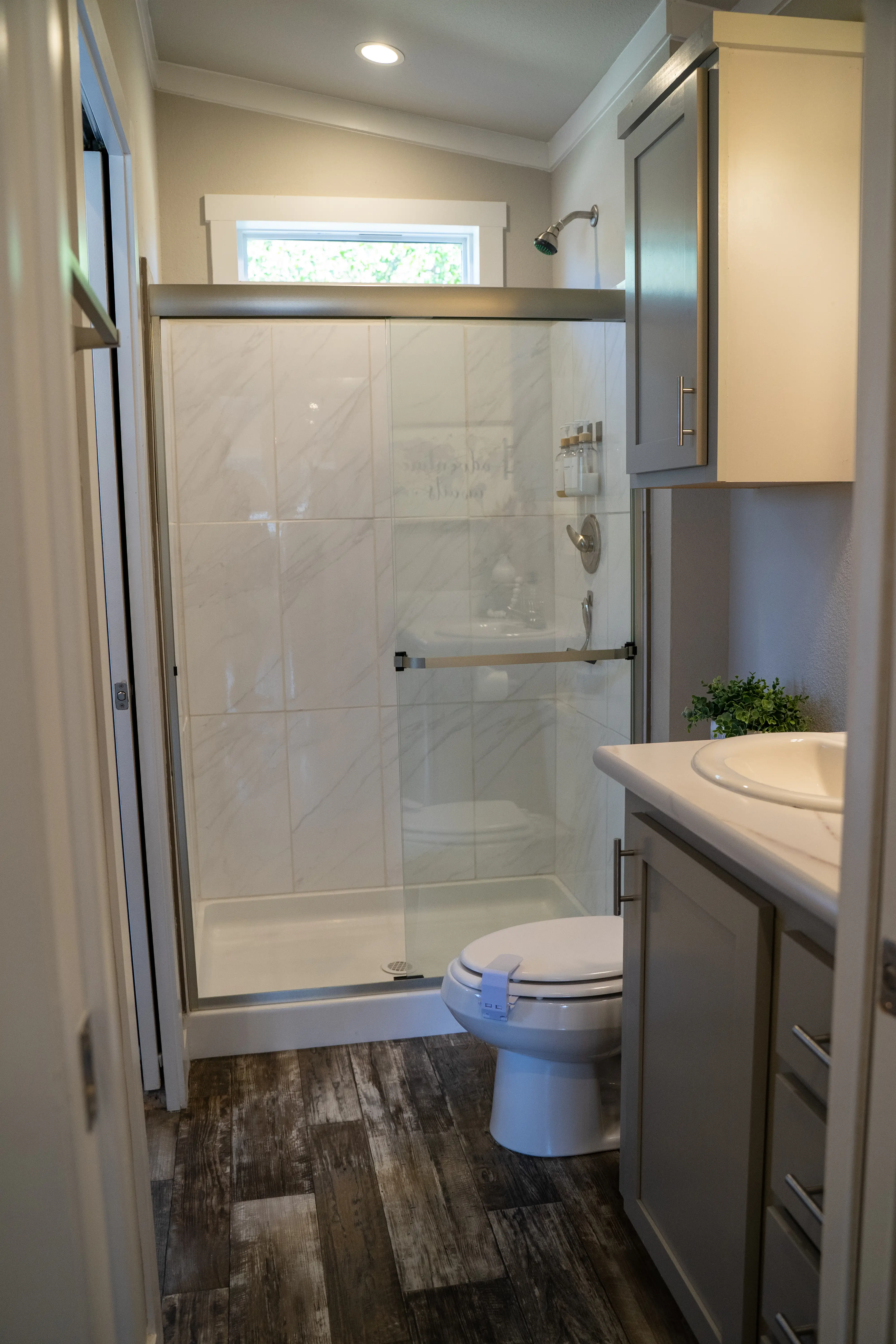
I’ve been in hotel rooms with smaller bathrooms. I think this is a pretty decent size for a tiny home.
If I were to move into a tiny home, it would need to be two stories.
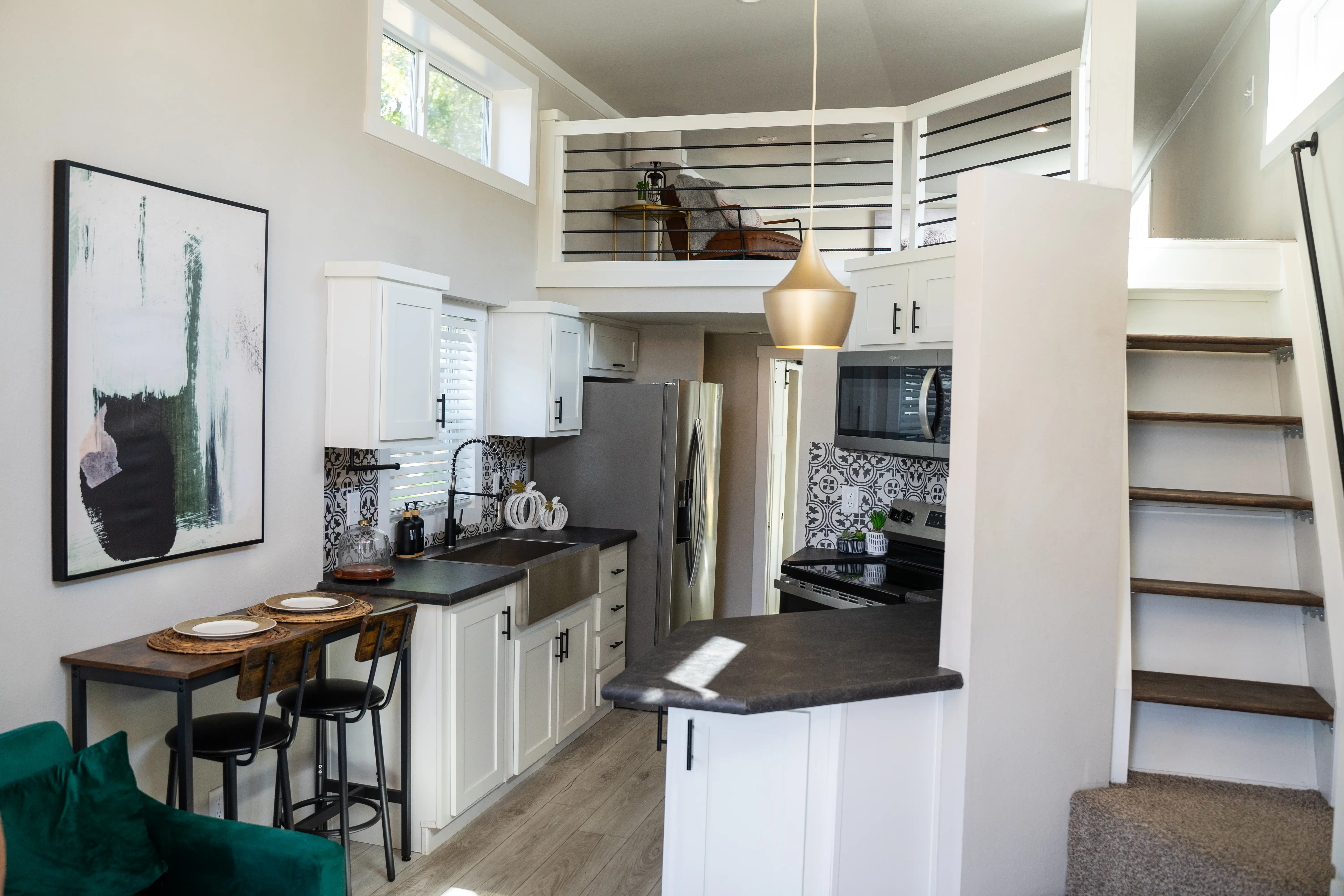
I’m 5’10”, so tall ceilings are a must. I was shocked by how spacious the two-story models felt — I couldn’t believe the entire tiny home fit into just 399 square feet.
Newton told me that residents’ grandkids love the lofts.
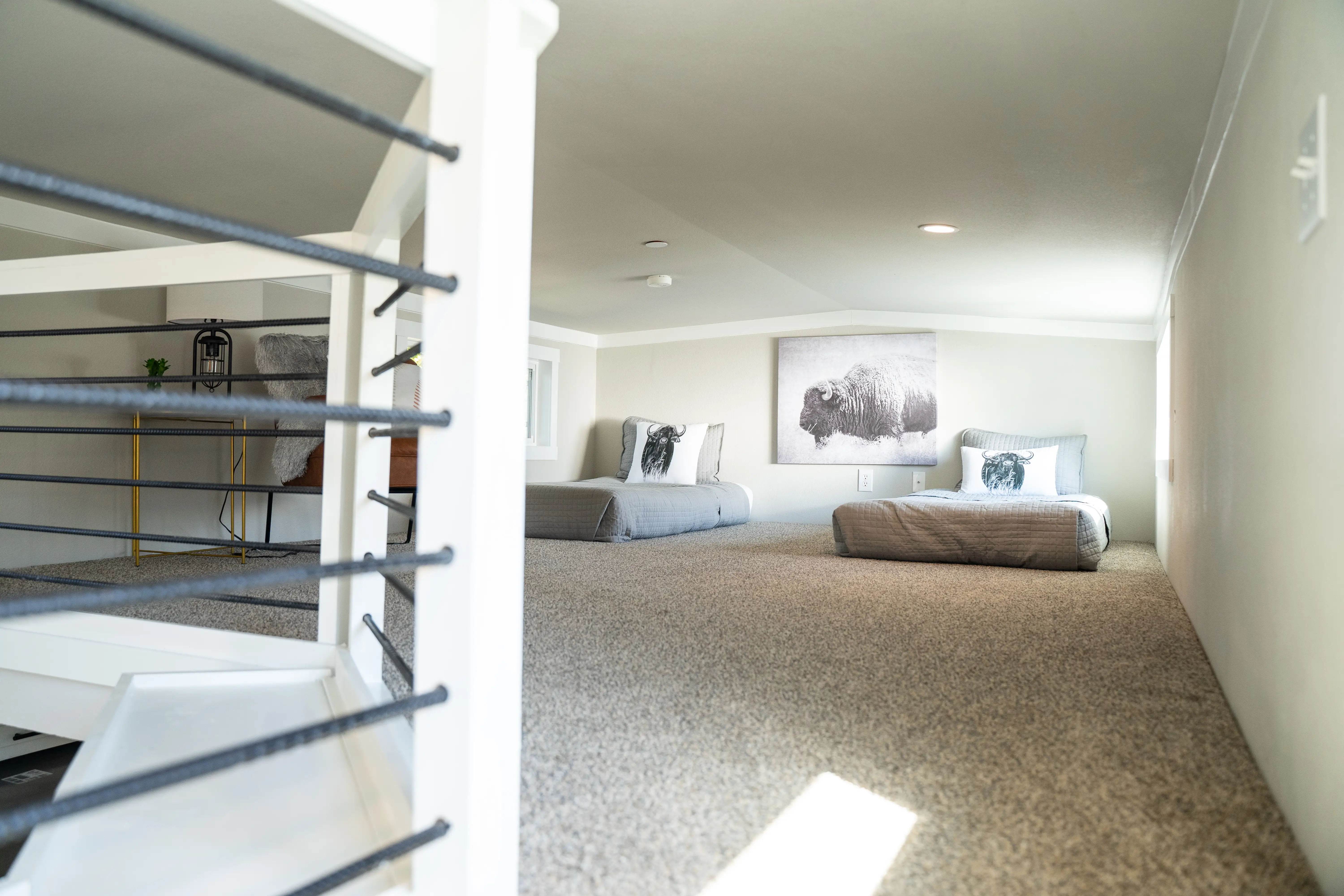
If you’re willing to pay extra, many floor plans also include a loft for storage or an extra sleeping spot.
I have a bunch of younger cousins. I can totally picture one of them turning this loft space into a fort.
Some models even had enough space for an outdoor kitchen.
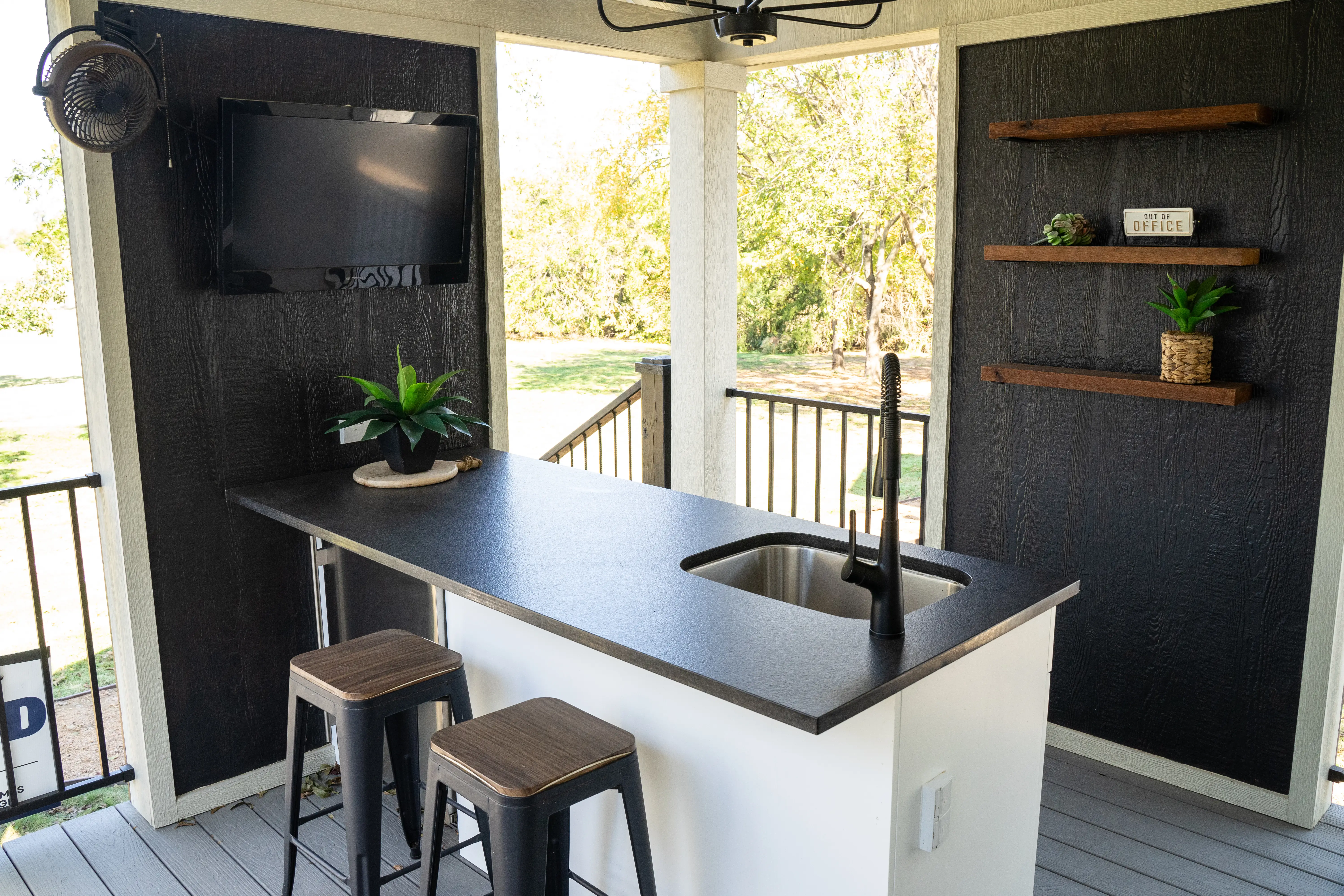
I’d never seen a tiny home with an outdoor kitchen. It definitely leaned into the resort vibe.
If you have a big family like mine, it might be just the right amount of extra space to host a Sunday lunch or supper.
Touring the tiny homes was fun, but what stayed with me most was my conversation with Giamalva and Miller.
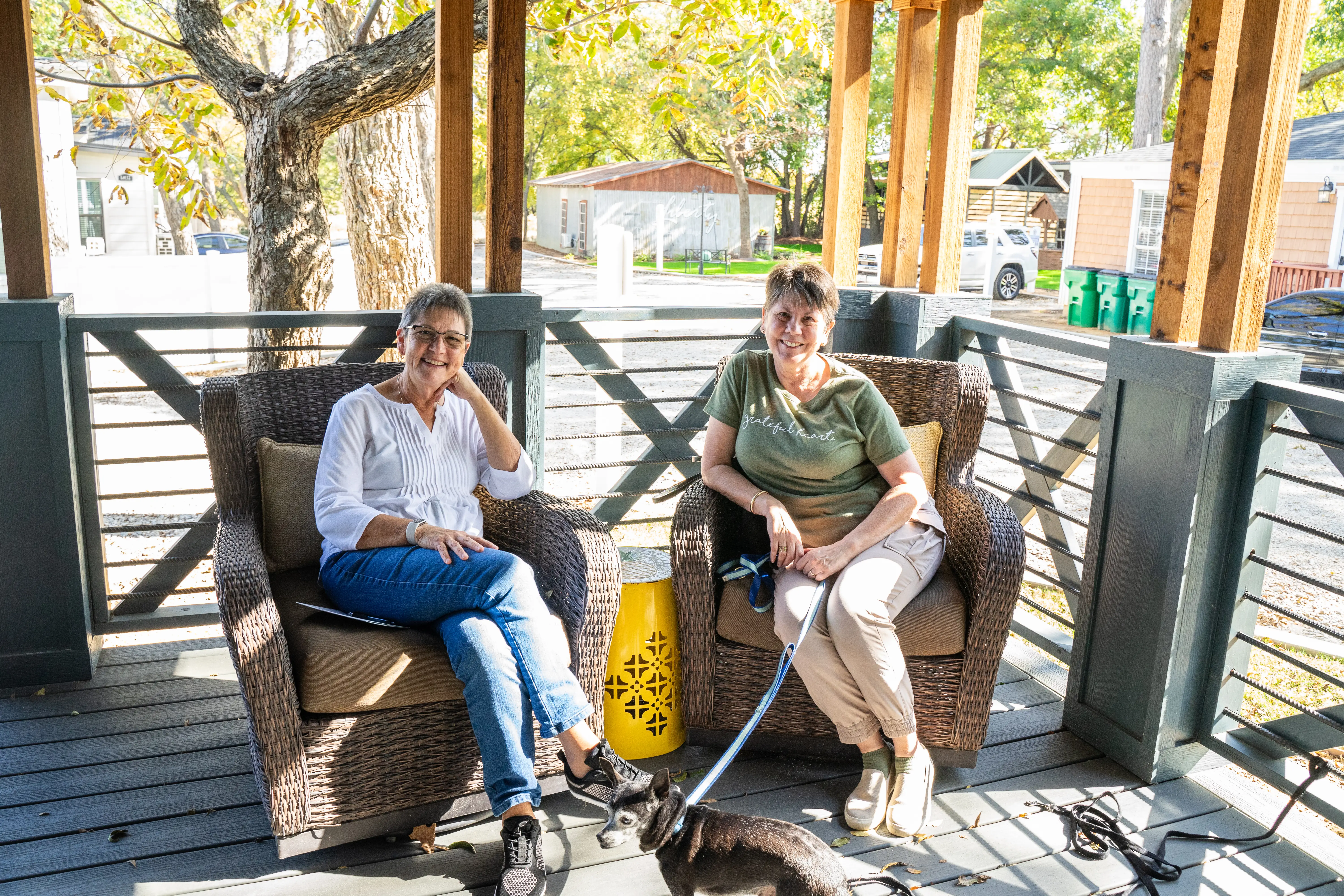
Both women came to Liberty for a similar reason — living alone in large homes had started to feel less like freedom and more like a liability.
“My husband passed away in 2021,” Giamalva, 70, told me. “What did I need with a second bedroom? I also didn’t need a 900-square-foot apartment.”
Giamalva paid for her tiny home in full using the money she made from selling her previous house. With her highest fixed cost now the $950 monthly lot rent, she said moving to the village was a “no-brainer.”
Miller arrived at a similar conclusion. She’d been living in a 2,200-square-foot house with a pool, but with her son miles away at Texas A&M, she said it no longer made sense to stay there.
Miller told me that moving into a tiny home solved her problems. “I sold my house, and I didn’t owe anything; I didn’t have a mortgage, so I was able to take that money, buy this, and have enough left to hopefully last me the rest of my life,” she said.
The women said the biggest benefit isn’t financial — it’s feeling safe, knowing neighbors are close by.
“If something happened to you in your place, everybody would know if they didn’t see you,” Giamalva said.
Miller, who told me she has health issues, echoed that sentiment.
“Not to be morbid, but when you get to be a certain age, and you’re living alone, you think, ‘If I fell — if, God forbid, something happened to me—nobody would know. Here, we just watch out for each other.”
Community events and a lively group chat keep the neighbors connected.
At Liberty, management plans monthly events — Thanksgiving dinners, for example, and most recently a chili cook-off. Residents also meet for Bible study and, when they can, walk their dogs together.
They even have a community group chat. “We have a good chat going,” Miller said. “If you needed something, all you would need to do is put it on there — and I know somebody would help.”
For me, that sounds like the main draw: the independence of having your own place, with the comfort of knowing you’re not entirely on your own.
Giamalva and Miller said they wouldn’t get that same mix in an assisted-living facility or retirement home, where costs are higher, and it can be harder to build relationships — or even just get around.
“As you get older and retire, your body ages, but inside, we still feel young,” Miller said. “So I don’t want to go to some home or an apartment for old people.”
Visiting the village made me confront how I feel about aging.
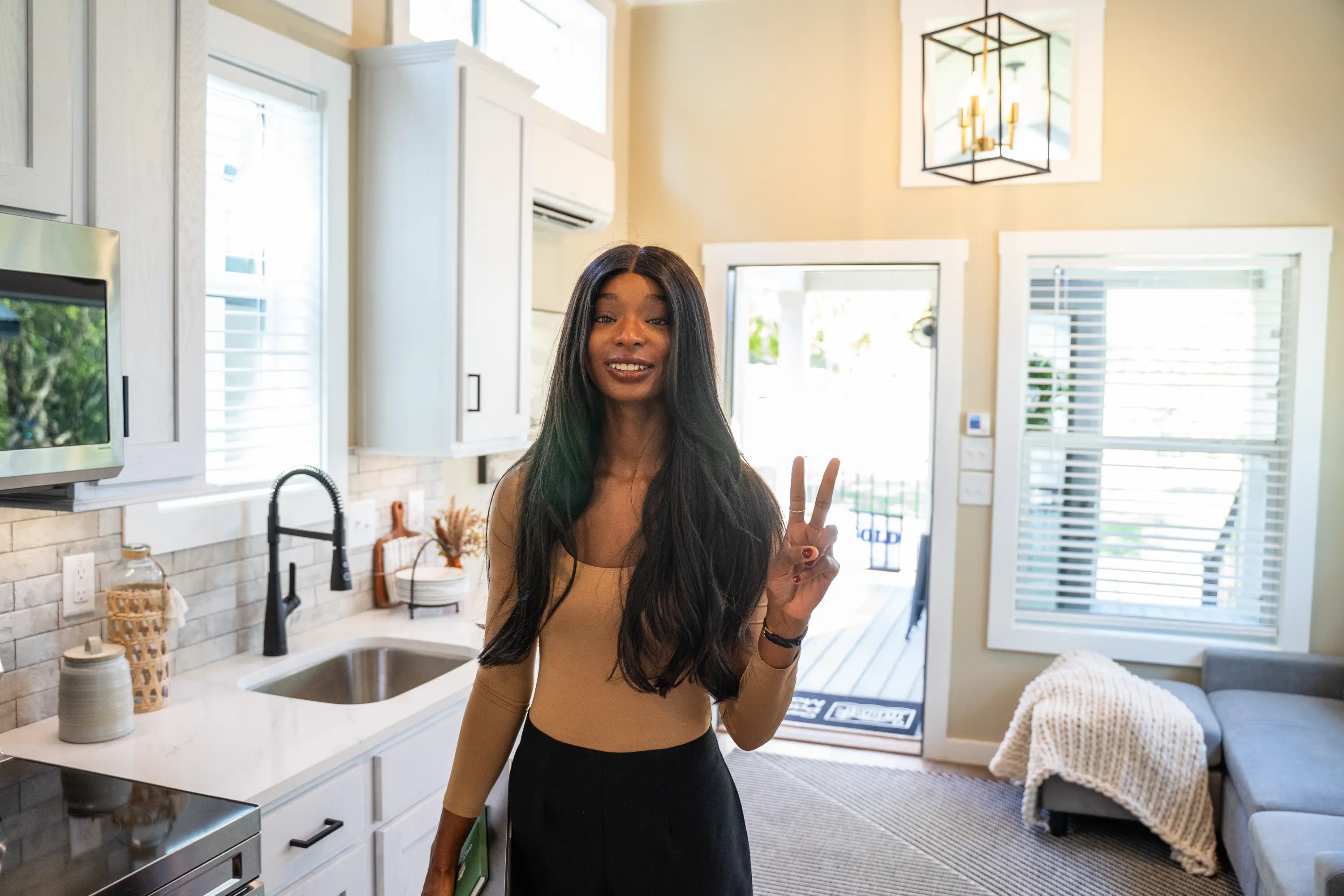
For many of Liberty’s residents, living alone must feel liberating, especially in old age, when doing so is often treated as risky or even discouraged.
It must also feel empowering. Giamalva and Miller chose to give up their bigger lives for something smaller, a move that’s both brave and practical.
I’m still young and newly married, so I haven’t spent much time thinking about what I’d do in their position — until now.
Leaving the village, I kept turning these questions over: If I ever found myself in a similar chapter, would I make the same choice? And would the promise of community make it easier to give up extra space and the things I’d accumulated over a lifetime?
Read the original article on Business Insider
The post I toured a Texas tiny-home village for retirees. The real sell wasn’t the houses. appeared first on Business Insider.