THIS IS NOT ABOUT US, by Allegra Goodman
Allegra Goodman’s 11th book, “This Is Not About Us,” is about our favorite kind of family: complicated. To add another complication, it bears the description “fiction” on the cover, as if someone could not quite make up their mind whether it’s a collection of short stories or a novel.
Publishers sometimes use this categorization because story collections don’t sell as well as novels. The less cynical take is that they’re offering this to us as a literary mystery to solve — an extra layer of intrigue when the stakes are otherwise quite earthbound.
I’ll give you the good news: “This Is Not About Us” is a nimble, heartfelt, acutely written collection that forms one wonderfully cohesive unit. As Goodman unpacks the little squabbles and triumphs of the Rubinsteins, an expansive Jewish clan in the Northeast, something big emerges. It’s a wise, witty exploration of a contemporary American family, and a deliciously readable book. As Goodman writes of one character, “Family was her addiction. She could not stop loving them.”
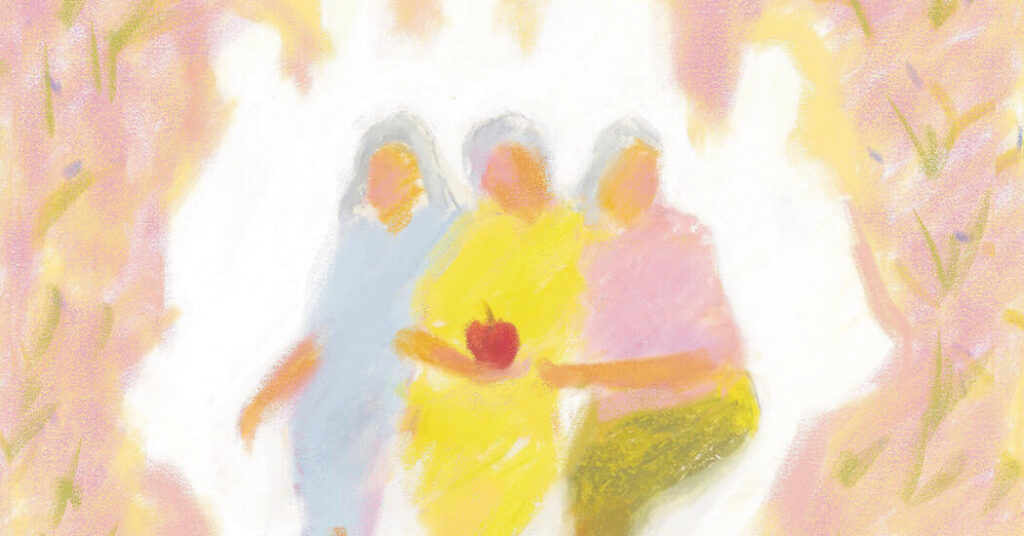
The action begins with a story called “Apple Cake,” and with an ending of a kind: Two sisters, Helen, 80, and Sylvia, 78, both matriarchs of their own families, circle their dying younger sister, Jeanne, who despite a terminal cancer diagnosis has taken months to pass away. But death is not the stake in this book; it is life, and in particular, children. Sylvia has two grandchildren, soon to be three. Helen has none, and, while she denies it, she hungers for them.
Other competitive arenas emerge: Sylvia is a better baker than Helen; Helen, in her pushy, direct way, is a better problem solver. Together, they try to manage the death of their sister, quarreling their way through it. By the story’s end, a rift emerges that lasts the entire book. Their baby sister observes them dryly from her deathbed: “Look at you, thought Jeanne. All vying for attention! Even so, she forgave everybody.”
Vying for attention, indeed. In this overstuffed first chapter we also meet several grown Rubinstein children along with their spouses and offspring. I wondered which of these characters would disappear into the mist, but it turned out quite a few got their shots at a story line.
It’s a testament to Goodman’s mastery and easy manner that she mostly keeps a steady rein. Still, the combination of middle classness and middle age tends to blur some of these players together; everyone seems to have gained a little weight or lost a little hair and they all appear to live somewhere off I-95. Except for Jeanne’s granddaughter, Phoebe, a peripatetic young musician who seemed happiest because she got to leave the Eastern Seaboard (and her family) behind.
The standout characters for me were Richard and Debra, newly divorced and parents to two girls. Debra, presented as a fierce and highly competent mother, has left Richard, who soon finds love again (and again). From story to story, we change our sympathies with them, though Richard is given the titular revelation, watching his daughter at her Torah reading in a highly fraught bat mitzvah scene: “Lily. Lily, he reminded himself. Just focus on her — and then he remembered, this is not about us. Those words comforted him. He was not important.”
By the way, even though I haven’t set foot in a High Holy Day service in several decades, there is a certain American Jewishness to the book I’d recommend, in the same way I might “Marty Supreme” or whitefish on a bagel or the sound of Bernie Sanders’s voice. Or like, therapy. The book is somehow extremely present tense but still steeped in a specific American Jewish past.
As for the short-story collection versus novel question, the stories here lean into one another, mostly to great success. However, “Sheba,” a one-off that has nothing to do with the Rubinstein family save for a faint appearance of Phoebe in the background, feels out of place. And while ordinarily Goodman is deft and funny regarding the grind of raising a family, a chapter centered on college applications is about as interesting as listening to someone talk about the college applications of their child, which is to say not very.
But generally it is to the benefit of us, the reader, when a talented novelist such as Goodman plays with short fiction; an opportunity to watch her be a little looser and freer, a little more open-ended. If you’re not trying to write a novel with a capital “N,” you’re perhaps more amenable to burrowing into these little slices of life and luxuriating in all the details and subtle themes that emerge.
The school pickups, the dance classes, the new eyeglass prescriptions; the poignancy of frozen shoestring fries being heated on a cookie sheet. That’s what “This Is Not About Us” is about: the delicate minutiae of family life, played beautifully, boldly, brightly in a major key.
THIS IS NOT ABOUT US | By Allegra Goodman | Dial Press | 336 pp. | $29
The post Meet the Rubinsteins. They’re Messy, but They’re Mensches. appeared first on New York Times.