Strangers would arrive at Patty Brecht’s home of 45 years on the Upper West Side of Manhattan and treat her like a hotel clerk.
They had paid good money to rent a room in her building a few steps from Central Park, they would explain, but needed help finding it. Once they located the room, they would ask why it was up so many flights of stairs. Others asked, Why didn’t the television work? Was Ms. Brecht’s Wi-Fi broken?
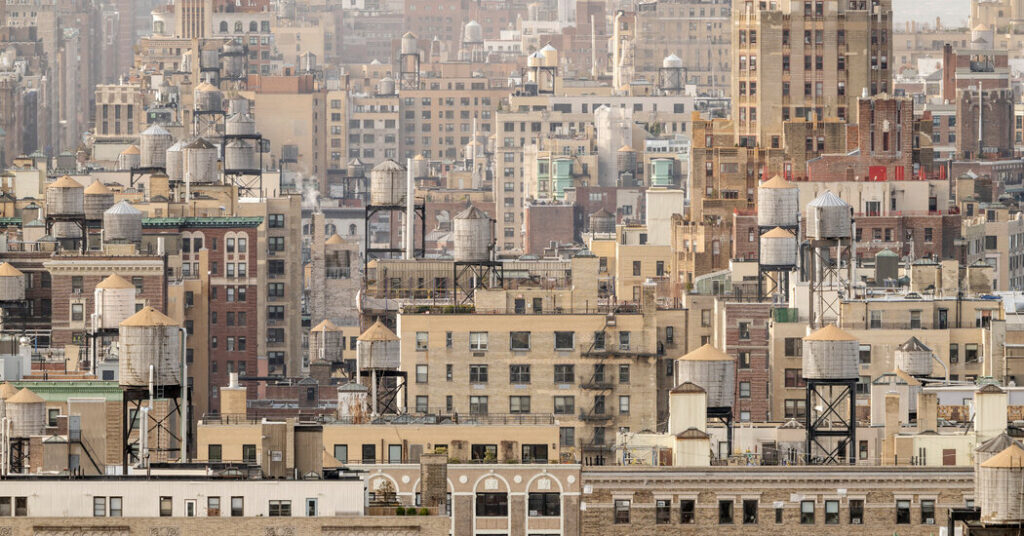
Ms. Brecht was just a tenant in one of the building’s 7 rent-stabilized apartments. When she moved into her apartment on West 89th Street in 1979, she was surrounded by other long-term tenants. But the strangers were boarders who had found the place through Airbnb and other short-term rental websites. By 2024, Ms. Brecht, 71, was the last tenant left.
“I had no idea who they were,” she said. “I would say to them: ‘Well, I’m a tenant here. I’m not a hotel guest.’ It was absurd.”
The city filed a lawsuit on Friday against Mark David Militana, the owner of Ms. Brecht’s building and another brownstone on the same block, claiming that he had illegally replaced long-term residents of the rent-stabilized apartments and had begun to offer them as short-term hotel rooms.
Of the nine units converted to short-term rentals in the two buildings, according to the Mayor’s Office of Special Enforcement, seven remain listed with the city as rent stabilized. By illegally renting units by the night, Mr. Militana has netted $550,000 since 2023, according to the lawsuit.
“Rent-stabilized apartments are critical to our affordable housing stock,” said Christian Klossner, the executive director of the Mayor’s Office of Special Enforcement, which led the investigation. “This person chose to maximize his profit to the detriment of New Yorkers.”
Mr. Militana could not be reached by phone or email on Friday night.
Neighbors and tenants have complained about short-term renters at the brownstones at 24 and 44 West 89th Street for years. One complaint from 2022 is described in a city database simply as “ILLEGAL HOTEL.” The escalation of the legal fight against the owner comes as Mayor Zohran Mamdani begins to address his campaign promises to make New York more affordable, including executive orders aimed at faster construction of new housing and his appointment of a longtime affordable housing advocate to lead the city’s Department of Housing Preservation and Development.
The buildings on 89th Street contain a total of just 18 units. But the lawsuit to return them to affordable, long-term rentals represents an early step toward one of Mr. Mamdani’s core campaign pledges: freezing the rent on nearly one million rent-stabilized apartments in the city.
“Most importantly, we want to get these units back into the rent-stabilized housing stock, and get tenants back into them,” Mr. Klossner said.
After a change to city law in 2022 forced Airbnb and other short-term rental companies to remove rental listings from their websites that were not registered with the city, the lawsuit states, Mr. Militana created his own website, Brownstonehospitalitysuites.com, to market the units directly to travelers. To try to avoid detection by the authorities, the lawsuit said, Mr. Militana gave different addresses — one belonged to a private school next door, another didn’t exist — which often led overnight guests to ask tenants like Ms. Brecht for directions to apartments they couldn’t find.
One fake address: “Central Park West, 10024, New York.”
Each unit cost $280 a per night to rent, according to the website created to market them, which was taken down hours after the lawsuit was filed. The listing, titled “Amazing Brownstone Apartment just off Central Park,” advertised a “Beautiful, newly-renovated 1 bedroom / 1 bathroom apartment in our historic brownstone in the Upper Westside.” Photos showed a well-appointed kitchen and a living room with modern art on the walls and double-height windows facing the street.
Such amenities were never offered to other long-term tenants, said Ms. Brecht, who spent years showering at friends’ houses or her gym because her landlord refused to fix the bathtub or the bathroom sink, which filled with sewer sludge every time she ran the water.
One of her complaints, lodged with the Buildings Department, described a light fixture in the ceiling of her apartment that regularly filled with water. She could use the stovetop, she said, but the oven was off-limits because of a rodent infestation. The landlord has since made some improvements.
“I was living like an animal,” she said.
On a block of lovely brownstones, the two owned by Mr. Militana on West 89th Street do not stand out. But together they have been cited for 115 violations, 95 of which remain open, according to a database operated by the Department of Buildings. The buildings have been the subject of 75 complaints, including calls to 311 by neighbors with reports of transient guests, a worker using a jackhammer too early in the morning and renovations conducted without permits.
The city’s lawsuit seeks $4 million in damages. The city plans to ask a State Supreme Court judge in Manhattan to appoint a receiver, who would be in charge of repairing the buildings and returning the units to compliance with rent stabilization laws, said Noah Pransky, a spokesman for the Office of Special Enforcement.
Christopher Maag is a reporter covering the New York City region for The Times.
The post Landlord Accused of Offering Rent-Stabilized Apartments as Hotel Rooms appeared first on New York Times.