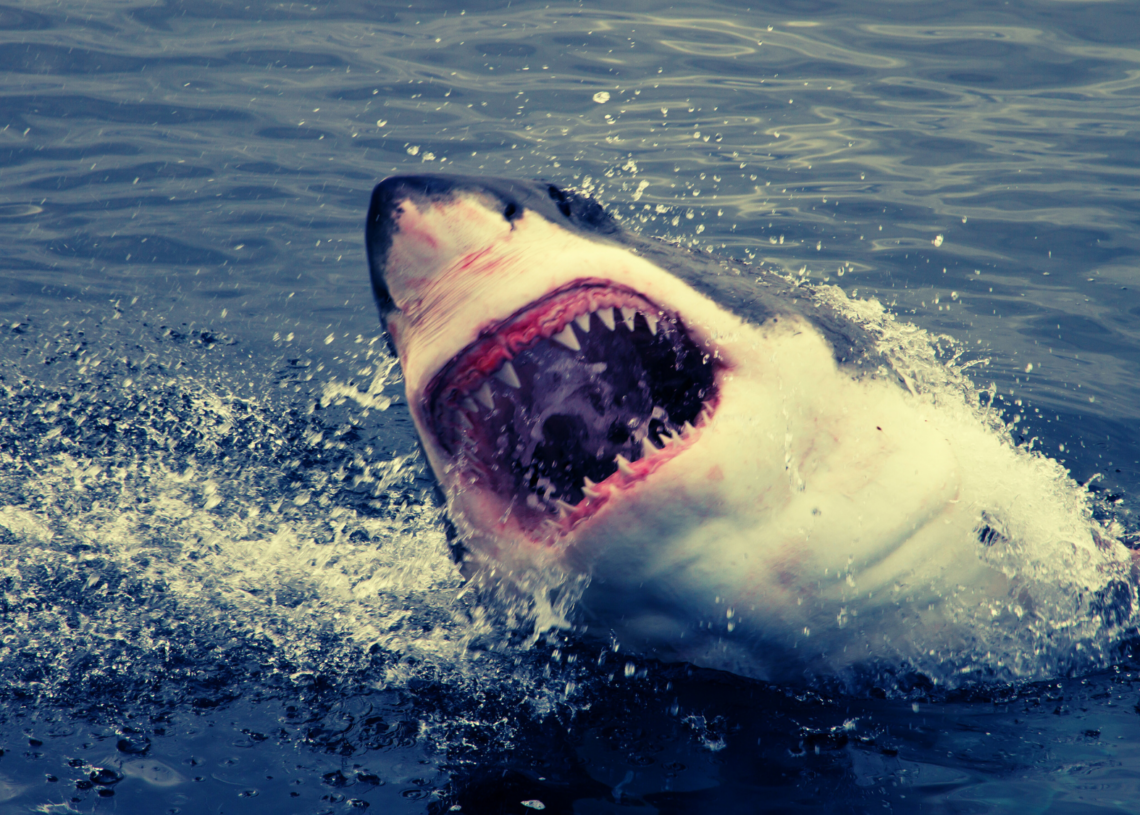
Shark panic sells. It sells beach-town merch, clicky local news alerts, and entire weeks of TV programming built around the idea that the ocean is basically a murder waiting to happen.
We keep returning to it because it scratches two very human itches at once, fear and fascination. We buy shark-tooth necklaces, binge-watch hours of Shark Week, and pretend we wouldn’t immediately cry in a snorkel mask if something brushed our ankle. We love a monster we can view from the safety of a screen.
A lot of this modern obsession traces back to one blockbuster summer in 1975. Jaws didn’t invent shark fear, but it certainly packaged it, scored it, and handed it to us in a format our brains can’t resist, a predator with personality. The two-note theme still lives in people’s heads, and it kicks in the second they imagine a dark shadow in the water.
Even Steven Spielberg has acknowledged the cultural wreckage. In a 2022 interview, he said, “I truly, and to this day, regret the decimation of the shark population because of the book and the film.”
Here’s the awkward part. The numbers don’t support the cultural hysteria at all. The International Shark Attack File confirmed 47 unprovoked shark bites worldwide in 2024. Four were fatal. That’s not nothing, and anyone who’s been bitten has every right to be shaken for life. But it doesn’t match the constant bloodbath suggested by the way we talk about sharks, or by the way we film them like aquatic serial killers.
NOAA Ocean Service pretty much tells people to calm down: “people are not part of their natural diet,” and sharks would rather eat fish and marine mammals. Most of the time, bites are bad mistakes, not targeted attacks. Maybe it was curiosity or confusion. Or maybe they saw a flailing limb in murky water. The shark takes off, but the story turns into the myth we’re all obsessed with.
NOAA also says that social media and sensational reporting can make rare events seem nonstop, because shock-driven clips travel faster than context. And context is boring. Rows of jagged teeth are not.
Meanwhile, sharks are doing a job the ocean depends on, helping keep marine food webs from spinning out of control. They’ve been here far longer than us, and they’re dealing with threats that don’t get cool theme music, like overfishing and habitat loss. If you want a villain, pick something with a trawler.
Jaws gave us an iconic movie and multiple generations of beach paranoia. The sharks don’t deserve it.
The post Sharks Aren’t the Villains We Think They Are (and How ‘Jaws’ Ruined Everything) appeared first on VICE.