There are some songs that get stuck in the TikTok hive mind. When they go viral, they swarm the app with covers and remakes, finding uses that stray far from their source material. They create a common language among a virtual community; they have a tendency to lend their writers fame almost overnight. For a relatively durable moment in 2020, one of those buzzy songs was “Little Miss Perfect.”
It’s a bouncy ditty about a perfectionist teenage lesbian denying her sexuality: “Straight hair, straight A’s/ Straightforward, straight girl/ Little Miss Perfect, that’s me.” Originally performed by Taylor Louderman of “Mean Girls” (in a YouTube video that has over 10 million views), the song took off in an early TikTok landscape dominated by young theater lovers. It’s been the soundtrack to fan-made edits, the inspiration for countless riffs and spin-offs, and used by high-schoolers to come out as LGBTQ+ to their parents during theater showcases.
But it was a stand-alone track, not part of a cast recording for a full musical. Fans were left wondering what happened to the do-gooder protagonist. “Petition for the writer of this song to give us the full show because I need closure for this character,” reads one viral TikTok.
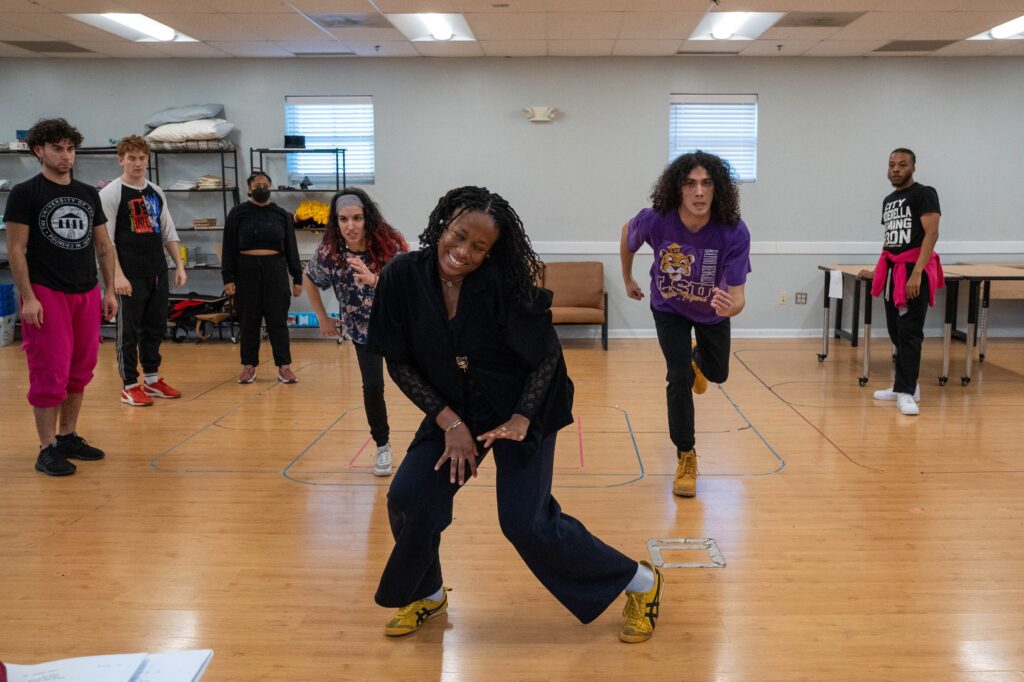
Half a decade later, that writer — 28-year-old composer Joriah Kwamé — has heeded the call. The musical, also titled “Little Miss Perfect,” has its world premiere at Olney Theatre Center this month, in association with the production company Straighten Your Crown, which brought the recent “Cabaret” revival to Broadway and Ralph Fiennes as Macbeth to Shakespeare Theatre Company. It’s part of a small group of shows that have roots on TikTok — and the first professional production The Post could find to be brought to physical fruition.
Remember the pandemic-era “Ratatouille: The TikTok Musical”? What began as a joke on the app snowballed into a fully fledged show existing in innumerable two-minute clips, complete with a director, puppets and Disney-fied compositions — and later staged as a virtual benefit concert. Or “The Unofficial Bridgerton Musical,” which turned Season 1 of the Regency-era show into a concept album developed on TikTok before a Netflix copyright lawsuit put it to bed?
Both gained popularity in much the same way — and around the same time — as the song “Little Miss Perfect.” In 2019, when Kwamé was a senior in college, the song was accepted into the Write Out Loud competition, a showcase for up-and-coming composers to have their work performed by Broadway stars — which led to the Louderman video.
Parts of the melody had been kicking around Kwamé’s head since middle school, but he was still surprised by its virality — and the calls to flesh it out. At first, he was adamant it was an independent song.
“Then it occurred to me that musicals are what I love, and what are the odds that the world is asking you to expand on something that you wrote?” he said during a recent rehearsal day at Olney. He had just wrapped a run-through of an additional song he had recently written, and his music team had transcribed, in less than 12 hours. “And so I thought about it and I was like, ‘Okay, if I’m going to do this, I have to find my way in.’”
He started a YouTube channel (his first video was titled “I WROTE LITTLE MISS PERFECT!”) and rapidly accrued 30,000 followers. He found that sharing works in progress was something of a beta test.
“I was able to instantly see a reaction to them,” he said. “When you’re in New York doing a workshop, you spend weeks rehearsing and you do a presentation. It costs millions of dollars. They invite producers who tell you what they think or if they want to produce it. I got to do like a mini version of that where I would post stuff and people would comment. The people who I was writing it for.”
He spent the rest of pandemic lockdowns writing a demo album and eventually posted a song a day until it was fully released. He moved to New York City and met an interested producer. He incorporated his followers into the plot; the main character’s love interest is Filipina because Quezon City is his second most popular city on YouTube.
The result, premiering at Olney, follows Noelle (played by Broadway “Lion King” alumna Leanne Antonio), a guarded and sensitive Black girl in a fictional Midwestern town not unlike Kalamazoo, Michigan, where Kwamé grew up. Her mission to win the class presidency and attend her dream college is confused by the arrival of a female foreign exchange student she develops a crush on. “It’s a journey to her redefinition,” Kwamé said.
It’s also an explicit effort to write the characters and stories that didn’t exist when he was a tween getting into the craft. Like ones with a Black lesbian protagonist. “This is way bigger than me, this is way bigger than musical theater,” Kwamé said. “Having roles that they relate to and a story that they relate to, that’s modern.”
Though “Little Miss Perfect” grew completely from an organic viral moment, it’s part of a broader trend of social media having an effect on what appears on stages. Take “Six,” which owes much of its success to TikTok users making videos with audio clips from its soundtrack, finding the cast album on Spotify and becoming (sometimes-paying) fans of the show. Or “Be More Chill,” which took off online two years after a small regional run in New Jersey in 2015 — and landed on Broadway. Even “Slam Frank,” a satirical off-Broadway hip-hop musical that ran last year, was inspired by a viral Twitter thread about Anne Frank.
There’s also “The Great Gatsby,” which received less-than-stellar reviews during its tryout run at New Jersey’s Paper Mill Playhouse. According to Trevor Boffone, author of “TikTok Broadway: Musical Theatre Fandom in the Digital Age,” the popularity of its behind-the-scenes videos helped send it to Broadway.
“What these people are doing is building an audience before they even have to sell a ticket,” he said in a phone interview. “That way, you have a potentially massive group of people who are excited about your show before the show exists.”
Broadway historian and “Be More Chill” producer Jennifer Tepper says social media has the democratizing power to identify the popularity of even a single song, bring it to the attention of gatekeepers and leverage it into a full production. But she also notes the ways Broadway has always been democratized. Writers of songs that were popular on the radio were invited to write musicals. Once shows opened, some got “that new lease on life,” she said, after cast albums gathered fans.
TikTok is the latest in a long history of media advances to attract new fans to musicals. Tepper points to “Pippin” as being among the first shows to advertise on television and “Rent” being an early adopter of subway car advertising. “It’s these shows that end up at the crux of this new moment and figure out how to make Broadway follow along with what’s happening in the world at large that take advantage of it. They really end up having a moment.”
Finding audiences for shows without existing intellectual property has, especially recently, been a struggle for theater producers. But for Nicole LaFountaine, the founder of the “Little Miss Perfect”-backing production company Straighten Your Crown, the original song “has been the IP.”
“It’s the way that we’ve been able to entice, say, other investors and producers to come on board,” she said. “To say, ‘Look, here are millions and millions of people who have interacted with this song, and they want to see a show.’” With eyes set toward New York City, LaFountaine is hopeful this run in Maryland is just the start, as she’s seen interest from other theaters.
But back at rehearsal, Kwamé wasn’t thinking past the Olney production, which will open for a month-long run on the theater’s 429-seat main stage. He was busy, eyes closed, foot tapping, listening to Antonio bring his lyrics to life.
“Three weeks from now, it’s gonna soar,” she said after a run-through of that new song, which will slot into the show’s climax.
Kwamé responded: “It already is.”
Little Miss Perfect
Olney Theatre Center, 2001 Olney Sandy Spring Rd., Olney. 301-924-3400. olneytheatre.org.
Dates: Feb. 8 through March 8.
Prices: $42-$113.
The post How a viral TikTok song with millions of views became a whole new musical appeared first on Washington Post.