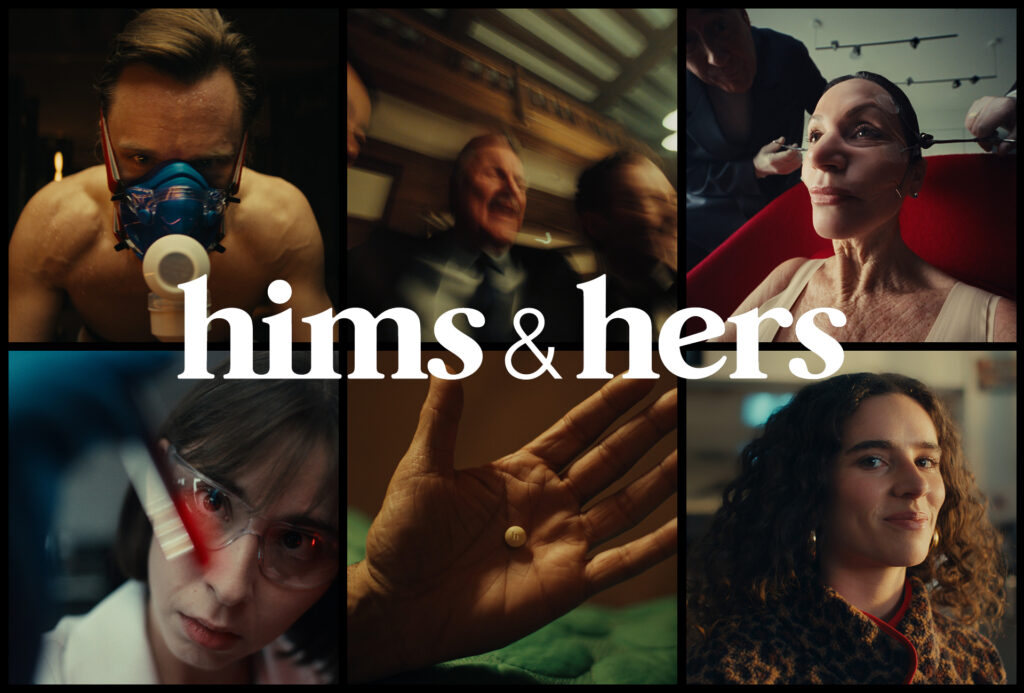
A telehealth company that generated buzz last year with a defiant Super Bowl ad hawking weight-loss drugs is back for this year’s championship with a socially charged pitch around longevity.
“Rich people live longer,” intones the artist Common, as the spot for Hims & Hers advises that you, too, can get access to the same “custom-formulated peptides,” hormone therapy and other wellness products as the wealthy.
The ad is part of Hims & Hers’ ambition to turn the conventional, doctor-driven, insurance-based medical system on its head by giving consumers a menu of on-demand tests and treatments to improve their health.
Hims & Hers is also promoting a new product to the massive NFL audience: a cutting-edge blood test designed to detect more than 50 types of cancer before symptoms show up. But the test’s reliability is questionable, with its manufacturer cautioning that it should be followed by additional medical procedures to diagnose cancer.
The ad features a man pulling out his phone as he waits in a car, checking a screen that reads “No cancer signal detected.” He smiles and closes his eyes in an expression of relief. That portrayal raises what some experts say is a risk of giving patients a false sense of security.
A large clinical trial showed that the test, called Galleri and based on a single blood draw, is not always reliable — especially on its own. It missed more cases of cancer than it found, according to Eric Topol, director of Scripps Research Translational Institute, who analyzed the trial results on his Substack in October.
“A lot of people, they might not be so savvy about interpreting the test,” Topol said in an interview. “They get the result ‘negative, no cancer detected.’ Why would they chase that down further?”
The test works by scanning for tiny DNA fragments, shed by cancer cells, that float in the blood, and it can pinpoint the specific organ or tissue where the cancer signal originates. Hims & Hers will make the prescription test available for consumers who subscribe to its $350 lab testing service — but it will cost an additional $700, the company said, a roughly 25 percent discount from the manufacturer’s list price.
Topol said Galleri can be a good tool particularly for people who are at high risk of cancer. However, “if it’s too broad a use, it’s going to be a waste of a lot of people’s money, and they’re going to get results that are misleading,” he said.
The manufacturer of the test, Grail, has said that adding it to standard screening for breast, cervical, colorectal and lung cancers led to a sevenfold increase in cancers detected.
Hims & Hers has invested directly in Grail, a publicly traded firm based in California. Grail has sold more than 420,000 Galleri test kits since 2021, according to a recent securities filing. Last week the company asked the Food and Drug Administration to approve the test under its most stringent regulatory category for medical devices and diagnostics.
The test makes a prediction, not a diagnosis. In a clinical trial of more than 23,000 participants who were not suspected of having cancer, Galleri rarely found a cancer signal, according to results that Grail posted in October. Of the 216 participants flagged by Galleri, about 60 percent were diagnosed with cancer within 12 months. That was a better predictive rate than in a previous trial, but it still meant that the test’s positive cancer signal did not result in a cancer diagnosis about 40 percent of the time.
Patrick Carroll, chief medical officer for Hims & Hers, acknowledged in an interview that a negative signal “doesn’t necessarily mean you’re free of cancer.” The company’s news release on Galleri states that “false positive and false negative results can occur.”
Those nuances are not included in the 60-second spot, in which Common narrates how rich people have health care “that comes to them” as a woman reclines on a sun-dappled couch, green smoothie within reach, while a health care worker gives her an infusion. Then the background music shifts from a tinny piano riff to an up-tempo beat and throbbing synthesizer as Hims & Hers makes its pitch: “The same science, the same access, no connections required.”
Grail says Galleri is recommended for adults “with an elevated risk of cancer,” which it considers to include people who are at least 50 years old. Carroll said Hims & Hers will tell customers whom the test is made for but won’t limit who can get a prescription. Some cancers, like prostate and colorectal cancer, can strike earlier than age 50, he pointed out.
“We’re really empowering the patient more to take control of their own health,” he said.
Though the test is made in a federally certified lab, Galleri — like many tests on the market — hasn’t been cleared by the FDA as safe and effective. Grail is seeking to expand access by winning the agency’s blessing, which is typically a prerequisite to getting large insurers to cover a test.
Andrew Dudum, CEO of Hims & Hers, described the company’s investment in Grail in personal terms, posting on X in October that his father was diagnosed with Stage 4 colon cancer at age 38. “The ability to detect cancer in its early stages was a dream when I was a kid,” he wrote. “It was what I wanted more than anything after my dad was diagnosed.”
The post Super Bowl spot will promote a cancer test that can produce false results appeared first on Washington Post.