Times Insider explains who we are and what we do and delivers behind-the-scenes insights into how our journalism comes together.
In reporting on the resurgence of a word long regarded as a slur, we faced a challenge: Could we write about the inappropriate term — employed recently by, among others, the president of the United States — without using it?
Even here, in this Times Insider piece exploring that challenge, we again face a difficult question. How do we write about writing about a word that should be avoided?
The word is “retarded,” and it has been understood to be a slur against people with intellectual disabilities for nearly two generations. This is not news.
What is news is that after a steady decline in its usage, following a national campaign and federal legislation, the word has made a defiant comeback in some circles, in part because of its use by people of prominence.
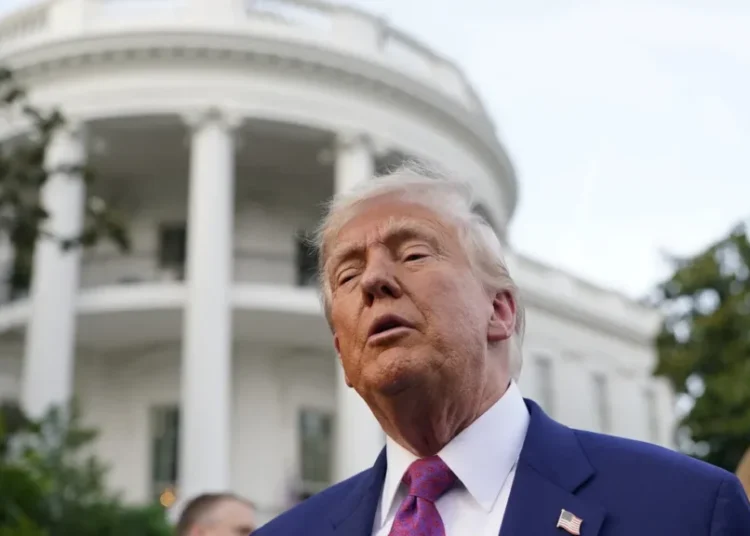
In recent months the word has been resurrected by Elon Musk, the musician Kid Rock and the Fox News personality Greg Gutfeld. In a post on Truth Social in November, President Trump called Gov. Tim Walz of Minnesota “seriously retarded,” and last month Harmeet K. Dhillon, the official overseeing the Justice Department’s Civil Rights Division, used “retards” in a social media post. I found this particularly striking, since the division’s responsibilities include protecting the rights of people with disabilities.
I have occasionally written about intellectual disabilities, including in “The ‘Boys’ in the Bunkhouse,” an article about the decades-long exploitation of dozens of men taken from institutions in Texas to work at a turkey-processing plant in Iowa. And I remember the word being bandied about in the schoolyards of my childhood in the early 1970s, particularly by bullies. Even then, many children avoided it; too hurtful.
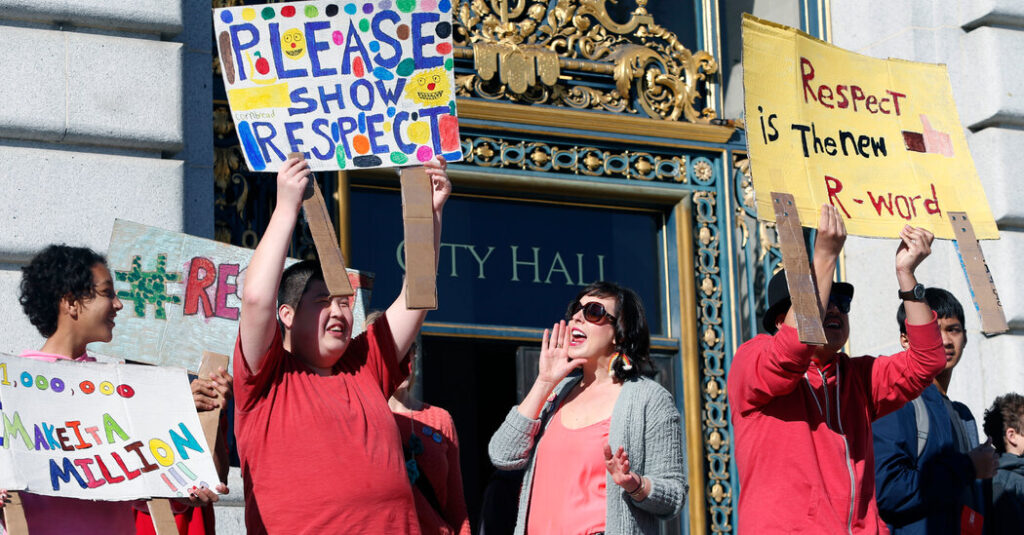
My colleague, Sonia Rao, 25, writes about disability issues as part of a yearlong fellowship at The Times for early career journalists. She remembers being in school when the Special Olympics campaign called “Spread the Word to End the Word” was at its peak. (A red bracelet bearing that phrase sits in a drawer in her childhood bedroom.) And she was surprised when her cousin dropped the word at a brunch this past Thanksgiving without realizing it was a slur.
Trump Administration: Live Updates
Updated
- Trump offers a new explanation for Gabbard’s presence at an election center raid.
- TrumpRx, a website that will connect patients directly with drugmakers, will go live on Thursday.
- Marco Rubio has given up his role as the acting head of the National Archives.
We teamed up. We scoured posts on Mr. Musk’s social media platform X — where use of the word has increased exponentially — researched the history of disability language and conducted more than a dozen interviews.
Sonia felt more than a little uncomfortable discussing the word during interviews with several people with intellectual disabilities. But they all said they understood the need for the conversation, and recounted how it stung to hear the word — even when it was not directed at anyone with a disability.
We then sat down to write, only to grapple with a few challenges: When, how and how often should we use the word in a piece exploring its power to offend?
We did not want to simply paraphrase what Mr. Trump or Ms. Dhillon had written. We also quoted the podcaster Joe Rogan and Kid Rock to demonstrate the seemingly gleeful celebration of the word’s resurgence in some quarters. Mr. Rogan declared the word’s return “one of the great culture victories.”
Quoting these uses strangely seemed both enough and too much.
In early drafts, we used “R-word” as a replacement for the word itself. But repeatedly writing that seemed performative and almost parodic at times, so we cut back on its frequency as much as we could. The Times also discourages reporters and editors from using constructions like that, with asterisks and dashes, as “a thin disguise for a vulgarism.”
Ms. Dhillon and others did not respond to our questions about why they were using a term that has long been acknowledged to offend, particularly those from historically marginalized communities. But defenders have said in various public arenas that not being able to use a certain word is a manifestation of cultural “wokeness” and an infringement of free speech.
To which Katy Neas, the chief executive of the Arc of the United States, a disability rights organization, said: “It’s language used by bullies to bully.”
Our article generated more than 700 reader comments, as well as many emails. A majority of the responses lamented the word’s resurgence and supported its removal from the lexicon.
But more than a few people, especially on X, mocked the article and used the word to try to insult us, without success.
Dan Barry is a longtime reporter and columnist, having written both the “This Land” and “About New York” columns. The author of several books, he writes on myriad topics, including New York City, sports, culture and the nation.
The post How Do You Write About a Slur? appeared first on New York Times.