You’re reading The Checkup With Dr. Wen, a newsletter on how to navigate medical and public health challenges. Click here to get the full newsletter in your inbox, including answers to reader questions and a summary of new scientific research.
Last week, I wrote about the risks of Amanita muscaria, a psychedelic mushroom that roughly 3.5 million American adults — about 1 in 100 — used in 2025, according to new data from Rand. That number is notable given that the largely unregulated products have no proven medical benefit and pose significant harms.
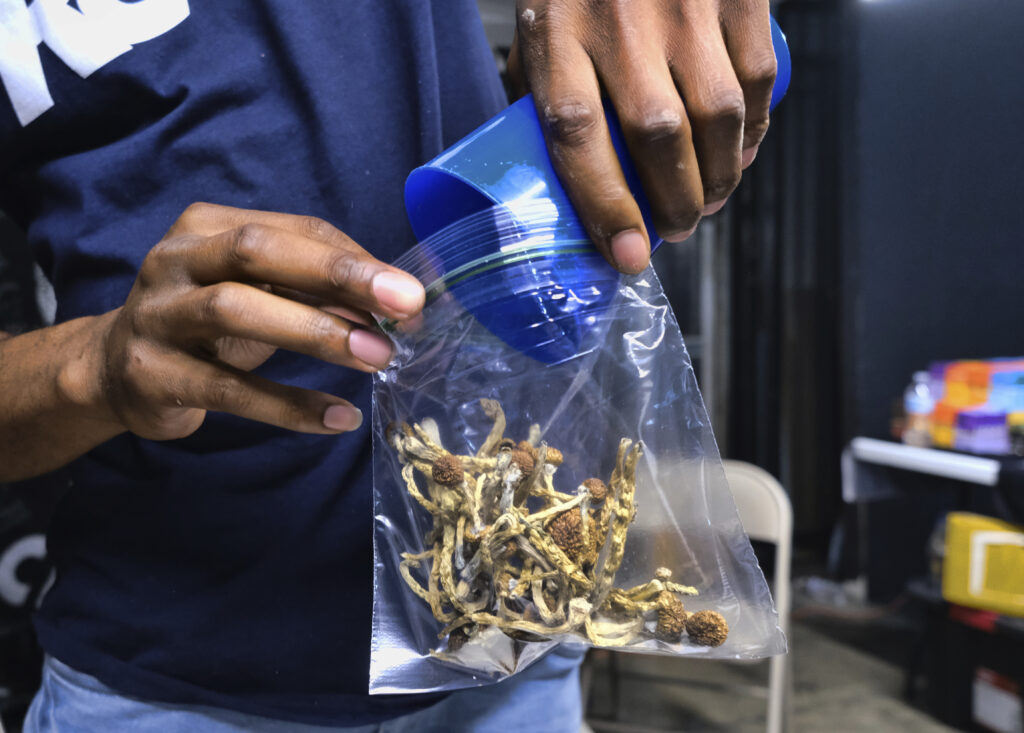
The Rand report surfaced another — equally troubling — finding that caught my attention: An estimated 10 million adults are now taking small, repeated doses of psychedelic drugs such as psilocybin, MDMA and LSD, often referred to as microdosing.
Beau Kilmer, co-director of the Rand Drug Policy Research Center and a co-author of the new report, told me there is no agreed-upon standard for what constitutes a microdose. “We defined it as taking a fraction of a regular dose that’s much lower than what you take if you were intending to trip or hallucinate,” he said. Use is often repeated over days, weeks or even months.
In principle, almost any drug can microdosed. I recently reported on a trend in which people take less-than-recommended amounts of GLP-1 obesity medications. Some do so for financial reasons or to reduce side effects. Others microdose after reaching their desired weight, believing they can maintain their progress with less medication.
I was struck by the range of reasons people report microdosing psychedelics. The Rand study found that a common motivation is self-treatment for depression, anxiety and other mental health conditions. That impulse is understandable though worrisome.
It is true that psilocybin and MDMA have shown real promise in randomized controlled trials to treat severe depression and post-traumatic stress disorder, but they are not yet approved treatments for these conditions. Moreover, those trials were conducted under tightly controlled conditions: Participants underwent careful medical and psychiatric screening; psychedelic dosing occurred in supervised clinical settings; treatment was always paired with talk therapy; and participants received close follow-up to manage complications.
None of that applies to people who microdose on their own. Jonathan Alpert, chair of the Department of Psychiatry and Behavioral Sciences at the Albert Einstein College of Medicine, told me that without careful evaluation and monitoring, psychedelic exposure can worsen psychotic or manic symptoms in some people. These substances hold promise, he said, but they “need to be engaged with the same scientific rigor and thoroughness as any novel treatment.”
The research simply has not proven that microdosing psychedelics is effective for treating mental health conditions. Moreover, Alpert explained, microdosing might prevent people from pursuing more evidence-based treatments that are more beneficial.
Another concern is that people often do not know what they are taking. Psilocybin is a controlled substance that remains illegal to distribute in all but two states, yet products claiming to contain it are readily available in vape shops, gas stations and across the internet. The same is true for other commonly used psychedelics, which are largely illegal and whose production and sale occur with little oversight.
Because potency and dosing are inconsistent and unpredictable, someone wishing to take a dose that does not cause hallucinations might end up consuming far more than expected. Products may also contain other undisclosed drugs, increasing the risk of unintended and potentially serious side effects.
None of these concerns seem to be curbing consumer interest. To the contrary, a JAMA Network Open study found that internet searches for psychedelic microdosing increased more than 13-fold between 2015 and 2023. Indeed, Kilmer explained, many who microdose are not trying to treat a diagnosed illness, but are instead hoping to enhance mental sharpness and boost creativity.
Here again, the data do not support the claims. A 2026 meta-analysis of 14 studies found no overall cognitive benefit from microdosing psychedelics. In fact, users showed a significant decrease in cognitive control.
People who choose to use these substances for lifestyle enhancement should understand that the current evidence does not back up the promised effects. If the goal is better mood and improved mental sharpness, they should consider evidence-based approaches, including regular physical activity and strong social connections.
The post The alarming trend of psychedelic microdosing appeared first on Washington Post.