Lost Science is an ongoing series of accounts from scientists who have lost their jobs or funding after cuts by the Trump administration. The conversations have been edited for clarity and length. Here’s why we’re doing this.
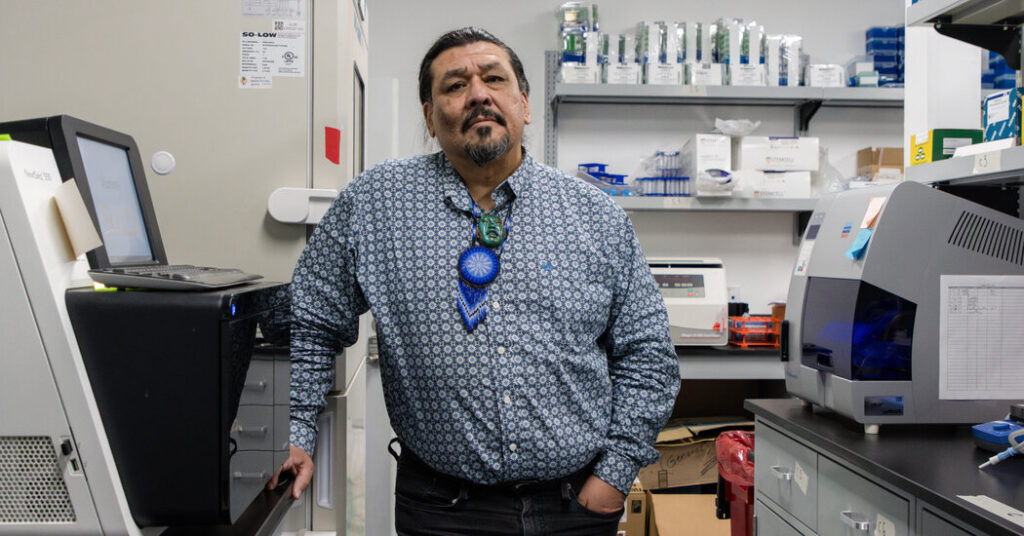
Joseph Yracheta: The Native Biodata Consortium is the first nonprofit data and sample repository within the geographic bounds and legal jurisdiction of an American Indian nation, on the Cheyenne River Sioux Reservation in Eagle Butte, S.D.
NativeBio participated in a program created by the National Institutes of Health for studying Black and Native communities, which suffered the most during the Covid-19 pandemic. We started work in February of 2024, building a server network to share Covid-19 data within the jurisdictional security of each tribal nation. The most common data elements were survey questions, like age, location, education, how many times you caught Covid-19 and how many times you got vaccinated.
There is a dearth of health data for Indigenous communities. Our network would have helped existing data get interpreted and implemented correctly. The survey data was to be put in a virtual container so scientists could access it. As users, they would be contractually obligated to follow the laws of each tribal nation. That model could then be modified for higher-risk genetic data.
The official notification came in July. Out of our $9 million grant from the N.I.H., we lost $6 million. It all went away.
We went to major research conferences and told everybody what we built, to spread awareness of the issue. We were building tools to make a fairer relationship between tribes and the federal government, and they pulled our access to the money.
Indigenous genomic data is unique and valuable, and tribes should be able to self-determine how their data gets used. But not all tribes have the same rights, and many don’t trust the government because there have been a lot of research harms in the past.
NativeBio’s mission is to get Indigenous data repatriated to one spot. And we’re going to continue that mission using the tools, equipment and contractual language that we gained before the grant money was lost.
Right now, we’re going to philanthropists and tribes for funding. We’re staying away from federal dollars because we don’t trust them, especially right now.
Joseph Yracheta, of the P’urhépecha and Rarámurì peoples, is a biomedical researcher and the executive director of the Native Biodata Consortium.
Katrina Miller is a science reporter for The Times based in Chicago. She earned a Ph.D. in physics from the University of Chicago.
The post He Built a Server to Protect Indigenous Health Data appeared first on New York Times.