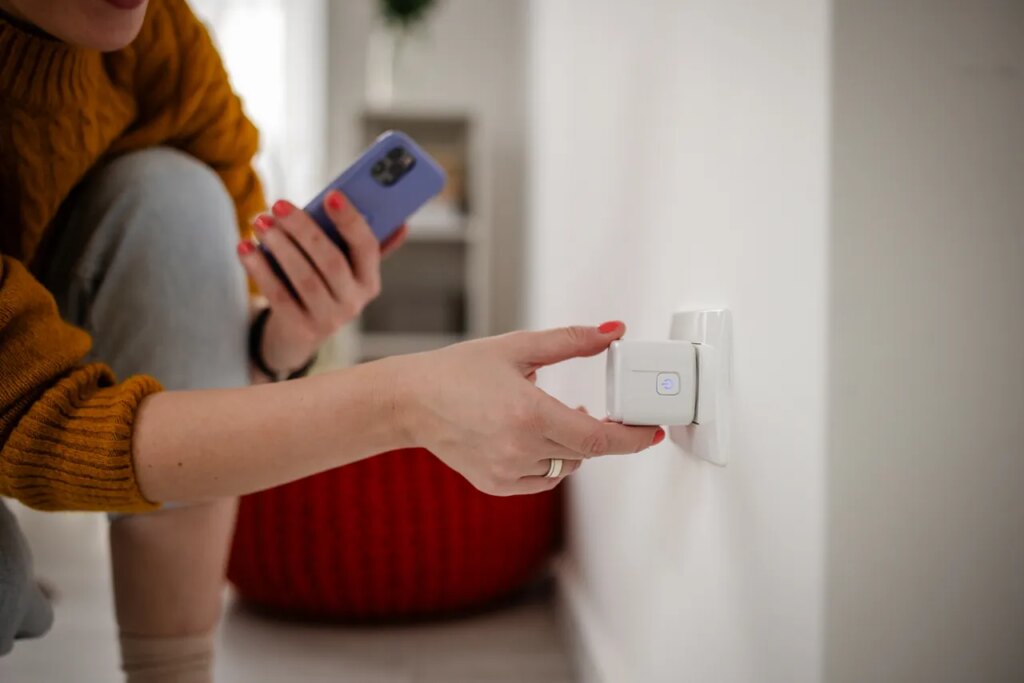
Thread is a protocol designed to connect smart home devices in a wireless mesh network. It works much like Wi-Fi but requires less power. With Thread, devices from any manufacturer can create a separate low-latency mesh and share encrypted data. Thread enables supported devices to connect and speak to each other without any configuration or management on your part, and it works locally without going back and forth to the cloud.
You can use various application layers on top of Thread, including Matter. I go into more detail about the unifying smart home standard in my Matter guide. If you’re setting up a smart home, you’ll likely run into terms like “Thread” and “Matter” now that the technologies are baked into more and more products. Here’s what you need to know.
Table of ContentsLargeChevron
- What Is Thread?
- Pros of Thread
- Cons of Thread
- Thread Border Routers
- A Brief History of Thread
- How Does Thread Work With Matter?
- Thread vs. Zigbee
What Is Thread?
Thread is a way for smart home gadgets to connect and share data. It is a low-power, low-latency, low-bandwidth alternative to Wi-Fi. Thread is especially important for small gadgets like water leak detectors, motion sensors, smart locks, smart shades, and smart bulbs. Think devices that only need to connect intermittently and have limited power and bandwidth needs.
Based on the Institute of Electrical and Electronics Engineers (IEEE) 802.15.4 radio technology on the 2.4-GHz spectrum, Thread is designed to connect low-power devices to a Wireless Personal Area Network (WPAN). Thread works in much the same way as Wi-Fi and Bluetooth (Wi-Fi is IEEE 802.11 and Bluetooth is IEEE 802.15.1). Several protocols are based on the same IEEE 802.15.4 tech, including Zigbee, WirelessHART, MiWi, and a few others.
Pros of Thread
- Low power requirements (far lower than Wi-Fi)
- Low latency for fast response times
- Self-healing network (you can drop and add devices easily without breaking the network)
- No proprietary hub required (though you do need a Thread Border Router to connect the Thread mesh to Wi-Fi)
- Very scalable and can handle hundreds of device connections
- Supports AES-128 encryption and password-based authentication
- IPv6 (Internet Protocol version 6) support for direct device addressability using IP addresses
Cons of Thread
- High-bandwidth devices (security cameras) can’t use it
- Support for the latest version is limited, so the current landscape is fragmented
- The range and number of devices that can connect are still limited
- Old Thread devices can’t always be updated to new versions
- A Thread Border Router is required to connect to the internet and cloud services
Thread Border Routers
While Thread enables supported devices to form a mesh, you need a Thread Border Router to connect that mesh to your Wi-Fi, Ethernet, or any other home network. Without this connection, the Thread mesh is closed and cannot connect to the internet. Most Thread Border Routers are also Matter controllers, and you have multiple Thread Border Routers in your setup. Here are some of your options:
- Amazon Echo (4th Gen)
- Amazon Eero 6, 6 Plus, Pro 6E, Eero 7, Pro 7, Max 7, PoE 6, and PoE Gateway
- Amazon Echo Show 8 (3rd Gen), Echo Show 15 (second-gen), Echo Show 21 (second-gen), and Echo Hub
- Apple HomePod (2nd Gen)
- Apple HomePod Mini
- Apple TV 4K (2nd Gen and 3rd Gen with Wi-Fi + Ethernet)
- Google Nest Hub (2nd Gen)
- Google Nest Hub Max
- Google Nest Wifi and Nest Wifi Pro
- Google TV Streamer 4K
- Samsung SmartThings Station, Hub v3, and Hub Dongle
- Samsung Smart TVs (CU8000, CU7000, NEO QLED 8K and 4K)
- Aqara Smart Hub M3
- Homey Pro
A Brief History of Thread
Originally developed by Nest (before the Google acquisition), Thread has existed since 2011. Devised as a power-efficient mesh networking technology for internet-of-things (IoT) products, Thread gathered pace after the 2014 formation of the Thread Group, which develops the technology and drives its adoption as an industry standard. Founding members like ARM, Samsung, Google, and Qualcomm have been joined by Apple, Amazon, and many other big companies over the years.
The Thread specification is available for free, but there is an end-user license agreement (EULA) for adopters. Thread has evolved, with new versions and features rolling out every couple of years. New versions are backward compatible, so new devices can work alongside older ones. Sometimes older Thread devices can be upgraded to the latest version, but not always.
The latest version, Thread 1.4, landed in 2024, bringing credential sharing, which allows for networks formed in different ecosystems (such as Apple Home, Google Home, Amazon Alexa) and different Thread Border Routers to form one big mesh, instead of several separate meshes. Unfortunately, although the Thread 1.4 specification is available, it takes a while for manufacturers to adopt it and go through certification.
To learn more about Thread, check out the official Thread Group website.
How Does Thread Work With Matter?
Thread is what enables devices to connect to each other, and Matter is the language they use to communicate. Thread actually supports various application layers, like Matter, that sit on top. It can even support multiple application layers simultaneously. Matter uses Thread, Wi-Fi, and Ethernet for device connectivity. If the device is battery-powered and bandwidth requirements are low, it will pick Thread. For high-bandwidth and always-on (plugged-in) devices (like security cameras), it will choose Wi-Fi. Matter also uses Bluetooth LE for the initial setup of some devices. You can find out more in my Matter guide.
Thread vs. Zigbee
Zigbee has been around longer than Thread and is based on the same wireless technology. It can also create robust mesh networks, features secure encryption, and is great for low-power devices. Because Zigbee has its own application and network layers, it requires a proprietary hub that acts as a gateway for connections, whereas Thread is IPv6, so it can seamlessly integrate with existing IP-based networks through any Thread Border Router. Thread is also lower latency than Zigbee, so smart home devices respond more quickly.
Power up with unlimited access to WIRED. Get best-in-class reporting and exclusive subscriber content that’s too important to ignore. Subscribe Today.
The post What Is Thread? Matter’s Smart Home Network Protocol, Explained appeared first on Wired.