This is an edition of The Atlantic Daily, a newsletter that guides you through the biggest stories of the day, helps you discover new ideas, and recommends the best in culture. Sign up for it here.
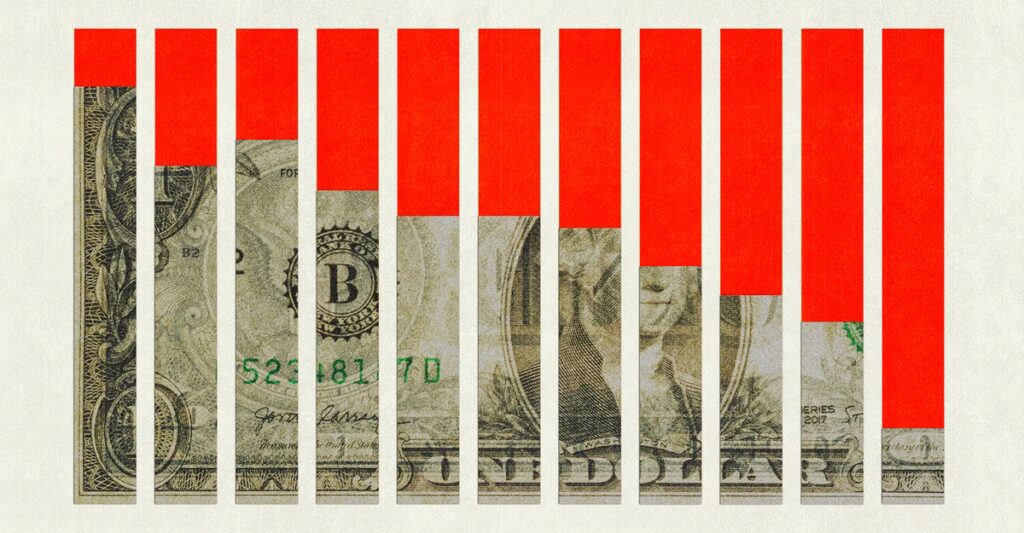
The U.S. dollar is getting weaker, and that’s just how the president wants it. During an appearance last Tuesday at the Machine Shed Restaurant in Urbandale, Iowa, Donald Trump told reporters that the dollar’s declining exchange rate was “great.”
Trump understands that a weak dollar doesn’t sound good. In his first term, he tweeted, “As your President, one would think that I would be thrilled with our very strong dollar. I am not!” His logic is that the relatively weak currencies of America’s foreign competitors, such as China and Japan, can make their goods cheaper in international markets, and that the United States would do well to replicate their strategy. This theory isn’t unfounded—a weak dollar would boost the economy in certain respects—but the president’s unpredictable foreign-policy and global-trade decisions are threatening to erode America’s economic standing abroad in a far more significant way.
When Trump talks about the relative strength or weakness of the dollar, he’s talking about its value in foreign-exchange markets. When the dollar index plunged 1.3 percent last Tuesday, that meant the dollar lost 1.3 percent of its value relative to a group of competing currencies, making some foreign goods a little more expensive to import. It did not mean that your dollar was immediately worth 1.3 percent less at the grocery store (although costlier imports do somewhat counteract the president’s affordability agenda).
That’s partly why, despite some mixed messaging after he took office in 2017, Trump has been fixated on a weak dollar for much of his adult life: In 1987, he took out full-page ads in The New York Times, The Washington Post, and The Boston Globe lamenting the dollar’s strength against the weakness of Japan’s “brilliantly” managed yen. A weaker dollar makes American companies and American goods more competitive abroad. Theoretically, the incentive to export and the disincentive to import could push companies to invest in domestic manufacturing—bringing back factory jobs and providing one potential path to the president’s long-held goal of squashing the trade deficit.
It’s typically pretty hard for American presidents to unilaterally effect a long-term change in the dollar’s exchange rate. Kenneth Rogoff, formerly the chief economist of the International Monetary Fund, told me that because the exchange rate is governed by so many different factors, the president wishing for a weaker dollar is “like doing a rain dance.” One of those factors is interest-rate policy—which is why the Federal Reserve usually has far more influence over the dollar’s value than the president does. When borrowing costs go down, the dollar index also tends to go down. Part of the reason Trump is so keen on exerting greater control over the Fed is its power over the value of money.
Although Trump hopes a weaker dollar will boost American exports, he’s also taking steps that could more than offset any gains. His mercurial policies are now threatening to push away some of America’s long-standing trading partners. Since the end of World War II, the U.S. dollar has been by far the world’s most dominant currency: Banks around the world tend to lend and borrow in dollars; many transactions that don’t touch America are conducted in dollars; and nearly 90 percent of trades on foreign-exchange markets happen by way of dollars. Our money has historically been attractive because it is stable. The dominance of U.S. currency throughout the 20th century was deeply connected to this country’s status as a global superpower, free from erratic dictators and seemingly unable to default on its debts.
This has afforded us what the former French Finance Minister Valéry Giscard d’Estaing once called our “exorbitant privilege.” As long as the dollar remains dominant, the U.S. has the edge on all other countries when it comes to borrowing, running gargantuan deficits, and imposing sanctions. Last spring’s “Liberation Day” tariffs were an expression of that exorbitant privilege—a way to strong-arm some of our allies. On April 10, a week after the plan was announced, the dollar dropped by about 2 percent. As my colleague Annie Lowrey put it at the time, those tariffs raised questions about “whether the United States deserves to have its privilege revoked.”
A weaker U.S. dollar isn’t necessarily a less dominant dollar. Many have prophesied the end of the dollar’s supremacy, and yet it remains on top. Part of the reason that the currency’s dominance is so hard to shake is that it’s self-perpetuating: Why use something else when so many people, companies, and nations are already using dollars? None of the economists I spoke with suggested that the dollar is in real danger of losing its hegemony, at least not in the near term. And the euro, yen, yuan, and so-called digital gold—bitcoin—are all for various reasons ill-equipped for dominance. (Actual gold, which thrives in times of global insecurity, is having a moment.)
But the president’s distaste for global institutions (such as NATO and the World Health Organization), for existing treaties, and for the alliances the U.S. has enjoyed since World War II has given international-trading partners plenty of reasons to worry about America’s stability. Maurice Obstfeld, another former IMF chief economist, told me that even if no clear successor to the dollar presents itself, “with enough inner geopolitical chaos caused by Trump, and geo-economic chaos, the dollar’s reach would shrink, and the reach of other currencies would rise.” A less dominant dollar would be a particularly dramatic indication of America’s waning status abroad.
The real trouble, in other words, is not that the dollar’s value is getting weaker. It’s the possibility that America’s allies and trading partners may one day cease to respect it.
Related:
Here are three new stories from The Atlantic:
- Ashley Parker: The murder of The Washington Post
- Yair Rosenberg: The second death of Charlie Kirk
- How to actually reform ICE
Today’s News
- The White House “border czar,” Tom Homan, said that the Trump administration will pull 700 immigration officers from Minneapolis, cutting the federal presence there by about 25 percent.
- Fulton County, Georgia, filed a sealed motion demanding the return of 2020 ballots and election materials seized by the FBI last week and challenging the legality of the search. A county official warned that the Trump administration’s seizure threatens state control over elections and could set a precedent ahead of the midterms.
- The Supreme Court allowed California to use a new congressional map approved by voters, clearing the way for Democrats to gain up to five House seats in this year’s midterm elections. The justices rejected Republicans’ bid to block the map, which they argued was racially gerrymandered.
Evening Read
Let Your Kids Fail
By Russell Shaw
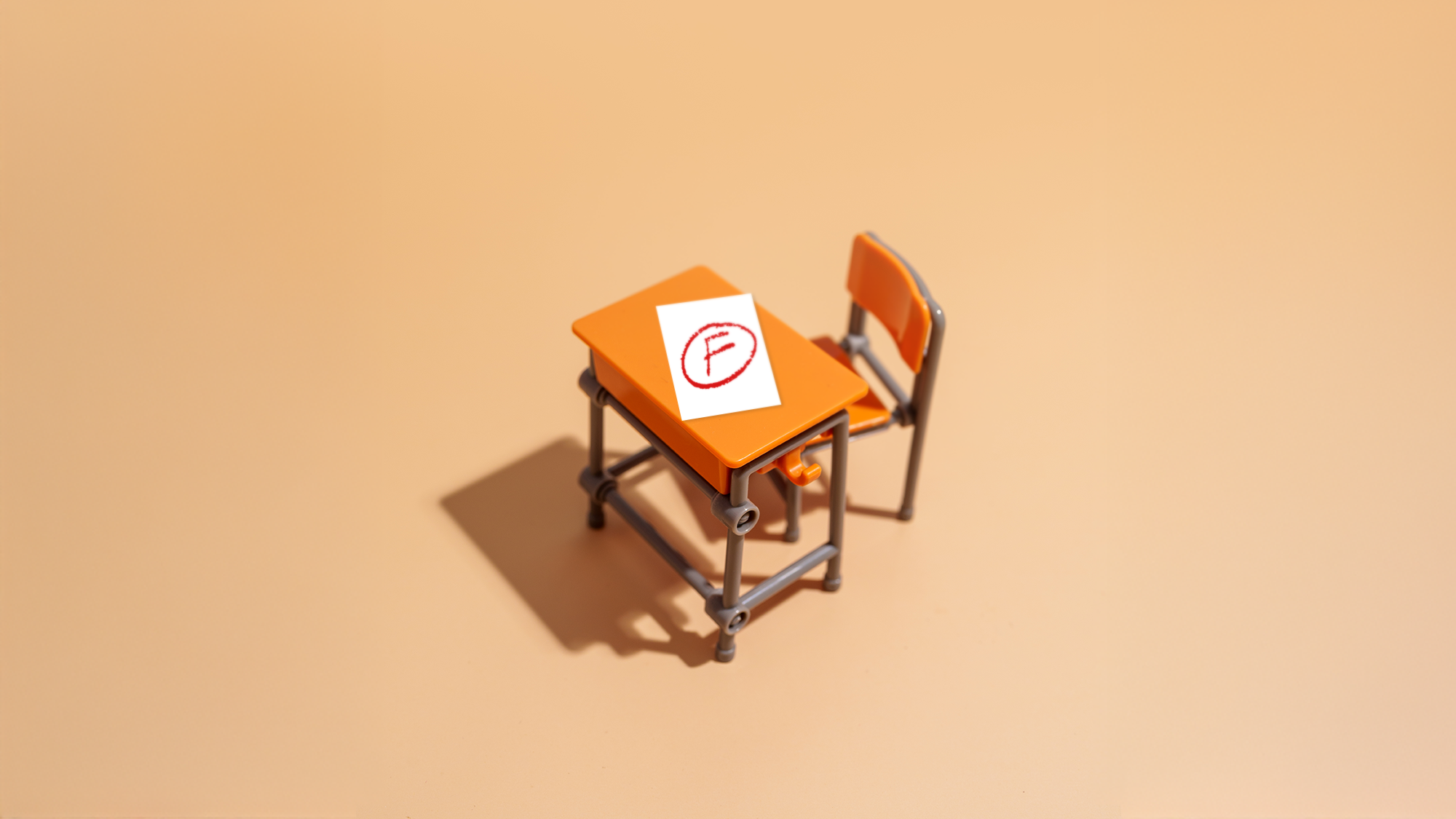
Early in my career, a mother came to my office to discuss her daughter’s calculus grade. When parents make this kind of request, I try to manage expectations by saying that as a school administrator, I have never changed a grade. Still, hopeful parents persist. In this case, the student had received a B, which her mother saw as a blemish on her otherwise spotless transcript. “I’m worried about how this will look to colleges,” she told me. “Is there any extra credit she can do?”
I explained that it’s okay to earn a B in a challenging course, and that her daughter might benefit from the experience of not being perfect. The mother looked at me as if I had suggested her child take up base jumping. “She’s never gotten a B before,” she said. “I don’t know how she’ll handle it.”
That kind of exchange perfectly captures a paradox of contemporary parenting: In trying to protect their children from any hint of failure, many parents risk making them more fragile.
More From The Atlantic
- The David Frum Show: Trump vs. Canada
- The unsettling rise of AI real-estate slop
- Why this shutdown is different
- What the Kennedy Center closure really means for art
Culture Break
Explore. American milk has more fat than ever, Sarah Zhang writes.
Reflect. Catherine O’Hara brought humanity to over-the-top characters—and managed to wink at the audience in the process, Paula Mejía writes.
Explore all of our newsletters here.
Rafaela Jinich contributed to this newsletter.
When you buy a book using a link in this newsletter, we receive a commission. Thank you for supporting The Atlantic.
The post Why Trump Wants a Weaker Dollar appeared first on The Atlantic.