Spain has proposed a ban on social media for kids under the age of 16, joining a growing number of countries that have moved to protect children and teens from potential online harms.
Spanish Prime Minister Pedro Sánchez announced the ban on Tuesday at the World Government Summit in Dubai, where he criticized tech companies for failing to rein in disinformation as well as illegal content like child sex abuse material and sexualized deepfake images on their platforms.
[time-brightcove not-tgx=”true”]
“Social media has become a failed state, a place where laws are ignored, and crime is endured, where disinformation is worth more than truth, and half of users suffer hate speech,” Sánchez said. “A failed state in which algorithms distort the public conversation and our data and image are defied and sold.”
“Today, our children are exposed to a space they were never meant to navigate alone,” he added. “We will no longer accept that.”
The ban needs parliamentary approval, which could be discussed next week, Sánchez said. It is among a series of five government measures targeting social media platforms. Sánchez said Spain had joined five other European countries to form the “coalition of the digitally willing” aimed at coordinating cross-border regulation of social media. It is not yet known which other countries are part of the alliance.
A number of other countries across the world have implemented or are considering restrictions on kids’ access to social media. Greece is planning to announce a ban soon, an official source told Reuters on Tuesday, while French lawmakers approved a social media ban last week, sending the bill to the Senate. In December, Australia became the first country in the world to introduce a blanket ban on under-16 access to a slate of social media platforms.
“No more pretending that technology is neutral,” Sánchez said.
Here’s what to know about Spain’s ban, which other countries have social media bans, and how tech companies are responding.
How Spain’s ban works
Spain will require social media platforms to use age verification systems, Sánchez said. These will be “not just check boxes, but real barriers that work,” he said.
On many social media platforms, the typical minimum age to make an account is 13, but historically this has been difficult to enforce.
Spain has not yet specified which platforms will be affected by the ban. At the summit, Sánchez singled out X for its AI chatbot Grok, which has come under global scrutiny for generating illegal sexual content including of minors; TikTok for allegedly allowing accounts to share “AI-generated child abuse materials,” and Instagram for allegedly “spying on millions of Android users.”
TIME has reached out to TikTok, xAI and Meta for comment.
Sánchez also said Spain plans to criminalize the manipulation of algorithms to boost illegal content, as well as hold tech executives personally accountable if they do not remove illegal content. Such measures will require parliamentary approval.
Sánchez said the ban will be debated by parliament as soon as next week, where it will join a broader bill aimed at creating digital protections for minors. The center-right People’s Party, the biggest opposition party in parliament, signaled its support for the measure, according to the Associated Press. PP previously floated proposals to restrict minors’ social media access, according to Spanish media.
But the bill could still face opposition, including from the far-right Vox party, which said that the ban was intended to make sure that “no one criticizes” the Sánchez government, according to the AP.
Where youth social media bans are taking shape
Last week, French lawmakers approved a bill that would ban social media use for children under 15 and aims to protect them from excessive screen time, cyberbullying and other harms. The legislation, which would take effect in September before the next school year, involves stricter rules on age verification and restrictions on mobile phone use in schools. The bill heads to the Senate ahead of becoming law.
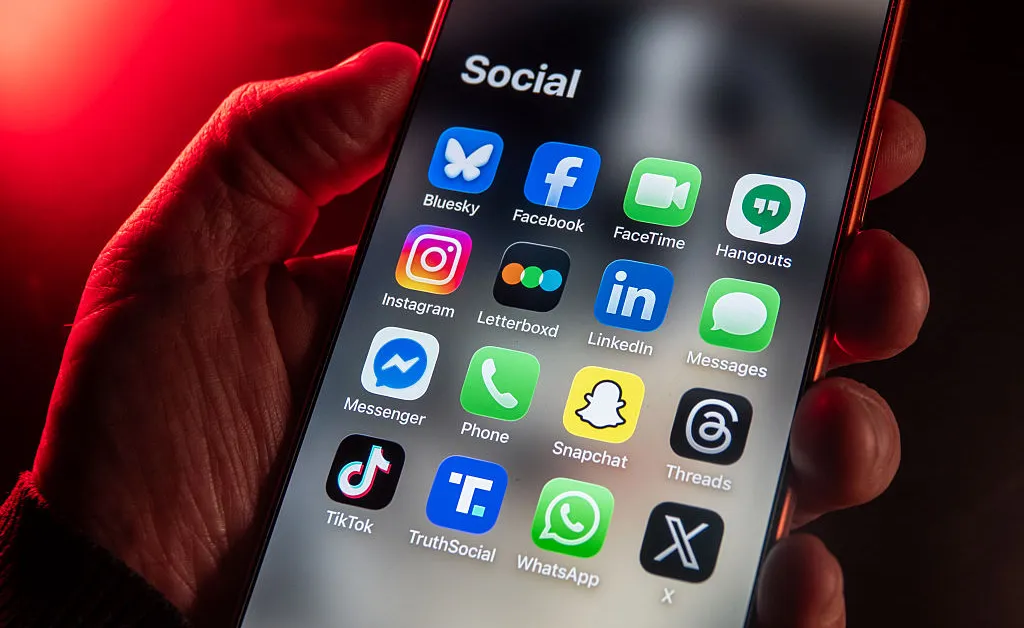
In December, Australia introduced a blanket ban on social media for under-16s—widely described as a first-of-its-kind law in the world. The ban affects Instagram, Facebook, Threads, Snapchat, TikTok, YouTube, X, Reddit, Twitch, and Kick, although the list of platforms is subject to change over time.
Malaysia said last year that it planned to introduce a social media ban for under-16s beginning in January, although that deadline has been pushed back to July. Malaysia temporarily banned X’s Grok over its sexualized images and introduced a law requiring social media platforms with more than eight million local users to operate under licenses.
Indonesia said it plans to enforce social media restrictions for teens aged 13 to 16 beginning in March. Indonesia also briefly banned Grok, and requires social media companies to operate in the country under licenses.
Denmark has also announced a plan to ban social media access for users under 15, with possible exemptions for younger teens with parental consent.
A senior government source told Reuters that Greece is also close to rolling out a ban on social media access for children under 15.
New Zealand and the U.K. are also weighing restricting access to social media for minors.
In the U.S., a number of states have moved to curb kids’ access to social media. At least eight states—Arkansas, California, Florida, Georgia, Louisiana, Mississippi, Ohio, and Tennessee—have enacted legislation that either bans minors from social media or requires parental consent for them to make an account. Several states, however, are facing legal challenges. Laws restricting minors from social media have been permanently blocked in Arkansas and Ohio over First Amendment violations and temporarily blocked in California, Florida, and Georgia. Louisiana is also facing litigation, and agreed not to enforce its law while the case plays out.
In the 2025 state legislative session, 18 states proposed similar legislation, although just one was enacted: Nebraska passed a measure requiring parental consent for anyone under 18 to make a social media account, which takes effect in July. Virginia also enacted a bill that aims to curb the addictive nature of social media by limiting users under 16 to one hour per day of social media use unless parents consent, which took effect in January. Several more states, including California and New York, have enacted bans on “addictive algorithms.”
At the federal level, Sen. Brian Schatz (D, Hawaii) introduced the Kids Off Social Media Act (KOSMA), which would bar children under 13 nationwide from accessing social media, as well as prohibit social media companies from using certain algorithms for users under 17. The bill was approved last June by the Senate Commerce, Science and Transportation Committee and awaits action by the full Senate.
How tech companies have responded
Elon Musk, the tech billionaire who owns X, has been vocal in criticizing social media bans, including the latest proposal from Spain. After Sánchez’s speech in Dubai, Musk posted on X, “Dirty Sánchez is a tyrant and traitor to the people of Spain.”
In another post, he said, “Sánchez is the true fascist totalitarian.”
Other tech companies have raised concerns with blanket social media bans, although all of those affected by Australia’s world-first ban, including X, said in December that they planned to comply. In December, Reddit filed a lawsuit against Australia over its ban, arguing that it threatens free speech and interferes with political discussion. Meta, which owns Instagram, Facebook, and Threads, said that by January it had removed nearly 550,000 accounts in Australia based on its new age verification requirements.
“We call on the Australian government,” Meta said in a blog post, “to engage with industry constructively to find a better way forward, such as incentivising all of industry to raise the standard in providing safe, privacy-preserving, age-appropriate experiences online, instead of blanket bans.”
The post Where Efforts to Ban Social Media for Kids are Taking Place appeared first on TIME.