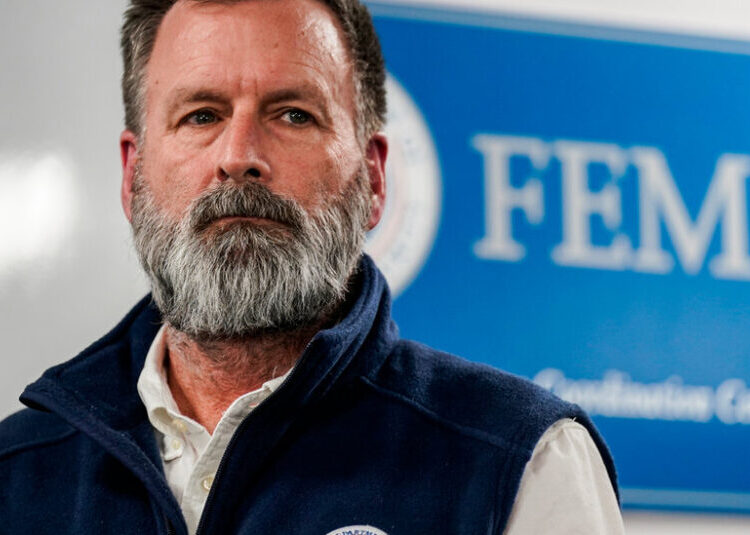
Judge Ana Reyes did not have to go far to discover Homeland Security Secretary Kristi Noem’s animus toward Haitians. She just had to read her social media feed. “I am recommending a full travel ban on every damn country that’s been flooding our nation with killers, leeches and entitlement junkies,” Noem wrote on X in December. She added, “WE DON’T WANT THEM. NOT ONE.”
Reyes, a Federal District Court judge in Washington, cited Noem’s post at the very beginning of a blistering opinion issued Monday night preventing the administration from ending Temporary Protected Status for Haitians, at least for now. That status was due to expire on Tuesday, rendering more than 350,000 Haitians who are now legally living and working in America undocumented overnight.
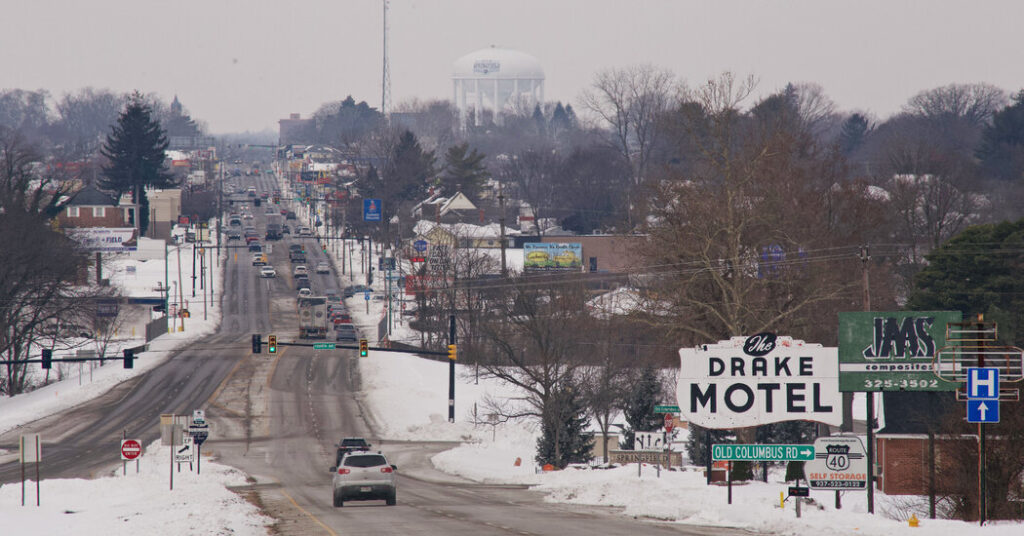
Ohio officials had warned that once that happened, ICE agents could swoop into Springfield, a city of around 60,000 where up to a quarter of the population is Haitian, and start rounding people up. Many Haitians here have been living in terror, some afraid to leave their homes. But Noem, in her sycophantic sadism, unintentionally helped give them a reprieve by serving up undeniable evidence of her racist decision-making to a court. “Plaintiffs charge that Secretary Noem preordained her termination decision and did so because of hostility to nonwhite immigrants,” wrote Reyes. “This seems substantially likely.”
The reprieve may not last long. Donald Trump’s administration is sure to appeal. Given that the Supreme Court has already allowed the administration to end T.P.S. for Venezuelans, the Haitians’ chances are not good. Both Trump and JD Vance have been singling out the refugees who live in this small postindustrial city since the presidential campaign, and they’re unlikely to stop now.
So the relief that many Haitians here feel is tempered by an omnipresent dread, one most likely felt in immigrant communities across America as they wait to see which city ICE will surge into next. “To me last night, it was like traveling through a desert and you came across a little oasis,” Viles Dorsainvil, executive director of Springfield’s Haitian Community Help and Support Center, told me on Tuesday. (His brother Vilbrun Dorsainvil was one of the plaintiffs in the T.P.S. lawsuit.) It wasn’t cause for a huge celebration, he said, but it eased at least some of the unbearable tension plaguing his community. “It’s just a pause,” he said.
That pause comes at a time when resistance to ICE is building nationwide, including in Springfield, a place without much of a progressive infrastructure. Here, that resistance isn’t organized by neighborhood, as in Minneapolis, but through a network of Black, white and Hispanic churches. They call themselves the G92 Coalition, after the ancient Hebrew word “ger,” for stranger or foreigner, that appears 92 times in the Hebrew Bible. One of the founders is Carl Ruby, pastor of the nondenominational Central Christian Church. He’s a former Republican — he remains a fan of Ohio’s Republican governor, Mike DeWine — who describes himself as theologically conservative but social-justice oriented.
Central Christian has been training people to protest and document ICE raids. At first, its training sessions would bring out about 30 people. The most recent one, a week and a half ago, drew 200. In the lobby was a bucket of orange whistles of the kind that have become ubiquitous in Minneapolis, packaged with instructions on how to use them: short blasts to warn of ICE sightings, long continuous ones if someone is being detained.
“The pastors’ group that I’m in, we got together, and we agreed that if violence breaks out in Springfield, we have a duty to go right to the front of it and to call for peace,” said Ruby. One year into the second Trump presidency, it’s not just blue America where people are readying themselves for disaster.
The threatened ICE surge into Springfield underlies one of the ugliest aspects of Trump’s mass deportation campaign, which is the targeting of specific ethnic groups following cruel propaganda campaigns.
Masked federal agents didn’t descend on Minneapolis because it’s a center of illegal immigration (Minnesota’s share of undocumented people is well below the national average); Trump went after it because it’s home to many Somali immigrants, people he referred to as “garbage.” That’s also why he sent federal agents to Lewiston, Maine, a former mill town often celebrated as an immigration success story because of all Somalis did to revitalize it.
Springfield, too, has been given new life by immigrants. A once-thriving manufacturing hub, its fortunes so collapsed that in 2012 it was regularly called the unhappiest city in America. In 2014, seeking to stem population decline, the city launched its “Welcome Springfield” campaign to attract immigrants. Haitians, many of whom had been given T.P.S. status after a devastating 2010 earthquake, responded. As new manufacturing jobs were created in the city, more immigrants followed. Many Haitians who settled in Springfield had children. The city stopped shrinking; in 2023, there was a tiny population increase.
Undoubtedly, the city faced strains in absorbing all these newcomers. Waiting times at a local health clinic increased, and schools needed to hire Haitian Creole interpreters and teachers certified to teach English as a second language. Hostilities reached a boiling point in 2023, when a Haitian driver veering into the wrong lane caused a school bus crash that killed an 11-year-old boy and sent more than 20 other children to the hospital. “Everything went crazy after the school bus accident,” said Ruby. “Our city council meetings got really, really ugly.”
The growing racial and cultural enmity in Springfield was exactly the sort of thing that fueled Trumpism. In July 2024, days before Trump chose Vance as his running mate, Vance denounced Haitian immigration to Springfield at the National Conservatism Conference, saying that the city had been “overwhelmed.” Soon a neo-Nazi group called Blood Tribe started vilifying Springfield’s Haitians online. In August, during Springfield’s annual jazz and blues festival, about a dozen of them marched on the city with masks, swastika flags and semiautomatic weapons.
Online, as Brandy Zadrozny reported for NBC News, the neo-Nazis stoked rumors that Haitians were eating ducks snatched from city parks. Those rumors metastasized into fictitious stories about Haitians eating household pets, which Vance amplified. “Reports now show that people have had their pets abducted and eaten by people who shouldn’t be in this country,” he posted on X on Sept. 9. The next day, Trump went viral during his debate with Kamala Harris when he said, “They’re eating the dogs, the people that came in, they’re eating the cats.” Soon city institutions were being inundated with bomb threats.
Trump’s election was a catastrophe for Springfield’s Haitians and their allies, and during the countdown to Feb. 3, they were filled with trepidation. Last week, Springfield’s school superintendent sent a message to school staff warning of an “anticipated federal immigration enforcement initiative that may begin on Feb. 4.” Governor DeWine said he’d heard mixed messages from the federal government. People struggled to prepare for raids without knowing if and when they’d arrive.
On Sunday evening, Rose Goute, a Haitian restaurant, was almost deserted. “People stay home,” said Jean Philistin, a 50-year-old who was there picking up takeout. “People are scared.” He said he was less frightened than many others because he became a citizen a few years ago, though he wasn’t sure how much that would matter. “The worst thing is, since you’ve got an accent, or since you’re Black, they can stop you for no reason.”
Philistin had been a civil engineer back in Haiti and now worked refurbishing houses. He has two teenage children, both born in America. “I don’t know why they hate my community,” he said sadly.
Though some Springfield residents clearly welcomed ICE, there’s a striking degree of opposition. On Monday morning, a prayer rally for Haitian immigrants at St. John Missionary Baptist Church downtown drew over 1,000 people. Three times, fire marshals had to ask people to leave because the sanctuary was too crowded. In the lobby, volunteers handed out orange whistles. Ruby told me he was positive that some of the attendees had voted for Trump.
“Loving my neighbor, protecting the stranger, it’s become a controversial act of resistance, risk, rebellion,” Casey Rollins, a Catholic grandmother and leading advocate for Springfield’s Haitian community, said from the stage. She described working with families to put into place power of attorney and emergency custodial agreements in case parents were arrested and their kids left behind. Many had been reluctant, she said: “They could not accept the idea that they might be forced to separate from their children.” But the urgency of the coming crisis was becoming undeniable. “Let’s hope we don’t need this,” she said. “Let’s pray we don’t need this.”
For now, thanks in part to Noem’s undisguised ethnic hostility, Rollins’s prayers have been answered. But people in Springfield seem to realize that the respite is temporary.
A few hours after the rally on Monday morning, I stopped by Ruby’s Central Christian Church. There I met Marjory Wentworth, a poet and author who’d become central to Springfield pro-immigrant organizing effort. She worried that however Judge Reyes ruled, it would be only a matter of time before ICE descended. “I mean, who are we more afraid of, the Blood Tribe or ICE?” she asked. It was a rhetorical question, because the answer was obvious: “ICE, absolutely.”
The Times is committed to publishing a diversity of letters to the editor. We’d like to hear what you think about this or any of our articles. Here are some tips. And here’s our email: [email protected].
Follow the New York Times Opinion section on Facebook, Instagram, TikTok, Bluesky, WhatsApp and Threads.
The post In Ohio, I Caught a Glimpse of the New Resistance appeared first on New York Times.