Netflix has a message for lawmakers nervous about its $83 billion purchase of Warner Bros. Discovery: The deal will be good for Hollywood and for America.
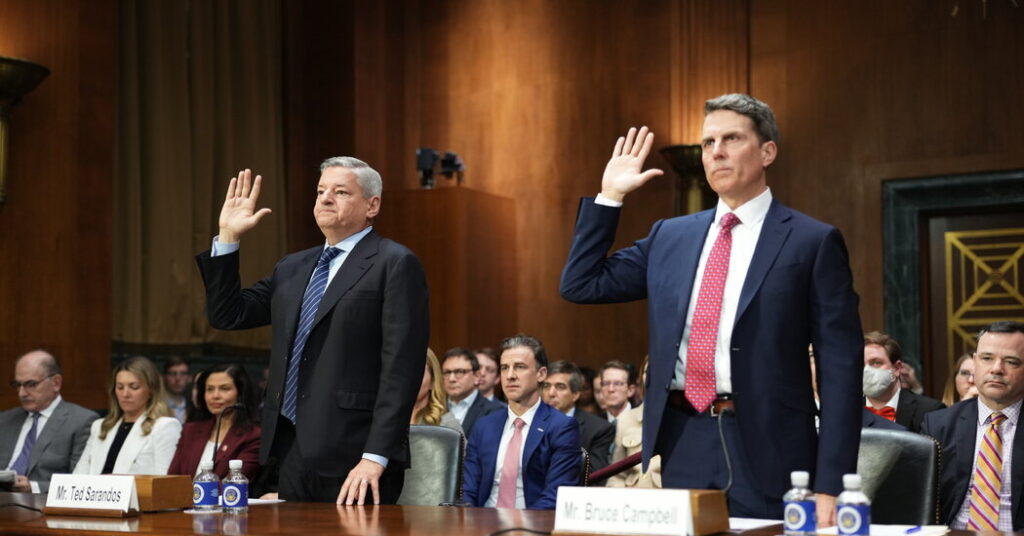
One of Netflix’s co-chief executives, Ted Sarandos, told senators on Tuesday that the streaming giant would boost domestic film and television production and preserve opportunities for workers and consumers.
“We’re buying a company that has assets that we do not, and we will keep investing in Warner Bros.,” he said. “And we’ll keep growing the American entertainment industry.”
Mr. Sarandos faces questions in Washington and oversees about whether the deal, which would combine Netflix with a major movie studio and HBO, would create a Hollywood behemoth with the ability to raise prices, squeeze talent and degrade the moviegoing experience. Over roughly two hours, a bipartisan group of lawmakers from the Senate Judiciary Committee’s antitrust subcommittee lobbed critical questions at Mr. Sarandos, who responded with diplomatic answers and occasionally more pointed disagreement.
Senator Mike Lee of Utah, the Republican chair of the subcommittee, said, “All told, one might say that Netflix seeks to become the one platform to rule them all, or at least to exercise a significant amount of market dominance.”
He added, “The merger raises numerous antitrust concerns, in a nutshell, consolidating both production and distribution power.”
The Justice Department is reviewing the acquisition in the United States, and regulators in the European Union and Britain are expected to scrutinize it as well. Those inquiries will stretch on for months while Netflix tries to fend off a hostile competing bid for Warner Bros. Discovery from Paramount Skydance.
Paramount is backed by the billionaire Larry Ellison and run by his son, David, both of whom have courted President Trump. Mr. Trump said last year that he would be “involved” in the regulatory process around the deal, adding to the political pressure.
In addition to HBO and Warner Bros. Discovery’s studio business, which makes movies like “Sinners,” Netflix would acquire the HBO Max streaming service, home to shows like “The White Lotus.” It would not buy the company’s other cable assets, which include CNN and TNT.
Paramount is offering to buy all parts of the company and has gone directly to Warner Bros. shareholders to encourage them to vote against the Netflix bid. In response, Netflix has modified its offer, agreeing to pay for the studio in cash rather than a combination of cash and stock.
Senator Cory Booker, Democrat of New Jersey, criticized David Ellison for declining to testify on behalf of Paramount. He also pressed Mr. Sarandos on the executive’s outreach to the White House before the deal was announced. Mr. Sarandos replied that he had discussed the deal with Mr. Trump at a meeting devoted to issues plaguing the entertainment industry more broadly, and said he believed politics would not influence whether the administration blessed the purchase.
“It was not a meeting specifically to talk about the deal,” Mr. Sarandos said. “I have confidence in this case on the merits, and that it will be run by the Department of Justice.”
Parts of Hollywood have also raised objections to the Netflix deal. The Writers Guild of America said the purchase would “eliminate jobs, push down wages, worsen conditions for all entertainment workers, raise prices for consumers and reduce the volume and diversity of content for all viewers.” In January, independent film groups signed on to an antitrust organization’s letter asking state attorneys general to scrutinize the deal.
Mr. Sarandos told the senators that he understood that people in the film and television industry had experienced a bruising recent past, with the Covid-19 pandemic and Hollywood strikes. But he said the deal would not restrict opportunities for writers and producers.
“They need to know that people are looking out for them,” he said. “And we are looking out for them.”
He also defended Netflix’s record with consumers. He said its prices had increased more slowly than those of competing services, and that the company raised prices only when it was providing more content for them to watch.
“Our history, and my own professional history, has been about adding more and more value to consumers,” Mr. Sarandos said. “And you do that by adding more choice.”
David McCabe is a Times reporter who covers the complex legal and policy issues created by the digital economy and new technologies.
The post Netflix Leader Pushes Warner Deal Before Skeptical Lawmakers appeared first on New York Times.