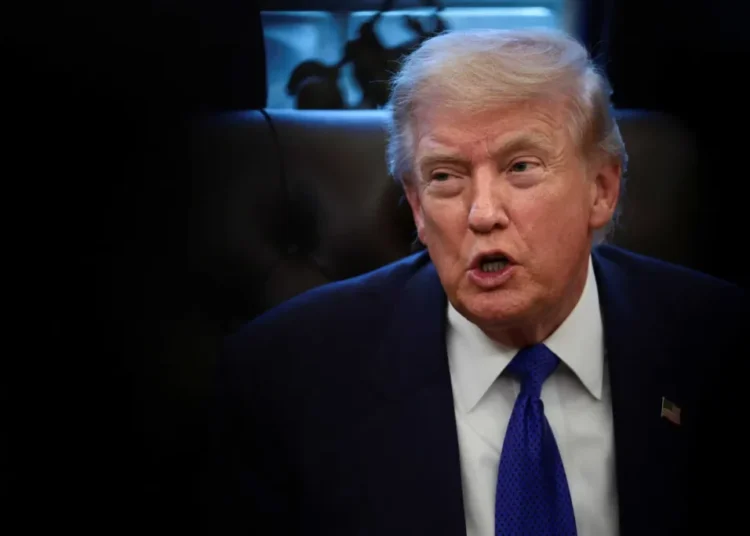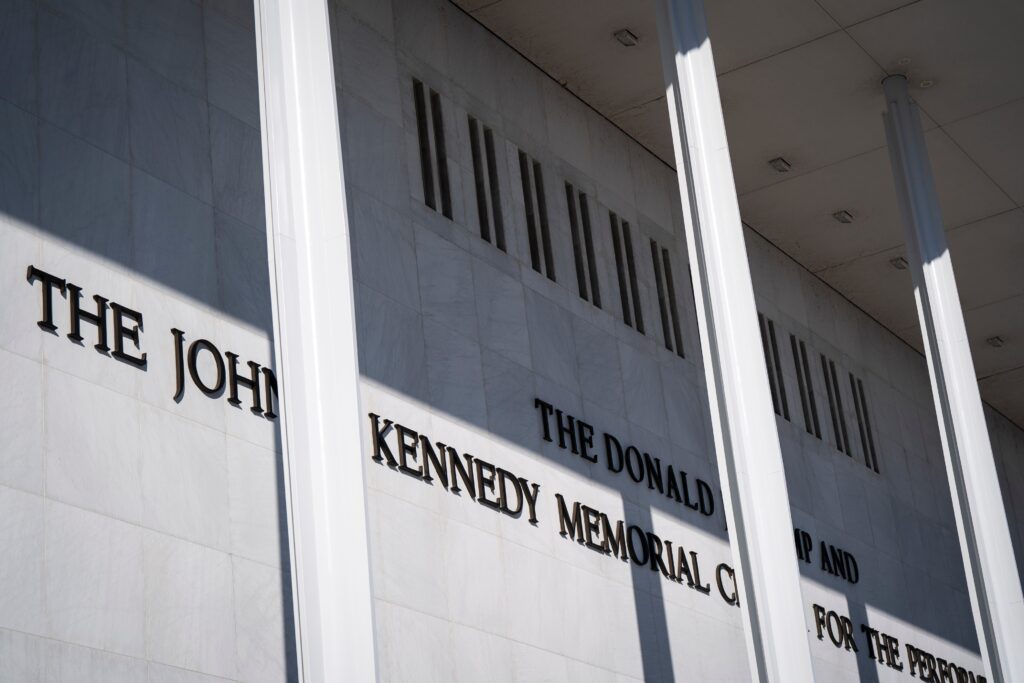
Staffers at the John F. Kennedy Center for the Performing Arts expect to continue their work until July 4, they told The Washington Post on Tuesday. After that — when the renovation unexpectedly announced Sunday by President Donald Trump could begin — the center will be in uncharted waters.
Joan Bialek, chair of the National Symphony Orchestra’s board of directors, told musicians Tuesday morning that the organization will retain both the orchestra and its staff. Bialek said the Kennedy Center is obligated to find a performance space under its affiliation agreement with the orchestra, the only major ensemble still based at the arts complex following the departure of the Washington National Opera earlier this year.
The orchestra is currently exploring outside venues. The ensemble typically announces its next season in the late winter or early spring to sell subscription packages to concertgoers.
“One of the greatest challenges now is to salvage some semblance of the 2026-27 season, a season that was planned over a year ago,” said one person with knowledge of the orchestra’s workings, who was not authorized to speak publicly. “Orchestras have been temporarily displaced for hall renovations before, but they usually get several years to plan and strategize for it. Five months warning does not give the NSO a lot of options. If renovations were truly needed, there’s no reason they couldn’t be planned for a few years from now to allow more time for all productions to prepare.”
Following Trump’s announcement, Bialek and the orchestra’s executive director, Jean Davidson, had reassured board members, musicians and staff that the orchestra would continue to receive funding from the Kennedy Center, according to an email they wrote that was obtained by The Post.
Elsewhere in the arts complex, an anxious staff worried about its future.
None of the unions associated with the Kennedy Center — including the Actors’ Equity Association, the American Federation of Musicians, the American Guild of Musical Artists, the International Alliance of Theatrical Stage Employees and the Stage Directors and Choreographers Society — have heard from executives about the upcoming closure and how it would affect the center’s workers. In an email to staff Sunday night, Kennedy Center President Richard Grenell wrote, “We will have more information about staffing and operational changes in the coming days.”
That has left workers to be concerned about layoffs. “A pause in Kennedy Center operations without due regard for those who work there would be harmful for the arts and creative workers in America,” the Kennedy Center Arts Workers United, an umbrella group that includes the various unions active at the center, said in a statement to The Post. “Should we receive formal notice of a temporary suspension of Kennedy Center operations that displaces our members, we will enforce our contracts and exercise all our rights under the law.
“We expect continued fair pay, enforceable worker protections, and accountability for our members in the event they cannot work due to an operational pause,” the statement continued.
Several employees, speaking on the condition of anonymity citing a fear of reprisal, worried that the current leadership could use the closure to weaken their labor unions. They said there had already been tensions between their organizations and leaders brought in after Trump took over the Kennedy Center last February, purging its board and installing Grenell and other allies as executives. At one point last year, they said, the new team offered free parking to everyone on staff who wasn’t involved with a union.
Inside the Kennedy Center, staff described the atmosphere as “chaotic” in the wake of Trump’s announcement, saying the proposal caught both employees and managers with ties to the Trump administration off-guard. One employee said staff had received little guidance from leadership on Monday and were prohibited from responding to concerned clients and patrons while the center’s communications team worked to draft an official statement.
“People are upset but not really surprised,” the person said.
Lawmakers on Tuesday offered sharply divided reactions to Trump’s renovation plans, which follow a December vote by the Kennedy Center’s board of trustees to rename the building after Trump. Rep. Jerry Nadler (D-New York) said he planned to introduce legislation that would bar naming a federal building after a person who had not been deceased for at least 10 years. Other Democrats blamed the administration for declining attendance and artist boycotts. Numerous prominent artists have withdrawn from scheduled Kennedy Center events in the aftermath of the board’s renaming vote.
“I think they’re shutting it down because they can’t fill the seats,” Rep. Alexandria Ocasio-Cortez (D-New York) told The Post. “They’ve been playing games with a cultural institution for the country and artists are … and can serve as a moral compass for the people.”
Sen. Angela Alsobrooks (D-Maryland) echoed those remarks: “It’s closed because of the irresponsible decisions of this administration that has caused cancellations. The artists don’t want to perform there, the people don’t want to come anymore.”
Republicans pushed back on that characterization.
Asked whether the closure was intended to save face amid artist cancellations, Sen. Josh Hawley (R-Missouri) said, “I don’t think the president cares about that. … There’s plenty of artists who are more than willing to perform.”
House Speaker Mike Johnson (R-Louisiana) defended the timeline for the shutdown and pointed to $257 million in federal funding for the center included in the One Big Beautiful Bill last year. “Congress appropriated a significant amount of money to update it. It’s a national treasure, and it needs to be in top shape, and the president is focused on that so it will take some time to do the renovation,” Johnson said. “This is on the time frame that we all expected.”
Sen. Tim Kaine (D-Virginia) framed the episode more dramatically: “Mark Twain could not have written a funnier thing about an ‘Emperor Has No Clothes’ story than Donald Trump putting his own name on the Kennedy Center, installing a puppet board to do so, watching audiences and artists revolt and then deciding to cancel it.”
On Monday, Roma Daravi, the center’s vice president of public relations, said the construction was necessary and would focus on HVAC repairs, structural issues, plumbing, electrical and fire protection among other priorities.
In his announcement, Trump said the renovation would need to be approved by the Kennedy Center’s board. He told reporters on Monday that he wouldn’t demolish the building before describing a potentially dramatic transformation. “I’ll be using the steel,” Trump said. “So we’re using the structure, we’re using some of the marble and some of the marble comes down, but when it’s open, it’ll be brand new and really beautiful.”
To pianist and songwriter Ben Folds, the break in activity from a renovation will be harmful to an entire community of workers involved in the arts. “You’re going to lose years of talent,” said Folds, who served as artistic adviser to the National Symphony Orchestra until he resigned last February in protest of Trump’s board takeover and the firing of former president Deborah Rutter.
“I’m thinking about the musicians of the NSO,” Folds said. “I’m thinking about the librarians. I’m thinking about the wonderful security lady who let us in all the time, and you walk through the door, and you feel welcome. It was such a magical era when I was there for 10 years.”
“We’re living through crazy, crazy times,” Folds said. “But art will prevail. It always has.”
Alisa Shodiyev Kaff contributed to this report.
The post Kennedy Center workers still in the dark as orchestra scouts other venues appeared first on Washington Post.