A few years ago, Nick Shirley’s career seemed to have plateaued. Still a teenager, he had created some videos that had become popular on YouTube, including one that showed him sneaking into the influencer Jake Paul’s wedding in Las Vegas, and another in which he threw a prom dance in his kitchen for his mother in the stir-crazy spring of 2020. But by 2021 he was selling pest control door to door in Florida with his brother, also an aspiring YouTuber.
Mr. Shirley decided he had to make a big change. A member of the Church of Jesus Christ of Latter-day Saints, he signed up to go on a two-year missionary trip to an unknown location, a rite of passage that is encouraged by the church but not required. He was so eager to depart that he forged signatures on his required medical forms, he told one interviewer. (He said he later acquired the proper signatures.)
“God didn’t want me to blow up on YouTube because he wanted me to go on this mission,” he speculated to a friend on a video podcast before he left. He was sad to leave because “I love posting,” he said, but he was determined to see it through.
The church sent him to Santiago, Chile, where he spent two years knocking on doors, speaking with strangers about faith and (mostly) not posting.
When Mr. Shirley came back to the United States at the end of 2023, he relaunched his influencer career with a new editorial mission. Rebranding himself an independent journalist, he began traveling to politically charged hot spots like the U.S.-Mexican border, Ukraine and Greenland, producing videos with a distinct MAGA edge. Weeks before the 2024 election, for example, he asked residents in Springfield, Ohio, about the debunked rumors spread by JD Vance that Haitian immigrants were eating pets. Mr. Shirley nodded soberly as one young interviewee said her aunt’s outdoor cat had been stolen by a Haitian.
His breakthrough came about five weeks ago, when he posted a 43-minute video claiming to expose fraud at about a dozen Somali-run day care centers in Minnesota. The video mostly shows Mr. Shirley, 23, knocking on the doors of registered day cares and autism centers.
As he asks to see the children inside or to enroll his fictional son, “Little Joey,” Mr. Shirley finds confused workers and closed doors, and concludes the businesses are fronts. He is accompanied by an older man he identifies in the video only as David, who brandishes a sheaf of documents purporting to back up the fraud claims.
“This is just fraud at unprecedented levels here in Minnesota,” Mr. Shirley tells the camera in the video, which has been viewed more than 141 million times on X and 3.9 million times on YouTube. He claims in the video to have uncovered $110 million in fraud in one day.
The Times could not verify the claims made in the video, and some officials in Minnesota’s Democratic-led government say they have yet to find evidence that scenes in Mr. Shirley’s video showed fraud.
Minnesota officials said in early January that the state conducted compliance checks at nine child-care centers after Mr. Shirley posted his video and found them “operating as expected,” although it had “ongoing investigations” at four of them. One of the centers, which Mr. Shirley singled out because it misspelled the word “Learning” on its sign, has since voluntarily closed. (He now sells merch mocking it.)
Mainstream news outlets, including The New York Times, have been reporting on fraud in Minnesota’s generous social services systems for years. Prosecutors have charged 98 people to date, nearly all of them Somali Americans.
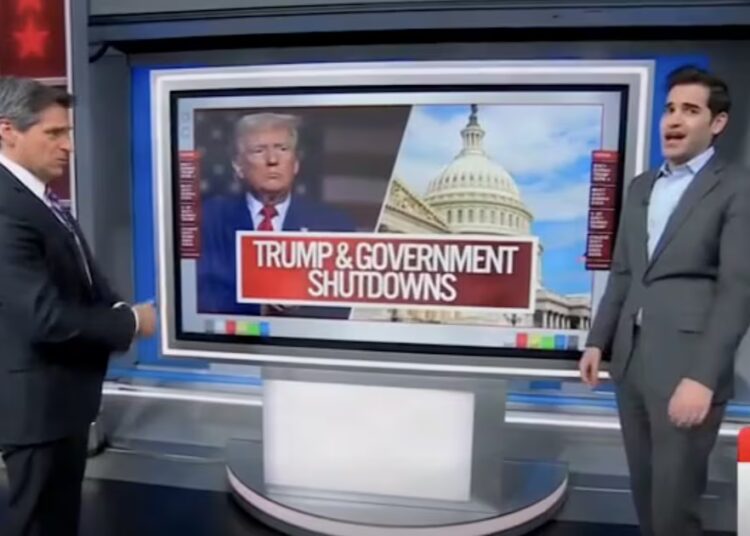
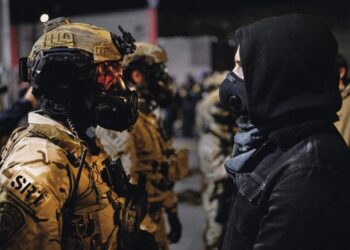
Mr. Shirley’s video was an instant sensation. And within two weeks, the Trump administration sent thousands of federal agents to Minnesota to crack down on illegal immigration, and announced a multipronged effort to combat “the Somali-dominated scams that have bled taxpayers dry,” including freezing funding for child care subsidies in Minnesota and four other states. When Gov. Tim Walz announced he would not run for re-election, Mr. Shirley took credit for it online.
“It basically brought him to ‘internet God’ status for a short period of time,” said Andrew Callaghan, a left-leaning independent journalist whose videos are popular with Gen Z viewers.
Mr. Callaghan, who first met Mr. Shirley while both were filming outside a Turning Point USA event shortly after Mr. Shirley’s return from Chile, says he has seen Mr. Shirley’s content evolve since then “from casual question-asking to loaded investigations about whatever the White House was talking about.” Mr. Callaghan added: “Once Trump tweets about it, or JD Vance says something about it, there’s this mini-ecosystem of conservative-leaning content creators who just flock to that place to confirm the hypothesis of the president.”
Mr. Shirley’s work in Minnesota helped bump him to the top tier of conservative content creators. Since he returned from Chile, he has seen his fewer-than-30,000 YouTube subscribers turn into 1.65 million. And his influence is not limited to social media consumers attracted by the inflammatory headlines splashed across the thumbnails of his videos (“America VS Islam,” “Migrants have taken Paris”). He has testified before Congress, dined at Mar-a-Lago and been named in a White House announcement of a new division of the Department of Justice devoted to fraud enforcement.
“This dude has done far more useful journalism than any of the winners of the 2024 @pulitzercenter prizes,” Mr. Vance posted on X.
‘I Want to Be the Next Alex Jones’
Mr. Shirley grew up in Farmington, Utah, a suburb of Salt Lake City. In high school he was a captain of the football team and a natural leader, several former classmates said.
He was best known locally for his YouTube channel, which at the time consisted mostly of pranks and stunts like riding a bicycle through an improvised wall of fire into a frigid lake or flying to New York alone without his parents’ permission.
“We were always pushing our limits, but never doing anything disrespectful or harmful to other people,” said Connor Cahoon, a close friend since junior high. “He always had that sense of, I’m going to go do these crazy things and ask for forgiveness later.”
After graduation, Mr. Shirley moved to Los Angeles with about $10,000 in savings, he told his friend on the video podcast in 2021. There, he rented a room in the Echo Park neighborhood with a handful of strangers.
Trump Administration: Live Updates
Updated
- Former farm leaders warn there could be a ‘widespread collapse’ of U.S. agriculture.
- Democrats call on ICE watchdog to speed up use of force inquiry.
- Trump will meet with Colombia’s president at the White House.
He had previously thought going on a mission for the church sounded “horrible,” he told his friend. “You basically get shipped off for two years,” he said. “I have friends that got called to Africa, Wyoming, anywhere.” But he kept thinking about it. In December of 2021, he departed for Santiago.
“I want to be the next Alex Jones,” he told his friend before he left. Mr. Jones, the right-wing conspiracy theorist, was “one of the most controversial guys but also spits probably the most facts out of any person,” he added.
In Chile, he lived in an apartment with a strict schedule and not much leisure time. Missionaries are discouraged from wasting time on social media, although they are sometimes allowed to use it to further their mission. Mr. Shirley filmed a few videos conducting man-on-the-street videos in Spanish, asking people questions like what Jesus meant to them. He often concluded by offering them a copy of The Book of Mormon.
In an interview with The Times last week, Mr. Shirley said the trip was an opportunity for him to mature from a provincial “prankster” to a man with a broader view of the world. He met Venezuelan migrants in Chile, he said, and paid attention as protesters in Santiago clashed over proposed changes to the country’s Constitution.
A year into his mission, he wrote a detailed plan for his return in longhand. The content he would produce in the future would be “interview/investigations on current subjects or on popular/strong topics.”
“At the time I didn’t know it was journalism,” he said. “I just thought it was adventure seeking.”
Mr. Shirley might be called a third-generation influencer. His grandmother Lolita, who died last summer, was a dance teacher whose obituary said she performed on the “Late Show With David Letterman” in the late 1990s. In later years, she maintained an Instagram account where she branded herself Grandma Savage (a nickname from Mr. Shirley) and chased the goal of appearing on “The Ellen DeGeneres Show.”
An older brother, Ryan, is also now a successful content creator, with 827,000 subscribers to his YouTube videos about travel destinations.
But it is Mr. Shirley’s mother, Brooke, who helped steer his political turn when he got back from his mission. Ms. Shirley has almost 300,000 followers on TikTok, where she calls herself a citizen journalist and has posted from many of the same scenes in Mr. Shirley’s videos. Mr. Shirley has referred to his mother as his producer. When he returned from Chile fluent in Spanish and inspired to try something new, it was his mother who suggested that he travel to the border to film.
“When he got home from his mission, I was like, ‘I know what we need to do,’ she told a reporter for The Columbia Journalism Review last fall. “He hadn’t been living in America. I was feeding him information. ‘Ask this, do this.’”
Ms. Shirley did not respond to an interview request from The Times.
A Gen-Z Everyman
Mr. Shirley’s new strategy became going to the scene of political tension: interviewing protesters in Portland, Ore.; clashing with immigrant vendors on Canal Street in New York City and, in perhaps his biggest journalistic coup, filming from inside the Terrorism Confinement Center in El Salvador, which he praised for making the country the “safest in the Western Hemisphere.”
He finds his stories by spending a lot of time online to have his “finger on the pulse,” he said. He tracks themes that are rising in interest on social media and stays nimble, often booking flights the day before he travels and films.
He also reads every direct message on social media, he said, which led to his breakthrough in Minnesota. He had been following reports about social services fraud in the Somali community in the United States since last summer but hadn’t figured out a way into it. Toward the end of the year, national attention increased; President Trump called Somali Americans “garbage” and said gangs of Somalis were “roving the streets looking for ‘prey.’”
When David Hoch, a local right-wing gadfly who has unsuccessfully run for office in the state several times, messaged Mr. Shirley to say he had documentation showing widespread fraud in the Somali community, Mr. Shirley called him. They spoke for about 10 minutes, Mr. Shirley said, and he was on a plane to Minneapolis days later.
The two men spent two days filming around the city, and Mr. Shirley posted the video the next week.
Mr. Hoch said in an interview that he was scheduled to testify about the issue in front of the Senate Judiciary Committee this week at the invitation of Senator Ted Cruz of Texas. He also expressed wide-ranging negative views of the entire Somali community in Minnesota.
The genre Mr. Shirley is working in is “participatory propaganda,” said Kate Starbird, a professor at the University of Washington who tracks the way political disinformation spreads online. In 2024, she analyzed a video that Mr. Shirley made interviewing undocumented immigrants at the border. (Since Mr. Shirley was not a prominent name at the time, the researchers referred to him only as an “aspirational influencer.”)
In that video, Ms. Starbird said, Mr. Shirley’s editing and subtitle translations created the false impression that the immigrants were planning to vote for President Joseph R. Biden Jr., as opposed to merely supporting him over Mr. Trump. (Noncitizens can’t vote in presidential elections.) The video was shared and viewed millions of times.
Mr. Shirley’s many fans see him as someone exposing truths the mainstream media is afraid to touch. Interviewing Mr. Shirley on “The Charlie Kirk Show” in late December, the show’s executive producer and current host, Andrew Kolvet, praised him as an heir to Mr. Kirk. “The baton is passed to a lot of people and you’re one of them, Nick,” he said. “Godspeed, my friend.”
Mr. Shirley’s persona on camera is that of a Gen Z Everyman, asking straightforward questions and listening intently. He claims no particular expertise, and he often trips over syntax and syllables, giving even prepared segments an improvised feel. In a recent interview with Mr. Callaghan, he struggled to pronounce and understand the word “benevolent,” asking Mr. Callaghan to define it for him.
When Mr. Callaghan asked him for advice on building credibility with conservatives, Mr. Shirley advised him to lean into gut reactions. “Don’t be afraid to say what are Somalians known for, when you know the answer inside your head but you’re too afraid to say it,” he advised.
When Mr. Callaghan said he worried that his answers would be based on stereotypes rather than reporting, Mr. Shirley pushed back. “How do you gain more trust?” he said. “Well, don’t be afraid to say a fact or an opinion.”
“Even if I know that I’m dumb?” Mr. Callaghan pressed.
“Yes,” Mr. Shirley replied.
Speaking with The Times, Mr. Shirley disputed the idea that his videos were anything but reporting. There is a connection, he said, between his stint as a missionary and the work he is doing now.
“On the mission I would talk with everyone, it didn’t matter who it is,” he said. “Now in my YouTube videos I talk with everyone as well.”
Talking with everyone is getting harder. Mr. Shirley said the attention of the last month meant he no longer felt comfortable livestreaming from public places. He now travels with security, provided by an organization started by a right-wing content creator who is also fund-raising for Mr. Shirley.
“I hit a new level of fame,” he said. “Now everywhere I go, I get recognized.”
He was speaking from a restaurant in San Diego, where he planned to spend the next day visiting Somali-owned day care centers in the city. Another hunt for fraud was underway.
Ruth Graham is a national reporter, based in Dallas, covering religion, faith and values for The Times.
The post The Influencer Who Spurred the Federal Crackdown on Minneapolis appeared first on New York Times.