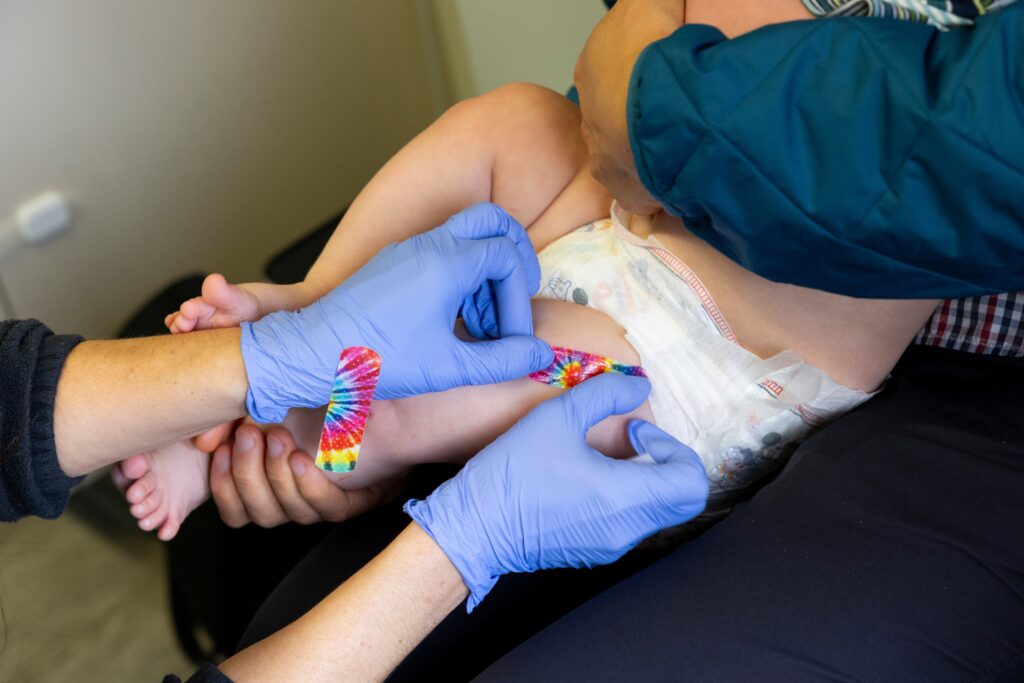
It should not be newsworthy for the American Academy of Pediatrics to issue vaccine recommendations, as it did last week. The organization, which represents about 67,000 pediatricians, has done so every year since 1935, in close coordination with the federal government.
Yet AAP’s latest guidance is a ray of hope, as it explicitly rebukes Health Secretary Robert F. Kennedy Jr.’s efforts to upend the childhood immunization schedule. Even more heartening is that the document was quickly endorsed by 12 other major medical organizations, including the American Medical Association, the American Academy of Family Physicians and the American College of Obstetricians and Gynecologists.
Last month, HHS announced it would overhaul the vaccine schedule by removing universal vaccine recommendations for six diseases (out of 17), including influenza, rotavirus and meningococcal disease. In doing so, it sidestepped the standard processes that has long governed vaccine policy and ignored decades of rigorous, evidence-based guidance.
AAP’s guidance rejected those changes. Its recommended vaccines mirror what the Centers for Disease Control and Prevention previously endorsed.
There’s no question this was the right call. Influenza remains one of the leading causes of vaccine-preventable hospitalization and death. Last season was among the most severe in years, according to CDC’s own data, causing at least 560,000 hospitalizations and 38,000 deaths. Rotavirus once caused more than 55,000 pediatric hospitalizations annually; routine vaccination has cut this by about 80 percent. Meningococcal disease, while less common, is rapidly progressive and often fatal or permanently disabling, making prevention through vaccination especially critical.
Sean O’Leary, a pediatrician and chair of AAP’s infectious diseases committee, told me the federal government’s recommendations are no longer grounded in evidence. “I think most pediatricians recognize what’s going on is really not acceptable and really so far out of the norm that we’re going to continue to follow the science,” he said.
That stance is not just symbolic; the AAP’s decision to publicly break from federal guidance carries concrete advantages. First, it provides legal and professional clarity for clinicians who worry about potential liability. It helps establish standard of care and reassures physicians that continuing to recommend vaccines is mainstream, responsible pediatric practice.
Second, the guidelines help clinicians navigate growing confusion among parents who are hearing conflicting messages. By pointing to a single, unified schedule endorsed by major medical societies, clinicians can confidently explain why this guidance — rather than the suddenly revised federal one — is the right one to follow. “This is the one based on science, this is the one that is going to best protect your children,” O’Leary said. “All of the medical professional societies agree, and this is what I recommend.”
Finally, it provides a clear template that other institutions can rely on. Many large health systems, including Johns Hopkins, Stanford, Dartmouth and Children’s Hospital of Philadelphia, have already announced that they will follow the AAP’s guidance.
Many state health departments have as well. Both the West Coast Health Alliance, which includes California, Hawaii, Oregon and Washington, and the Northeast Public Health Collaborative, which includes Connecticut, New York, , Massachusetts and seven others, have indicated they will follow AAP’s lead. In total, 27 states and D.C. — including four led by Republican governors — have said they will not heed the CDC’s new vaccine schedule and instead rely on its prior guidance or recommendations from external medical organizations.
O’Leary thinks insurers will probably follow suit. AHIP, the trade group representing major U.S. health insurers, announced in September that companies will continue to cover all vaccines previously recommended by the CDC through 2026. He expects coverage to persist beyond that because vaccination makes economic sense. “It actually saves them money by preventing hospitalizations and deaths,” he said.
Taken together, these moves may blunt some of the most damaging effects of Kennedy’s policies. Physicians can still recommend routine immunizations with confidence. And even as trust in federal guidance erodes, clinicians and families can turn to trusted medical institutions.
Of course, some states will gladly follow Kennedy’s anti-vaccine crusade. And there are limits to what medical societies can do. They would have limited ways to protect access to vaccines if the government were to withdraw approvals or weaken liability protections for manufacturers so much that vaccine production becomes financially untenable.
These worst-case hypotheticals might sound extreme, but so did the idea that the CDC would retreat from its gold-standard childhood immunization guidance. That is precisely why medical organizations must remain aligned and prepare to push back, before vaccines — rather that the diseases they once prevented — are relegated to the history books.
The post A ray of hope breaking through RFK Jr.’s anti-vaccine campaign appeared first on Washington Post.