The House is expected to vote this week on a measure to block D.C. from opting out of the Trump administration’s federal tax cuts — an effort that could lessen the city’s anticipated revenue by $600 million and upend its tax rules in the middle of filing season.
Like various states, the D.C. Council voted in November to divorce the city from President Donald Trump’s federal tax cuts in the One Big Beautiful Bill, a move that freed up $600 million through 2029 and that lawmakers in part put toward funding a local child tax credit.
But the potential action from Congress would force the city to adopt the federal tax code even for its local taxes and wipe out that revenue bump, preventing funding for the child tax credits. D.C. officials say that in addition to the expected revenue hit, the congressional action would sow fiscal chaos for the city; according to a letter that the city’s chief financial officer sent Congress on Monday, the sudden about-face could force D.C. to suspend its filing season for several months and extend tax deadlines into the fall.
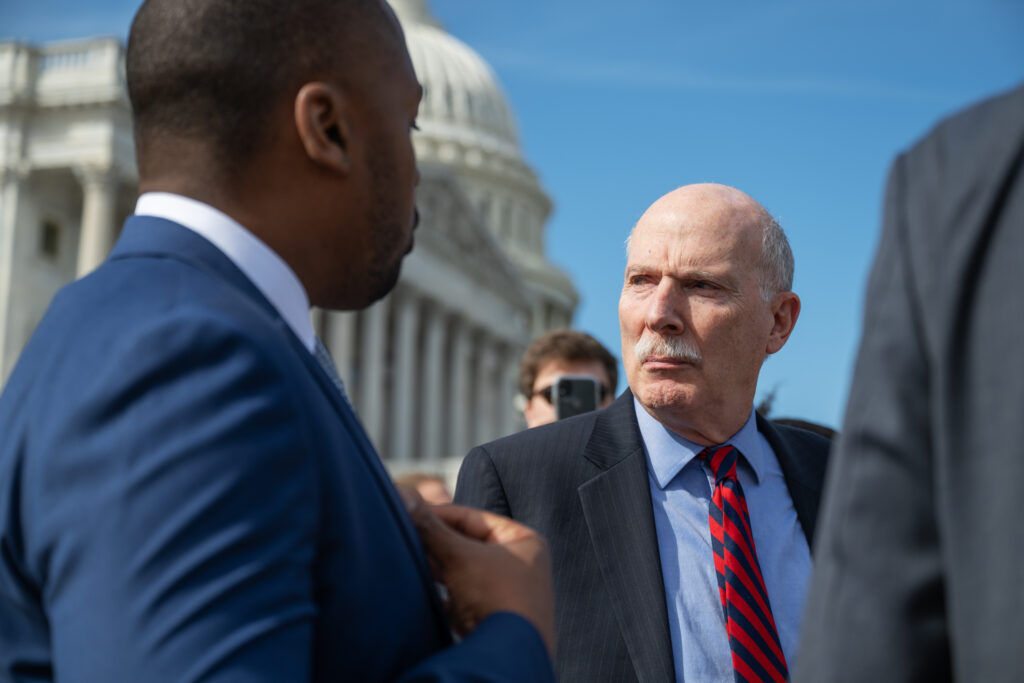
“It’s just going to be a mess,” D.C. Council Chairman Phil Mendelson (D) said at a news conference Monday.
The measure is moving fast. The House Rules Committee considered a disapproval resolution blocking the city’s tax changes on Monday, teeing up a House vote this week. The Senate has scheduled a committee vote on the same disapproval resolution on Wednesday, and if it clears the committee, the resolution could go to the Senate floor for a vote. It would not be subject to the filibuster, requiring only a simple majority to pass.
Rep. James Comer (R-Kentucky) said during the Rules debate Monday that D.C.’s decision to opt out of the tax cuts would hurt D.C. residents’ pocketbooks as well as local businesses by excluding the local tax code from various tax exemptions. He called the council’s action “misguided,” requiring Congress to correct it.
“These reforms provide much needed tax relief for both individuals and businesses,” he said of the One Big Beautiful Bill tax changes, “relief that keeps more of Americans’ money where it belongs: in their pockets. However, the D.C. Council has cherry-picked pieces of these federal tax reforms and decided to just ignore the application in the local tax code.”
D.C. Mayor Muriel E. Bowser (D) and Mendelson urged congressional leadership to oppose the disapproval resolution in a joint letter Monday. Congress has the authority to repeal locally passed D.C. laws, a function of the city’s limited autonomy under the Home Rule Act.
“These resolutions are an intrusion on the District’s Home Rule authority and would have major and immediate impacts on tax administration in the District,” they wrote, adding that the rapid midyear tax changes would lead to confusion, delays and extra costs.
D.C. Chief Financial Officer Glen Lee said in a separate letter to congressional leaders Monday that if the measure were to pass, the city’s tax revenue office would have to update forms and instructions, reprogram its tax processing system and communicate the changes to third-party tax processing vendors that residents use to file taxes. Lee anticipated these adjustments would require “several months” and extend D.C. tax filing deadlines into the fall — also generating “millions of dollars of additional expenses” for the city and potentially creating a cash flow problem because of delayed tax collection.
D.C. has increasingly tussled with GOP lawmakers over the ability to spend its own money in the budget. For some lawmakers, the impending congressional action recalled the dramatic episode last year when Congress blew a $1 billion hole in the city’s active 2025 budget by omitting routine language from a spending bill. City officials were able to use a 2009 law as a work-around but still had to cut about $350 million from the budget in the middle of last fiscal year.
“This feels like déjà vu,” said council member Christina Henderson (I-At Large).
The situation differs in this case in that the money is not yet in the bank, Mendelson said. But the roughly $600 million is expected to be factored into the city’s financial plan during the CFO’s next revenue estimate later this month, which will inform the mayor’s budget proposal, Mendelson said. That could leave her with over $600 million less in revenue to work with than anticipated, he said.
D.C. officials point out that they were not unique in choosing to unlink the local tax code from the federal one; a dozen states did so in various forms. “We’re just the only one that the Congress can mess with about it, because we’re not a state,” said Henderson.
Staring down a projected revenue downturn because of the Trump administration’s mass layoffs of federal workers, the D.C. Council saw its divorce from Trump’s tax bill as a way to boost available revenue.
The decisions to modify the tax laws, Bowser and Mendelson wrote in their letter, “are the same type of policy judgments that every state and local government routinely makes on behalf of their residents.”
That said, the move also drew some pushback given city lawmakers changed the tax code on an emergency basis without a public hearing. And some critics objected that it also eliminated tax deductions that could help Washingtonians or D.C. businesses, and committed a portion of the revenue to a new program, the child tax credit, rather than banking it given the unpredictable economic climate.
D.C. exempted itself from 13 of the One Big Beautiful Bill’s 84 provisions, including various corporate tax breaks and exemptions from tax on tips, overtime earnings and personal car loan interest payments. Federal exemptions will still apply to D.C. residents and businesses on the federal return.
Lawmakers opted to use about $239 million of the funds generated by the decoupling to implement tax refunds of up to $1,000 per child for families, depending on household income. The measure passed with support from 11 of 13 council members; the sole “no” votes were Henderson and Mendelson, who were in favor of the decoupling — just not the choice to immediately redirect some of the revenue to tax credits.
The combined effect of the child tax credit and earned income tax credit was projected to reduce child poverty in D.C. by 20 percent, according to an unpublished analysis that the DC Fiscal Policy Institute commissioned from Columbia University and summarized in a December blog post.
Proponents of the policy say reversing it would sabotage those poverty reduction efforts.
“So by voting yes for this bill you are voting yes to spike child poverty rates by 20 percent, or prevent them from being reduced by 20 percent,” said Tazra Mitchell, chief policy and strategy officer at the DC Fiscal Policy Institute.
“There is no need for this,” added council member Zachary Parker (D-Ward 5), who sponsored the child tax credit legislation. “Folks ought to do their damn jobs and leave D.C. alone.”
Mendelson also warned that the resolution would make D.C.’s revenue forecast more uncertain — in turn putting the District at risk of another downgrade from credit agencies, which could lead to higher borrowing costs for city infrastructure projects.
Moody’s Ratings downgraded the city from its coveted triple-A bond rating last year, citing the Trump administration’s massive federal jobs cuts and uncertainty over whether Congress would cut Medicaid.
Lee, whose office goes to Wall Street and handles debt refinancing, wrote in his letter that the disapproval resolution would have “no material impact” on the city’s financial plan, noting that he already factored in the impact of the One Big Beautiful Bill in his September revenue forecast, suggesting the move would retain the status quo.
Mendelson said he thought Lee was “talking like an accountant.”
“He’s not talking about the opportunity of additional revenue,” he said.
Though Republicans in Congress have launched many efforts in recent years to block or amend D.C. laws, their last successful disapproval resolution was in 2023, when both chambers voted to block a major overhaul of the city’s criminal laws with Democratic support. It was the first time in more than 30 years that Congress had voted to overturn local D.C. legislation. Both chambers also voted in 2023 to overturn a police reform bill passed by the D.C. Council, but then-President Joe Biden vetoed the effort.
During Monday’s House Rules Committee debate, several Democrats voiced opposition to the disapproval resolution.
Rep. Jim McGovern (D-Massachusetts) read from Bowser and Mendelson’s letter on the dais, noting the impact the resolution would have on the city’s tax season. “This is insane,” he said. “I really am frustrated that this is what we’re going to spend our time doing this week? A bill that’s going to create more chaos in the District? It doesn’t make any sense.”
Del. Eleanor Holmes Norton (D), the District’s nonvoting House delegate, said in a statement that Congress has never before overturned a D.C. provision intended to raise revenue, calling it unprecedented.
“This is not governance or oversight. It is sabotage, and the damage would be severe and intentional,” she said.
The post House vote could upend D.C.’s tax code, hit revenue mid-tax season appeared first on Washington Post.