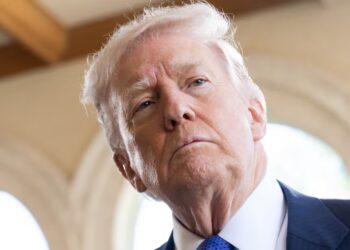
President Trump has backtracked on a major point in negotiations with Harvard, dropping his administration’s demand for a $200 million payment to the government in hopes of finally resolving the administration’s conflicts with the university, according to four people briefed on the matter.
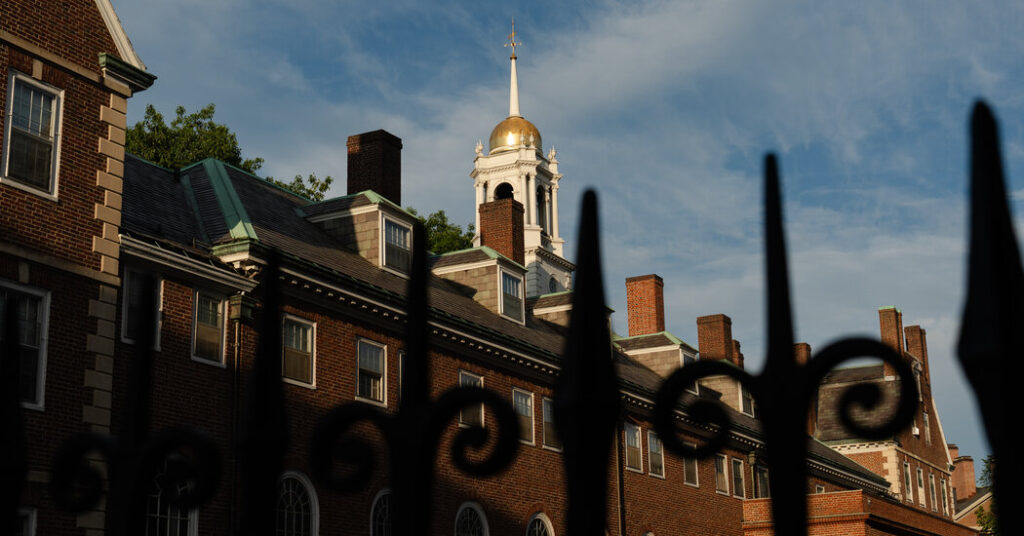
Harvard has been the top target in Mr. Trump’s sweeping campaign to exert more control over higher education. Hard-liners in his administration had wanted Harvard to write a check to the U.S. Treasury as part of a deal to address claims that university officials mishandled antisemitism, The New York Times previously reported. But Harvard, wary of backlash from liberal students and faculty, has rejected the idea.
Trump administration officials have indicated in recent days that the president no longer expects such a payment, according to the Harvard and Trump officials briefed on the matter, speaking on the condition of anonymity to describe private conversations.
But shortly before midnight, six hours after The Times reported that Mr. Trump had backtracked, he claimed the story was wrong and attacked The Times and Harvard. He said he was now seeking $1 billion “in damages” from Harvard and that the administration’s investigations of Harvard should now be criminal.
“This should be a Criminal, not Civil, event, and Harvard will have to live with the consequences of their wrongdoings,” Mr. Trump said in a post on Truth Social.
The White House’s earlier concession came amid sagging approval ratings for Mr. Trump, and as he faced outrage over immigration enforcement tactics and the shooting deaths of two Americans by federal agents in Minnesota. A deal with Harvard would hand the president a victory at a difficult time in his presidency.
But those same factors could also torpedo a deal, as some Harvard leaders now consider the risk of backlash even higher if they are seen as having any hand in easing the pressure on Mr. Trump, according to one person familiar with their thinking.
Some connected to the university, however, think Harvard has no option but to eventually cut a deal. The administration has repeatedly attempted to cut off research grants, which would be an untenable crisis. Like many major research universities, Harvard relies on federal funding for its financial model.
Harvard’s top governing board was scheduled to meet Monday and was expected to discuss Mr. Trump’s concession on money, according to two people with direct knowledge of the matter. A Harvard spokesman declined to comment about the latest shift in the talks.
“Negotiations with Harvard are ongoing,” said Madi Biedermann, the acting chief of staff for the Education Department. “The administration’s goal with Harvard, as with all its work on higher education, is to ensure campuses properly enforce civil rights laws, students are learning in an environment free from harassment and intimidation and campuses once again prioritize truth-seeking and merit.”
An Encounter at Davos
The latest chapter in the saga between Harvard and the White House opened two weeks ago in a tiny town in the Swiss Alps.
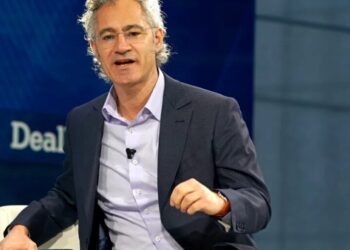
Mr. Trump had visited Davos to speak at the World Economic Forum, where he crossed paths with Stephen A. Schwarzman, the billionaire investment executive who has taken a role in the negotiations between Harvard and the White House. Mr. Trump asked Mr. Schwarzman to call him about the deal, according to four Trump administration and Harvard officials involved with the negotiations who were briefed on the matter.
The two men spoke last week, the people said, and Mr. Trump made clear he would no longer demand a $200 million payment from the university if that concession would secure the deal. The two sides have discussed additional terms, including provisions that affirm Harvard’s commitment to following federal law.
Linda McMahon, Mr. Trump’s education secretary, conveyed a similar message to Mr. Schwarzman last week in a separate conversation, saying that the administration was willing to forget about the fine, the officials said. Mr. Schwarzman declined to comment.
The Times reported in July that Harvard was willing to spend $500 million on work force programs as part of the deal. But the university rejected a more recent push by hard-liners in the administration to require the university to make $200 million of that a direct payment to the government, believing it would jeopardize its independence.
The administration’s new position may have found a more receptive audience last year, when top Harvard officials, including Dr. Alan Garber, the president of the university, had a strong desire to cut a deal that preserved the school’s ability to compete for federal research grants.
Recently, some top Harvard officials have grown uneasy about striking any deal while the administration’s actions are drawing scrutiny and rebukes. University negotiators also observed as other deals with the administration have gone awry.
For instance, Brown University and the University of Pennsylvania agreed to deals that appeared to resolve issues between the school and the administration. Penn agreed to align its policies to the administration’s strict definitions of gender, while Brown agreed to similar changes plus $50 million of spending on work force programs.
But the administration later returned to both universities, asking leaders to sign on to a “compact” that would have offered greater access to research funding in exchange for an embrace of Mr. Trump’s policies. Both universities rejected the offer.
In another example, early in Mr. Trump’s second term, major law firms avoided federal sanctions after signing deals with the administration in which they agreed to do pro bono work. Mr. Trump then told the firms the pro bono requirements could be satisfied by tending to his personal legal problems. The firms later started doing free work for the Commerce Department.
Harvard’s Calculus
Harvard has also seen that it can survive bombardment from the White House.
Last year, a federal judge in Boston both restored Harvard’s federal funding and rebuffed the administration’s effort to block international students from enrolling. Though the administration launched a variety of civil investigations into the school, none of the inquiries have turned into criminal investigations. And the administration, despite threats, has not followed through on having the university disqualified as a federal contractor.
Dr. Garber’s leadership, meanwhile, is being praised, including by rival universities.
On Tuesday, Dr. Garber, who became president of Harvard in 2024, was honored by Yale University as a “legend in leadership,” in large part because of his pushback on the White House.
Jeffrey Sonnenfeld, the Yale School of Management professor who announced the award, described Dr. Garber as “American higher education’s most consequential defender of academic freedom.” (Yale also presented an award to James E. Ryan, the former president of the University of Virginia who was forced out under pressure from Mr. Trump’s Justice Department.)
In a lengthy email to the Harvard community on Thursday, Dr. Garber made no direct reference to the university’s negotiations with the Trump administration. But writing that “no institution can solve the hardest problems alone,” he argued that Harvard needed to “strengthen collaborations with other colleges, universities, research organizations and industry partners.”
Michael C. Bender is a Times correspondent in Washington.
The post Administration Drops Demand for Cash From Harvard After Stiff Resistance appeared first on New York Times.