President Donald Trump’s Justice Department has been forced to take down thousands of documents relating to Jeffrey Epstein that may have identified victims, admitting that “technical or human error” had botched the process.
In another embarrassing blow to Attorney General Pam Bondi and her department, the names and identifying information of numerous victims of the late sex offender were released unredacted on Friday, including several women whose names have never before been publicly associated with the case.
Justice officials were forced to address the issue in court on Monday, after survivors demanded that the DOJ site be taken down because of the redaction failures.
“The Department now has taken down several thousands of documents and media that may have inadvertently included victim-identifying information due to various factors, including technical or human error,” the DOJ said in a letter to two U.S. District Court judges with the Southern District of New York.
“As of the date of this letter, the Department now has taken down nearly all of those materials specifically identified by victims or their counsel, as well as a substantial number of documents identified independently by the Department. The Department is reviewing those documents and will re-process them.”
More than 3.5 million new documents were released last week, marking what Deputy Attorney General Todd Blanche said was now the end of the department’s review into the Epstein files.
But this was only about half of the 6 million documents the department reviewed, prompting renewed fears of a cover-up.
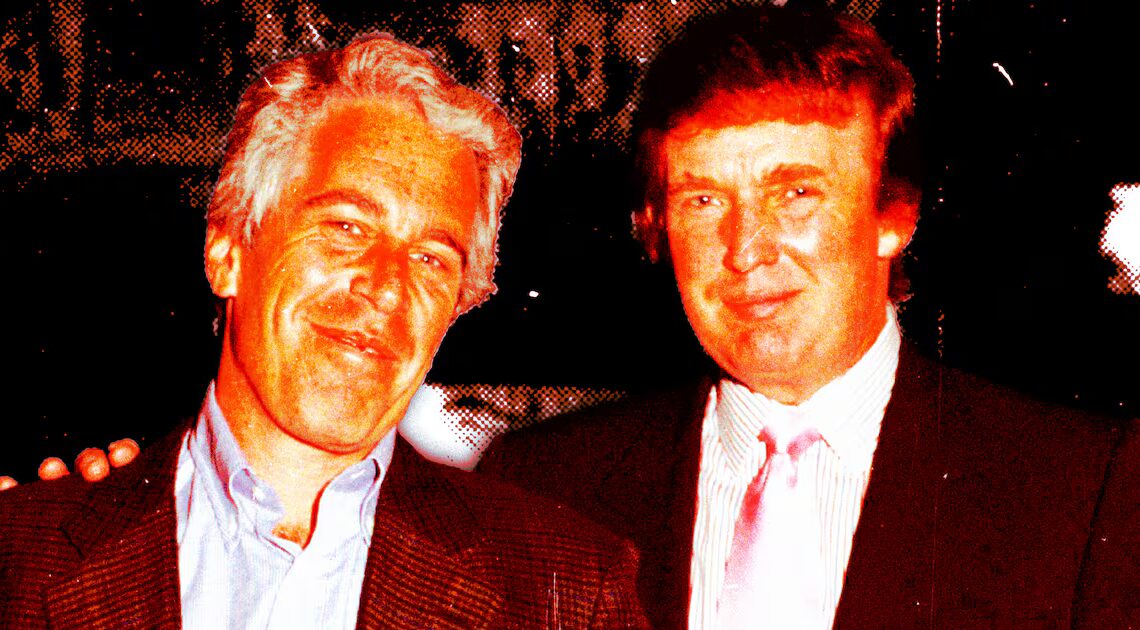
Trump, who has consistently claimed the files were a “hoax,” features thousands of times in the latest trove.
Among the references to Trump are uncorroborated FBI tips accusing him of sexual assault, fresh ties to Epstein and Maxwell, and emails between Epstein and his various associates that reference the president.
However, Trump has consistently denied wrongdoing and is now threatening to sue people over the files, including author Michael Wolff, co-host of the Daily Beast’s Inside Trump’s Head podcast, who he claims “was conspiring with Epstein to do harm to me.”
Epstein was a source when Wolff wrote his bestselling book Fire and Fury, which detailed the chaos of the first months of Trump’s first term.
“I have nothing to do with Jeffrey Epstein,” Trump said on Monday, adding that, “frankly, the DOJ should just say ‘we have other things to do.’”
But survivors hit out at the department for holding back so much information, and for exposing them while the names of some potential predators were redacted.
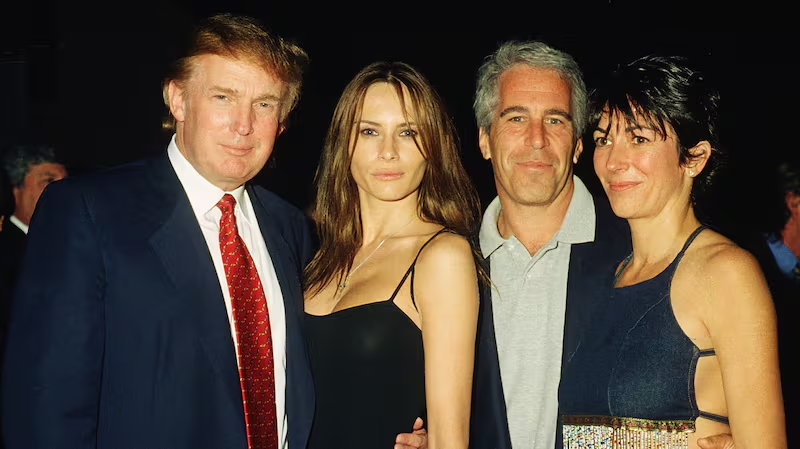
In one filing, for instance, one of Epstein’s victims told the FBI how Ghislaine Maxwell effectively tried to pimp her out to Trump and his party pals, making it clear that she was “available” for them.
But the names of the men involved in the victim’s testimony, other than the president’s, remained redacted.
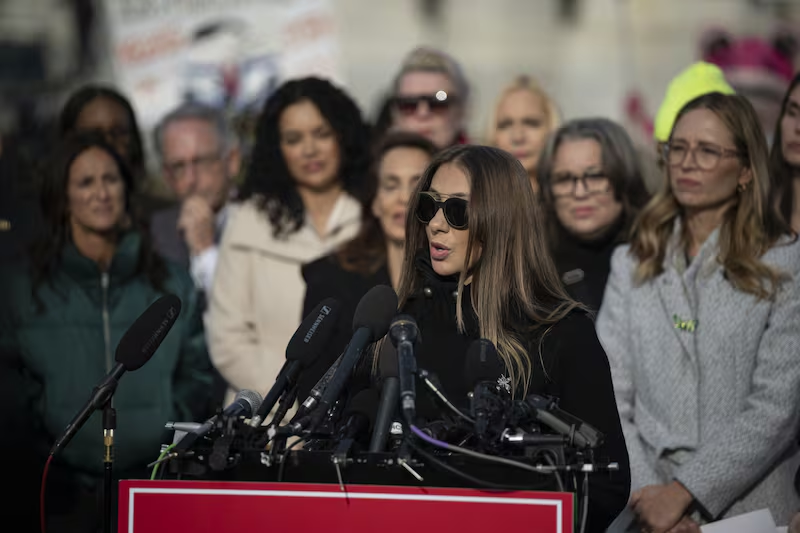
“This latest release of Jeffrey Epstein files is being sold as transparency, but what it actually does is expose survivors. Once again, survivors are having their names and identifying information exposed, while the men who abused us remain hidden and protected. That is outrageous,” survivors said in a statement.
“As survivors, we should never be the ones named, scrutinized, and retraumatized while Epstein’s enablers continue to benefit from secrecy. This is a betrayal of the very people this process is supposed to serve.”
The department’s letter to the court was submitted by Jay Clayton, the U.S. attorney for the Southern District of New York, who Bondi handpicked earlier this year to investigate Epstein’s links to former President Bill Clinton, LinkedIn co-founder Reid Hoffman, and former Harvard President Larry Summers.
In the letter, the Justice Department told the court that it had “further expedited its processes” for responding to the concerns of victims and for removing documents to be reexamined for additional redactions.
The release of the latest tranche also came 42 days after the department was required by law to release all the relevant files relating to Epstein’s networks and crimes, as required under the Transparency Act that Trump reluctantly signed into law last year.
According to Blanche, some of the files that would not be released include documents that could jeopardize ongoing investigations, anything that breaches attorney-client privilege, files that identify victims, and any depiction of child pornography. Images of death, physical abuse, or injury would also not be released, he said.
The post Trump’s DOJ Scrambles to Take Back Epstein Files appeared first on The Daily Beast.