This is an edition of The Atlantic Daily, a newsletter that guides you through the biggest stories of the day, helps you discover new ideas, and recommends the best in culture. Sign up for it here.
One year ago, President Trump conducted a hostile takeover of the Kennedy Center, the venerable Washington, D.C., performing-arts institution. The president said he had never attended a show there, but he was confident that he alone knew what the center needed.
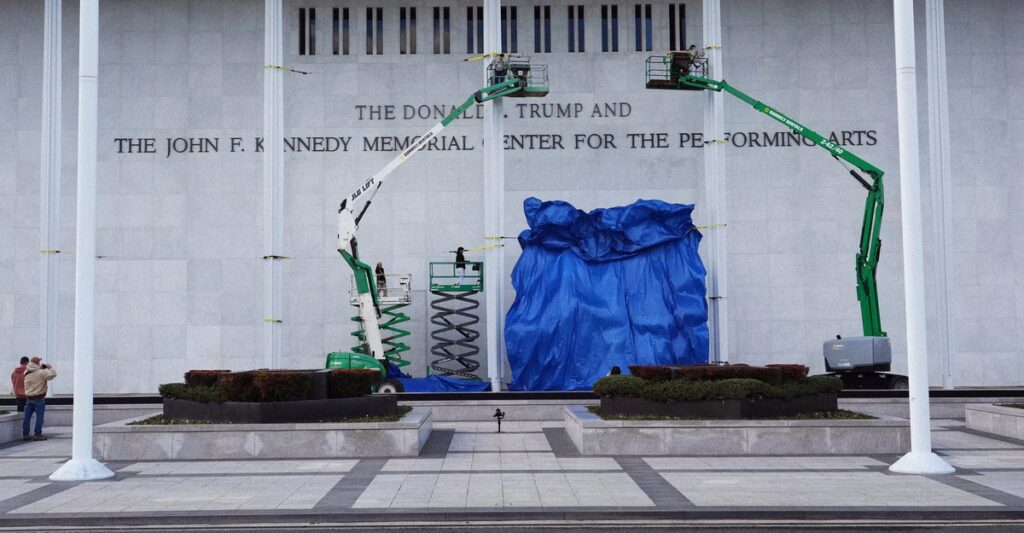
Last night, Trump delivered an implicit admission of defeat, announcing that the center will close on July 4 for two years. Trump brought the same theory to the Kennedy Center that he does to most of his moves: He believes that he knows better than the experts, and that a “silent majority” actually supports his disruptions. That certainty seems to have led him to a bad bet here.
“I have determined that The Trump Kennedy Center, if temporarily closed for Construction, Revitalization, and Complete Rebuilding, can be, without question, the finest Performing Arts Facility of its kind, anywhere in the World,” the president wrote on Truth Social. “The temporary closure will produce a much faster and higher quality result!”
If you’ve been paying attention, this explanation will be perplexing. In October, Trump posted that “Many major improvements” were under way at the center—including, bafflingly, the addition of marble armrests on chairs—but that “We are remaining fully open during construction, renovation, and beautification.” (For the record, the Kennedy Center underwent a $250 million expansion just seven years ago.)
In December, when Trump added his name to the building’s facade—in violation of statute and grammar—he boasted, “We saved the building. The building was in such bad shape, both physically, financially and every other way. And now it’s very solid, very strong.” Just a month ago he added, “A year ago it was in a state of financial and physical collapse. Wait until you see it a year from now!!! Like our Country, itself, it will rise from the ashes.”
Now Trump is saying that a year from now the center will be closed and dark. Trump’s contradictory statements and the absence of an independent board or any notification to Congress make these claims of a building in need of repair unverifiable at best, and most likely nonsense. (He also hasn’t said anything about how he would pay for this renovation.) A more plausible reason for the closing is that under Trump, the Kennedy Center can’t hold on to staff, artists, or audiences.
When Trump took over, he fired Deborah Rutter, the respected programmer who was the center’s president, and replaced her with Richard Grenell, a political bagman who had previously been deployed as acting director of national intelligence, ambassador to Germany, and envoy to Venezuela, but who had no arts experience. (To be fair, he had little or no qualifications for most of those jobs.) Other staff haven’t stuck around either. “Almost every head of programming has resigned or been dismissed,” The Washington Post notes.
The latest of these was Kevin Couch, the new head of programming, who quit less than two weeks after his hiring was announced. One can imagine the job would be no picnic. In recent weeks, the composer Philip Glass yanked a new symphony commissioned by the center. The opera singer Renée Fleming also canceled two performances. The Washington National Opera announced that it was departing the center. The jazz musician Chuck Redd canceled a long-running Christmas Eve concert. Grenell’s threat to sue Redd for $1 million is unlikely to make artists more eager to book shows.
Grenell has accused artists of politicizing the center. “The left is boycotting the Arts because Trump is supporting the Arts,” he posted on X. “The Arts are for everyone—and the Left is mad about it.” But this statement has it all backwards. Trump grabbed unprecedented presidential control and politicized his own involvement in the arts, promising to use his leadership of the Kennedy Center to vanquish leftist culture. One artist who chose to play, the folk guitarist Yasmin Williams, said that an organized group attended and heckled her.
Given the hollowing out of the schedule and Trump’s unpopularity in Washington, ticket and subscription-package sales have fallen steeply. The Washington Post found that since September, “43 percent of tickets remained unsold for the typical production. That means that, at most, 57 percent of tickets were sold for the typical production.” (Some of those tickets may have been given for free.) For comparison, 93 percent of tickets were sold or given for free in fall 2024. One of Grenell’s dictates was that the center would book only shows that broke even or were profitable, yet instead the center is driving patrons away. CNN reports that the Kennedy Center wasn’t even able to book performances for next season. Closing the doors for two years just makes official what was already happening.
Trump believed that if he grabbed the Kennedy Center’s reins and started booking shows that conformed to his taste—and to that of some of his friends and MAGA fans—the venue would be wildly popular. It turns out, though, that a 79-year-old New York–born billionaire whose tastes run to gilded accents and kitschy musicals isn’t a good proxy for either the general population or arts patrons in Washington. As my colleague Spencer Kornhaber recently wrote, Trump’s term dawned with expectations of a huge cultural shift. Instead, popular culture has remained stubbornly indifferent to MAGA aesthetics.
Trump keeps making a version of this error. His first term was a series of overreaches, all confidently executed in the belief that the silent majority would back him. Instead, he lost in 2020. His second-term win renewed his overconfidence. Now he believes that because many Americans wanted tighter border security, they will also support violent crackdowns in the streets of American cities; instead, his immigration approval keeps sinking. He believes that because he won the election in part on his promises to fix the economy, Americans are willing to tolerate high inflation; instead, polls show that voters’ confidence in the future is declining.
The closure of the center also fits into another pattern: As I wrote last week, Trump has proved adept at destroying things but shows little interest in building them back up. Trump’s previous predictions for the Kennedy Center haven’t borne out, so some skepticism is warranted now. Even if the physical overhaul succeeds, the center will still have the same problems of audience, artists, and staff when it’s done—only in a gaudier space. In effect, Trump appears to have graffitied his name on an empty shell. “I am doing the same thing to the United States of America, but only on a ‘slightly’ larger scale!” he wrote in an October post about the center’s makeover. This time around, his harshest critics might be the first ones to agree.
Related:
- Ryan Miller: Why my band, Guster, played the Kennedy Center
- Trump’s golden age of culture seems pretty sad so far
Here are four new stories from The Atlantic:
- Pete Hegseth delights in violence.
- The real reason ICE agents wear masks
- The man who broke physics
- Stop meeting students where they are.
Today’s News
- Fulton County, Georgia, plans to sue the FBI and the Justice Department over last week’s seizure of 2020 election records, arguing that the search warrant was improper and that agents took original ballots and voter rolls without proper custody procedures.
- The government is likely to remain partially shut down until at least tomorrow, when the House is expected to vote on a funding package. Most Democrats are opposed and say they will not help pass the bill without additional restrictions on immigration enforcement.
- Taylor Rehmet, a Democrat, scored a major upset by winning a Texas state-Senate special election on Saturday in a deep-red district near Fort Worth that Trump had carried by 17 points.
Dispatches
- The Wonder Reader: Rafaela Jinich explores stories on the upside of not fitting in.
Explore all of our newsletters here.
More From The Atlantic
- Do you feel the AGI yet?
- A hidden lesson of the Minnesota welfare scandal
- The storms that teach what we can tolerate
- A social-media ban really could do a lot of good.
- Trump’s new method of humiliation
- The broken relationship between Minnesota and the federal government
Evening Read
The Father-Daughter Divide
By Isabel Woodford
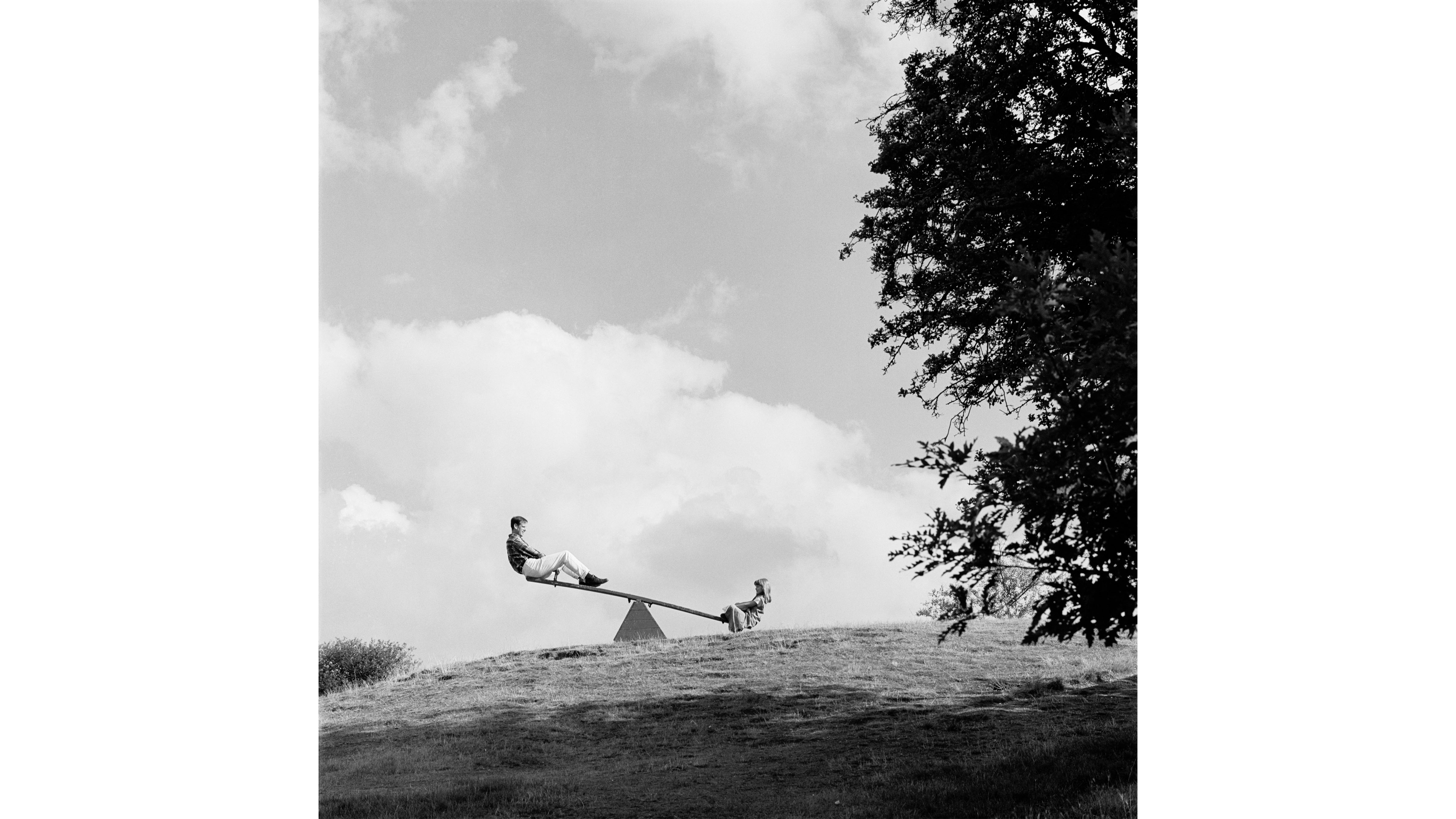
Growing up, Melissa Shultz sometimes felt like she had two fathers. One version of her dad, she told me, was playful and quick to laugh. He was a compelling storyteller who helped shape her career as a writer, and he gave great bear hugs. He often bought her small gifts: a pink “princess” phone when she was a teen, toys for her sons when she became a mom. Some of their most intimate moments came when she cut his hair; it was, she said, “a way to be close without talking.” He was there for her in hard times, too. When her engagement ended, he helped pack her things and drove her home.
But she told me their relationship could also be turbulent. The other version of her father was “dark” and would “get so angry” that he seemed to lose control. He would freeze her out for months at a time if she challenged him. He’d call her names, even in front of her own kids. He died when she was in her 30s, and she grieved intensely, though she doubted whether they ever fully understood each other. Now in her 60s, Shultz told me she still mourns the relationship.
Culture Break
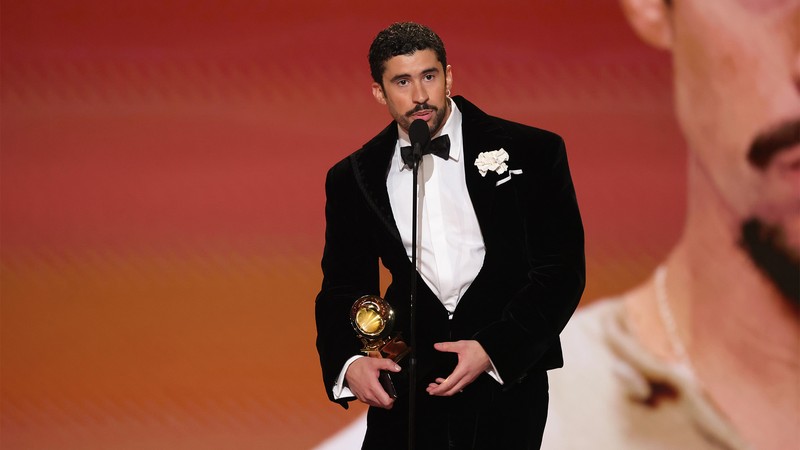
Explore. Spencer Kornhaber writes about the big message of the 2026 Grammys.
Read. Escape!, a new novel by the former Survivor contestant Stephen Fishbach, mines the drama of competition shows to tell a cautionary tale about trying to edit down the mess of life, Julie Beck writes.
Rafaela Jinich contributed to this newsletter.
When you buy a book using a link in this newsletter, we receive a commission. Thank you for supporting The Atlantic.
The post Trump Made a Bad Bet on the Kennedy Center appeared first on The Atlantic.