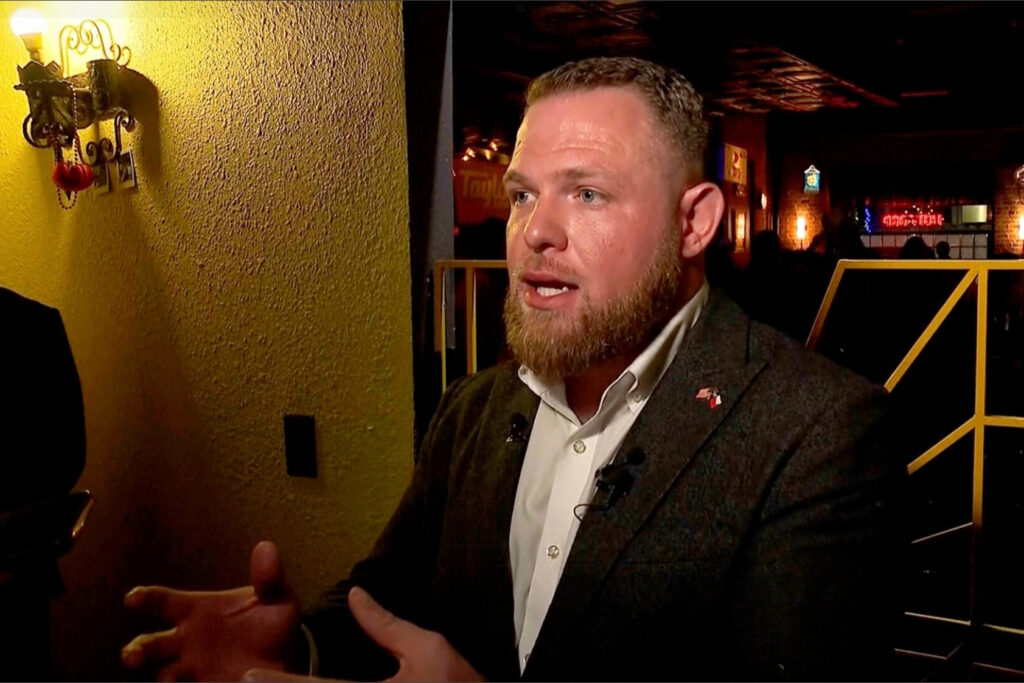
Democrat Taylor Rehmet’s shocking victory on Saturday, flipping a Texas state Senate seat in a district that President Donald Trump won by 17 points in 2024, is sending shock waves throughout the political world. It should, but there are mitigating circumstances that could mean the midterm implications are less dire for Republicans than they appear.
It has become normal in the Trump era for Democrats to dramatically overperform in special elections compared with the most recent presidential contest. The Democratic base hates Trump so much that it will turn out in much higher numbers than its GOP counterpart in non-regularly scheduled elections.
That might have been what happened here. By Monday morning, with 95 percent of the vote counted, the total came to 94,880 votes. That compares with nearly 278,000 cast in the 2022 midterm.
Something similar happened in 2017 in South Carolina’s 5th Congressional District special election. Republican Ralph Norman won a seat by only three points in a seat that Trump carried by 18.5 points the year before. But only about 88,000 people voted in the special. In the 2018 midterm — a historically bad one for Republicans — Norman won by over 15 points as turnout rose to over 248,000.
There is some data that suggests turnout was not the only factor at play in the Texas race. Ross Hunt, a local conservative data analyst, posted on X that Republican primary voters or voters from GOP households still accounted for about half of the voters. He contends this shows that turnout was only part of the problem: Inability to persuade independents or even some Republicans was a larger one.
That may be, but one must then ask whether that failure is a national or a local issue. The GOP candidate, Leigh Wambsganss, is a conservative Christian activist whose Instagram account touts her as “ULTRA MAGA.” It might just be that she was out of step with a large part of the Trump 2024 constituency, which, contrary to common belief, contained plenty of regular Republicans and moderate independents.
The outcome nonetheless is yet more proof that the GOP faces a 2018-style midterm shellacking if things don’t improve.
Still, in 2018, Democrats did not win many House seats that Trump had carried by double digits in 2016, and did not flip any that Trump had won by 17 or more. (Longtime Democratic incumbent Collin C. Peterson did win his rural Minnesota seat, in a district Trump had carried by over 30 points, against underfunded opposition.)
The Texas shocker does not, thus, suggest that deep-red seats are at risk of turning blue in November.
The result does jibe with the larger body of evidence from November’s New Jersey and Virginia elections, and other special elections, that Democrats are on track to carry lots of traditionally GOP seats that are slightly less ruby red. Democrats gained 15 seats in Virginia’s 100-seat House of Delegates, for example, and now hold every seat that Trump won by 4.4 points or fewer, according to data from the Virginia Public Access Project.
Do that in November, and Democrats would win the U.S. House and probably gain two Senate seats.
That dismal outcome for the GOP is precisely what one should expect when their president’s job ratings dwell in the low 40s. Trump’s rating now sits below those of presidents Barack Obama and George W. Bush at similar times in their second terms. Both presidents’ parties lost heavily in the ensuing midterms.
Nor is it hard to see why this is happening. Trump’s approval ratings on the economy have declined over the year as inflation remains stuck a bit below 3 percent and the job market worsens. The tragic killings in Minnesota by federal agents amid Trump’s deportation push, combined with the continuing air of confrontation in the streets, means even immigration has turned into a net negative for the president.
There’s a subtext to Trump’s problems, too. In 2024, he won the popular vote by decisively carrying voters who did not like him or Vice President Kamala Harris. They presumably saw the chaos that had erupted during President Joe Biden’s term: an uncontrolled border, the highest inflation since the 1980s and wars erupting around the world.
Trump said this wouldn’t have happened on his watch, and that he would put a stop to it. A year into his term, however, and the sense of chaotic disorder, domestically and internationally, is worse, not better. Wars aren’t ending, at least the ones that matter to Americans, and the never-ending drumbeat of startling news — much of it engendered by the White House — is simply unsettling to many.
Trump’s base may love it, but the voters that he and the GOP depend on — moderate independents — clearly do not.
The Texas special election result on Saturday should set off alarms in the White House. The fact that it probably won’t means the 2026 blue wave will likely continue to gather strength in the weeks and months ahead.
The post The Democratic win in Texas was shocking, except for this appeared first on Washington Post.