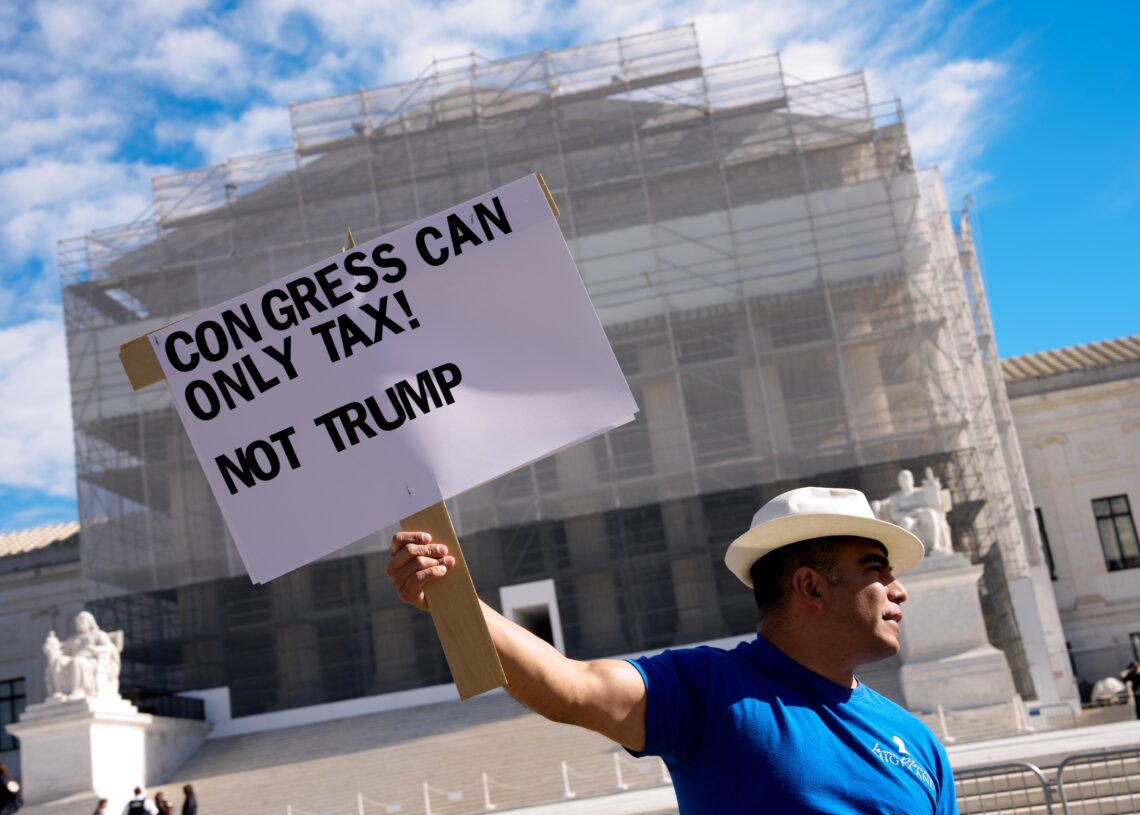
On May 12, 1952, the Supreme Court heard oral arguments in what is now probably its most important case on presidential power: Youngstown Sheet & Tube Co. v. Sawyer. With the Korean War raging, President Harry S. Truman had ordered the government to take over U.S. steel mills. The businesses sued and the Supreme Court had to decide, quickly, whether Truman exceeded his authority.
The justices held their conference to discuss the case a few days later. “Well, boys, the president got licked,” Justice Robert H. Jackson said to his law clerks after the meeting. On June 2 — just three weeks after oral argument — the court released its 6-3 ruling against Truman.
That lightning-fast timeline for a landmark case is striking as the country and the world await the current Supreme Court’s ruling on President Donald Trump’s global tariffs. Like Truman, Trump is citing national security to claim vast powers over private business in the United States.
But more than 12 weeks have already passed since the Nov. 5, 2025 arguments in the tariffs case. Now the court is on break, meaning a decision is unlikely for at least a few more weeks. Judging by the oral argument, Trump is the underdog in Learning Resources Inc. v. Trump. But the longer the case drags on without resolution, the less likely it is that the president got licked.
The Trump administration was prepared for an earlier decision. “We would expect a ruling in January,” Treasury Secretary Scott Bessent said in August, gaming out the timeline on Fox Business. On Jan. 9, when the court was scheduled to announce opinions, the solicitor general, who argued the case, and his staff appeared at the courthouse, according to SCOTUSblog. “Seeing who’s here, it’s not the case you thought,” said Justice Sonia Sotomayor.
The lengthy deliberations are a puzzle because the case is not particularly complex. The 1977 International Emergency Economic Powers Act allows the president to “regulate” imports in an emergency. Trump says this IEEPA language means he can impose unlimited tariffs on any country at will, even though the Constitution gives the tariff power to Congress. The Supreme Court has decided a series of similar cases in recent years emphasizing that Congress needs to speak clearly to give sweeping powers over the economy to the executive branch. This legislation doesn’t mention the power to tax or tariff.
During arguments in a different case last year, Chief Justice John G. Roberts Jr. highlighted the ability of the Supreme Court to move “expeditiously” when it has to, adding: “I think we did the TikTok case in a month.” Indeed, its January 2025 decision on legislation forcing the sale of TikTok came one week after oral arguments because of a looming deadline for the law to go into effect.
The uncertainty around Trump’s IEEPA tariffs is affecting businesses, of course, but also Congress — which can’t get an accurate revenue picture until the fate of Trump’s tariffs is settled — and the Federal Reserve, which has to factor in tariffs to its forecasts for inflation.
Then there’s Trump’s tariff-centered diplomacy. The president’s tariff threats against European countries over Greenland last month might have hurt his cause at the Supreme Court if they made him appear to be abusing power. On the other hand, they emphasized that Trump views tariffs as his primary foreign-policy tool — and the Supreme Court has historically been reluctant to intervene in a president’s foreign policy.
It could be that several justices are writing separate concurrences or dissents, prolonging the process. But the Youngstown case that took just three weeks featured seven opinions among the nine justices. Jackson, at least, began to draft his famous concurrence before hearing oral arguments, as law professor Gerard N. Magliocca notes. The current justices have known for months that the IEEPA tariff case was coming their way.
The 11-judge appeals court that heard the case last year took four weeks from oral argument in late July to its decision in late August. It ruled against the tariffs 7-4, but in a show of deference suspended the ruling as Trump appealed to the Supreme Court — meaning that the tariffs will have stayed in effect throughout the entire litigation.
It’s always perilous to make predictions about a case based on the deciders’ timeline, but some are possible. Criminal defense lawyers tend to be happy when the jury is out for a long time without convicting their client. And the longer a status quo stays in place, all else being equal, the less likely the Supreme Court is to disturb it. In a recent case on National Guard deployments, the Supreme Court sat on Trump’s appeal for a curiously long time before affirming the status quo — no National Guard in Chicago — that the lower courts had established.
It’s still hard to see how Trump wins this case, given the three liberal justices inclined against him, Justice Neil M. Gorsuch’s strict view of the separation of powers and the chief justice’s concern with the court’s nonpartisan reputation. But the odds of a clean and decisive defeat for the president are going down, and the odds of some sort of negotiated settlement are going up. Perhaps the justices are trying to engineer a way to block the tariffs only prospectively, without inviting an avalanche of lawsuits over refunds. That could be a worthy goal, but the damage from judicial delay is growing.
The post A mysterious delay in the Supreme Court tariffs case appeared first on Washington Post.