SAN ANTONIO — The 5-year-old boy, in a blue knit bunny hat and Spider-Man backpack, was returning from preschool when immigration officers detained him late last month in Minneapolis. A few days later, officers there took custody of a 2-year-old girl after breaking her family’s car window.
Liam Conejo Ramos and Chloe Renata Tipan Villacis, along with their fathers, were flown to a family immigration detention center in Dilley, Texas, an hour south of San Antonio, where detainees face long lines for basic supplies and inadequate medical care, according to people who have been housed there. They are among an escalating number of children swept up in the Trump administration’s enforcement dragnet, which has drawn mounting public outrage over its aggressive tactics and increasingly indiscriminate ramifications.
The U.S. government does not provide direct information about children in immigration custody. But federal data on family detention, and independent analyses of child detentions, suggest immigration authorities are increasingly ensnaring the youngest and most vulnerable lives in President Donald Trump’s effort to deport massive numbers of undocumented immigrants.
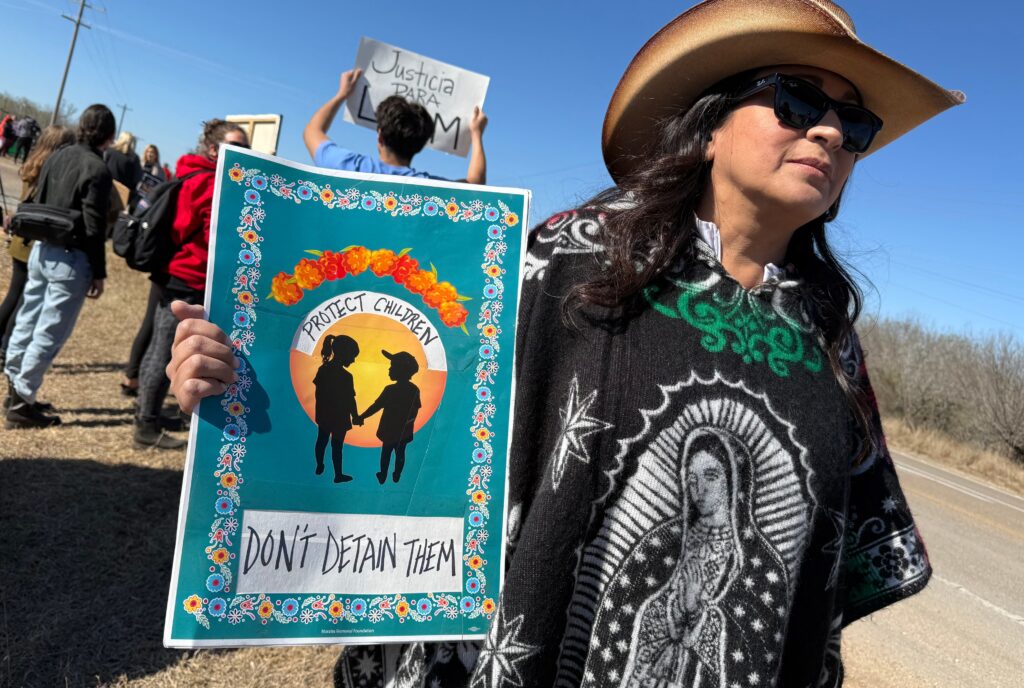
“There are other options, regardless of what you believe about immigrants, but you do not have to put children in detention,” said Dianne Garcia, a pastor at a San Antonio church that serves an immigrant population. She said authorities are trying to instill fear in families so they choose to leave the country voluntarily.
On Saturday, a federal judge agreed that Liam should not be in federal custody. U.S. District Judge Fred Biery ordered him and his father released and lambasted the Trump administration’s “ill-conceived and incompetently-implemented government pursuit of daily deportation quotas, apparently even if it requires traumatizing children.”
The numbers are rising quickly. Over the past four months, the average number of people, including children and adults, held each month in family detention has nearly tripled, from 425 in October to 1,304 in January, according to Department of Homeland Security data.
An independent analysis by the Marshall Project, a nonprofit news organization, concluded that at least 3,800 minors under 18, including 20 infants, were detained in 2025. And ProPublica found that Immigration and Customs Enforcement last year sent approximately 600 children arrested inside the country to federal shelters built to house minors detained at the border. That is more than the entire number of children detained in federal shelters during the four years of the Biden administration.
Advocates and attorneys contend that hundreds more youth have been affected in cases, where authorities have separated families, which are not comprehensively tracked. Those include instances in which parents have been deported but their children remain in the United States in government custody.
Over decades, the federal government has relied on a patchwork of laws, court rulings and policies meant to ensure that minors are held in the least restrictive setting possible and released as quickly and safely as possible. Trump aides have instead prioritized his deportation goals and treated children as collateral damage, said Wendy Young, president of the immigrant rights group Kids in Need of Defense.
“In this past year, we’ve seen a lot of [the protections] dismantled and transformed again into a system that’s really more punitive and aligned with law enforcement goals than it is with child protection,” Young said.
DHS did not respond directly to questions from The Washington Post asking about the number of children in federal detention and the conditions described by some migrants and their attorneys. In an email, assistant secretary Tricia McLaughlin said the Dilley facility has been retrofitted for families and provides for their safety, security and medical needs.
“All detainees are provided with 3 meals a day, clean water, clothing, bedding, showers, soap, and toiletries,” she said.
Authorities do not separate families, McLaughlin said, as parents are asked if they want to be removed with their children or have them placed with someone the parent designates. In the cases of Liam and Chloe, authorities said they took custody because relatives abandoned or refused to take them. Chloe, like Liam, has been released, returned to her mother in Minneapolis, after the Trump administration belatedly complied with another judge’s order.
For years, most children in federal custody were those detained at the U.S.-Mexico border. As the administration succeeded in dramatically reducing border crossings, it has ramped up enforcement inside the country and detained more families who have lived here for years — including those whose children attend U.S. schools. Some families were awaiting immigration court decisions on their appeals to remain in the country when they were detained, lawyers said.
The impact is “just really, really damaging and catastrophic because of how sudden and swift and violent it is,” said Zain Lakhani, director of migrant rights and justice at the Women’s Refugee Commission, “and because it’s targeting a population that is just not prepared for this.”
Family shelters closed, then reopened
The South Texas Family Detention Center in Dilley, opened by the Obama administration in 2014 with a capacity of 2,400 detainees, ceased operations during President Joe Biden’s tenure. The Trump administration reopened the facility after authorities began detaining families in spring last year.
A second facility, in Karnes City, Texas, has been used to temporarily hold families but has primarily detained single adults in recent months, according to DHS detention data and attorneys representing people in both facilities.
The administration is moving to purchase and convert up to 23 industrial warehouses into large-scale detention centers, and authorities indicated in a draft document reviewed by The Post that some will include family housing.
The federal government has long struggled to comply with legal requirements for families and unaccompanied children. Many who are detained at the border seek asylum protections, and a federal court settlement does not permit minors to be held for longer than 20 days.
Families are buffeted by political winds, with their conditions shifting depending on the administration, said Elissa Steglich, a clinical professor at the University of Texas School of Law.
“Family detention has always been more a political device to make a statement about either border policy or the asylum system writ large,” she said.
Amid a border crisis in 2014, the Obama administration scrambled to hold tens of thousands of unaccompanied minors at crowded facilities on military bases, warehouses and chain-link enclosures. A public backlash prompted federal officials to move to other methods, including releasing the families and using electronic monitoring.
In his first administration, Trump implemented a zero-tolerance policy in which authorities separated thousands of children from their family members when they arrived at the border and prosecuted parents in an effort to deter more migration. But the administration reversed course amid public outrage.
The Biden administration closed three of the family detention centers. As the number of migrants crossing the border soared after the covid-19 pandemic, however, children and families were huddled into cramped tent facilities or housed in hotels at or near the border. The vast majority were released into the United States pending their immigration court proceedings.
In his second term, Trump has pushed to deport a record number of migrants, and authorities ramped up efforts to arrest families in spring in Texas after they reported for immigration court hearings or mandatory check-ins at ICE offices. A few months later, immigration advocates said, the administration began detaining families in San Antonio and other major cities.
The population at the detention facility in Dilley swelled. Immigration lawyers have said children have been held well beyond the 20-day legal threshold established in 1997 under a legal settlement known as the Flores agreement. Many children have been detained at routine immigration check-ins, immigration lawyers said.
Longing for home
Most of what is known about the day-to-day conditions inside the federal detention center comes from accounts provided by those who have been held there. In interviews with The Post, migrants and their attorneys described a facility that includes a chapel, library, commissary, infirmary and pharmacy.
There are also recreational spaces and a school where children can watch educational videos, said Edward, an immigrant from Colombia who, like others who provided first hand accounts, spoke on the condition that only their first names be used out of fear of reprisals from the government. He and his two sons, ages 11 and 10, spent 47 days in the facility after being detained during an ICE check-in in December.
He said the living spaces consist of several corridors labeled by color and animal names and reserved for different kinds of families: The brown bear hall for two parents with their children; the yellow frog hall for single mothers and young children; and the green turtle hall for single fathers and sons.
Edward, who has an active asylum case, said he slept in a room with 12 bunk beds where the lights stayed on and the tap water tasted like chlorine.
Two immigration judges held hearings for asylum seekers to accelerate their proceedings, but they often did not result in a conclusion to their cases. Every Monday, ICE agents reviewed cases with detainees, pressuring them to sign deportation papers, according to recently released detainees.
Some said they were told that if they refused, the could end up being sent to another country where they had never been.
“I kept telling them I wasn’t interested,” Edward said.
His sons had been rehearsing for roles in a Christmas play at their San Antonio-area church and a folkloric dance at school, he said, but instead they spent the holiday lining up for roll calls in the detention center.
Edward’s lawyer was preparing to challenge his detention in court, but authorities released him and his sons without explanation in January.
Aury, 25, who also was released in January with her three young children, said she remains in shock over their 50 days in detention. They applied for asylum after entering the country in 2023 and were living in an apartment in San Antonio, as the kids attended school and Aury awaited a resolution to her immigration case.
“I love my Texas home. Why are they doing this to me?” Aury’s 10-year-old daughter wrote in letters she placed on her mother’s bunk. Authorities offered families a $5,000 payment to sign a voluntary deportation form, Aury said.
“They wanted us to believe none of us will ever leave that place,” she said.
Attorney Eric Lee said he saw children all over the facility during a recent visit, some as young as 3 or 4. “What is happening in these detention centers is worse than anybody thinks,” he said. One of his clients, who is 9, drew a picture with crayons of the house she dreams of returning to one day.
In recent weeks, federal officials have released hundreds of families to a border shelter to make space at the Dilley facility for new arrivals from Minnesota, immigration lawyers said.
Kristin Etter, an attorney for some of the new families, recently met with an Ecuadorian mother and her 11-year-old daughter who were arrested in Minneapolis while on their way to school. The fourth-grader spends most of her time in the Dilley facility without opportunities for intellectual stimulation, Etter said.
“We are not talking about jailing criminals or jailing public safety threats,” she said. “It’s cruelty.”
Yuli, an asylum seeker from Venezuela, said she got close to agreeing to leave the country after being held in mid-November with her 3-year-old son. She described inadequate medical care for herself and her toddler, who suffered diarrhea, and for the other detainees, who had to wait hours for treatment, even for serious illnesses.
She and her son were released in mid-January after her attorney sued the government in federal court. Yuli now wears an ankle monitor, and ICE conducts visits to her home.
“There is a better way,” she said. “This was inhumane.”
Paúl reported from Washington. Maria Sacchetti contributed to this report.
The post Trump’s immigration crackdown means more children detained by ICE appeared first on Washington Post.