“A dictator comes from below and then throws himself in an even deeper hole.” That sentiment was published by the French magazine Voilà in April 1939 in a preview of Charlie Chaplin’s satirical film “The Great Dictator.”
Today, President Trump appears to be testing the depths of the hole into which he can throw himself — and drag America with him. He faces falling approval ratings and growing unpopularity for his domestic and foreign policies, including his fixation on Greenland and repeated threats of using the U.S. military against Americans. Rather than recalibrating, Mr. Trump is barreling ahead (or down), whatever the costs to the nation and the world. Asked by reporters from The New York Times if he recognized any constraints on his actions, the president replied: “My own morality. My own mind. It’s the only thing that can stop me.”
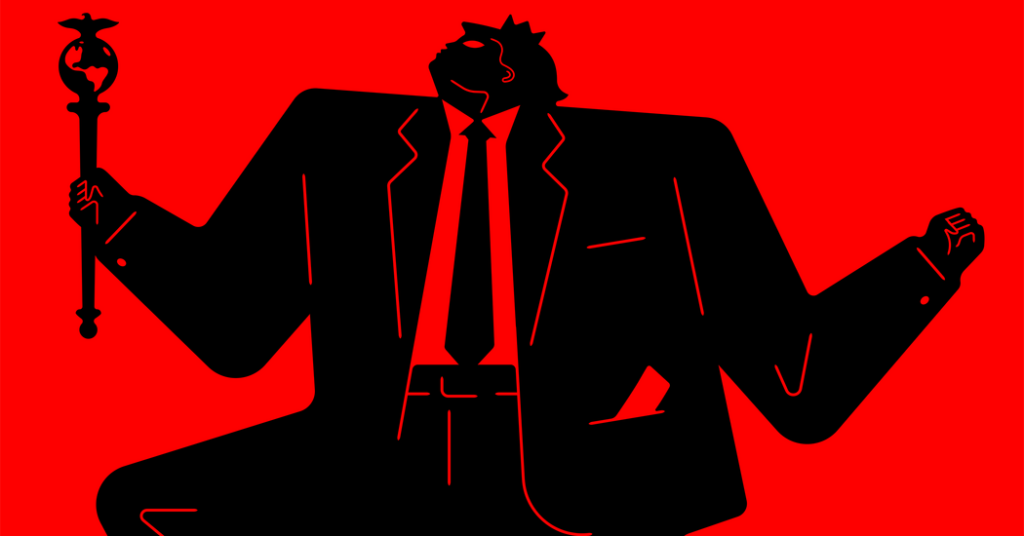
I have seen this brand of strongman megalomania and the adverse effects it can ultimately have on leaders and their governments. I call it autocratic backfire. Authoritarian-minded leaders present themselves as bold innovators with unerring instincts about how to lead their countries to greatness. Their personality cults proclaim their infallibility while propaganda machines suppress news of their failures and exaggerate their influence and competency.
As autocrats surround themselves with loyalists who praise them and party functionaries who repeat their lies, leaders can start to believe their own hype. As they cut themselves off from expert advice and objective feedback, they start to promulgate unscrutinized policies that fail. Rather than course correct, such leaders often double down and engage in even riskier behavior — starting wars or escalating involvement in military conflicts that eventually reveal the human and financial tolls of their corruption and incompetence. The result: a disillusioned population that loses faith in the leader and elites who begin to rethink their support.
You can see this dynamic at work in three scenarios over the past 100 years: Benito Mussolini’s old-school one-party dictatorship, Vladimir Putin’s 21st-century kleptocracy and Mr. Trump’s attempt to erode an established democracy. All of these leaders constructed echo chambers, overestimated their abilities and underestimated or dismissed their adversaries’ capabilities.
Autocratic backfire can end in a leader’s ouster and a nation’s collective ruin, as it did in Fascist Italy; in a leader clinging to power over a weakened state, as is happening with Mr. Putin’s Russia; or in popular resistance and mass mobilizations that help restore democracy in the end — which could yet be the fate of the United States.
‘Tell Mussolini what he wants to hear.’
“I follow my instincts, and I am never wrong,” said the Italian Fascist dictator Mussolini, shortly before he invaded Ethiopia in 1935. That war and Italy’s ensuing occupation initially made him popular at home, further inflating his ego, but eventually contributed to the bankruptcy of the Italian state.
In 1940, against the advice of many of his generals, Il Duce entered World War II alongside Adolf Hitler. “The password among high-ranking Fascists became, ‘Tell Mussolini what he wants to hear,’” his biographer Laura Fermi wrote. This remained true as he ordered troops to the Balkans as well as East and North Africa, leading to the loss of Italy’s East African colonies the next year.
Even then, instead of retrenching, Mussolini sent Italian troops to the Russian front, again ignoring his generals’ counsel. By then, those commanders were shielding him from some of the worst news, knowing he did not want to hear things that contradicted his propaganda. When the Allies landed in Sicily and the Fascist Grand Council voted in July 1943 to remove him from power, judging him incompetent to govern, Mussolini went to work the next day as though nothing had happened.
He spent his last years as the head of the Nazi puppet state the Republic of Salò, his phone tapped by the Germans. He was killed by anti-Fascist partisans in April 1945.
It fell to others to reflect on the costs of maintaining the myth of “Mussolinian miracle-working,” as Tullio Cianetti, a minister who had voted to remove him, called it. Those around him were too blinded to see how Il Duce was leading Italy to disaster.
Putin’s overreach in Ukraine.
When Mr. Putin invaded Ukraine in February 2022, he “already had it all, down to the gold toilet seats in his absurd palace in Crimea,” as Margaret MacMillan put it. He had eliminated rivals, had jailed dissenters and was a main energy supplier to much of Europe. He paid no significant price for his imperialist aggressions in Georgia in 2008 or Crimea in 2014, with the Crimean annexation giving him a nationalist high and boosting his popularity.
But Mr. Putin had become insecure. He was fearful of internal dissent, as evidenced by his escalating repression of Alexei Navalny, and fearful of Ukraine’s democracy over the border. While older Russians supported him, a Levada poll in February 2021 indicated that nearly half of respondents ages 18 to 24 said the country was heading in the wrong direction.
The invasion of Ukraine was supposed to secure Mr. Putin’s place in history as the leader who revived a version of the Soviet empire. Instead, the war has exposed the depth of Russian institutional incompetence, tarnished the president’s reputation and left Russia more reliant on other autocracies. Facing large-scale deaths of its soldiers, the country has had to recruit fighters from North Korea, Cuba, Syria and African nations to supplement its forces in Ukraine. With the war consuming almost a quarter of Russia’s liquid assets in 2024, Moscow’s economic dependence on China will probably deepen.
This blow to Mr. Putin’s image and Russia’s global stature has brought some domestic destabilization, from the Wagner Group head Yevgeny Prigozhin’s mutiny in June 2023 to increased disaffection and public criticism from elites. Dozens of prominent Russians have perished in suspicious circumstances since the war started, and Russia’s youths are deeply skeptical of the conflict and the government’s messaging around it.
“Putin did overreach going into Ukraine,” a former U.S. ambassador to Russia, Michael McFaul, said last year. “This is a disaster for their economy. He’s just slaughtered some of the young people,” he added. “His autocracy at home and imperialism abroad has set them back decades.”
‘Ego damaged. Swagger lost.’
Happily for Mr. Putin, Mr. Trump seems intent on using his presidency to help solve those problems. He has elevated Kremlin sympathizers, echoed Kremlin talking points and presented a “peace plan” for Ukraine that draws closely from a Russian-written draft document.
To the dismay of Republican pollsters and politicians who lament his reduced popularity, Mr. Trump has been more focused on those efforts — along with his White House ballroom, his fantasy of owning Greenland, the bombing of boats in the Caribbean and militarized repression of Americans living in Democratic-governed cities — than on affordability, jobs and the issues that win elections.
Now, it seems, it’s America’s turn to have a “Bubble Wrapped president,” as The Atlantic called him, surrounded by sycophants who praise his judgment and fill him with a sense of infallibility.
So it’s no surprise that the signs of a potential backfire are growing. Unlike Mussolini and Mr. Putin, Mr. Trump still operates in a democracy. He was unable to consolidate power before becoming unpopular, and he seems unlikely to recover his higher approval ratings. A majority of Americans don’t support his efforts to gain control of Greenland and how he is handling the war in Ukraine. The brutality and thuggishness of masked Immigration and Customs Enforcement agents are also unpopular.
Mr. Trump’s behavior during a recent address to the nation suggests he is aware of cooling public sentiment. He shouted at times, as though he felt fewer people were listening. He repeated old lines about fixing the messes of others and newer lines about being a peacemaker, but the magic that brought so many to him may be dissipating. “Confidence fading. Can’t lie through the reality anymore,” Owen Shroyer, a former Infowars host whom Mr. Trump pardoned for his activities on Jan. 6, commented on X. “His base has turned. He knows it. Ego damaged. Swagger lost.”
It is well documented that strongmen are at their most dangerous when they feel threatened. That is why, as popular discontent with the Trump administration’s actions deepens, Americans should brace for heightened militarized domestic repression and more imperialist aggression abroad.
The rules of autocratic backfire are clear. Even if a struggling strongman manages to stay in power, once his carefully crafted image is tarnished, a collective reckoning can begin with the costs of his corruption and lying. Once a leader proclaims, “I am the only one that matters” and sits alone at the top of the pinnacle of power, it is hard for him to escape blame, no matter how many officials and former friends he purges. He is more vulnerable to being removed or, at the very least, judged — by lawmakers, by courts, at the polls and, perhaps most lastingly, by history.
Ruth Ben-Ghiat is a professor of history at New York University. She is the author of “Strongmen: Mussolini to the Present” and publishes Lucid, a newsletter on threats to democracy.
The Times is committed to publishing a diversity of letters to the editor. We’d like to hear what you think about this or any of our articles. Here are some tips. And here’s our email: [email protected].
Follow the New York Times Opinion section on Facebook, Instagram, TikTok, Bluesky, WhatsApp and Threads.
The post History Shows Trump’s Worst Impulses May Backfire on Him appeared first on New York Times.