It’s a best-of-times, worst-of-times scenario for Canada on the global stage.
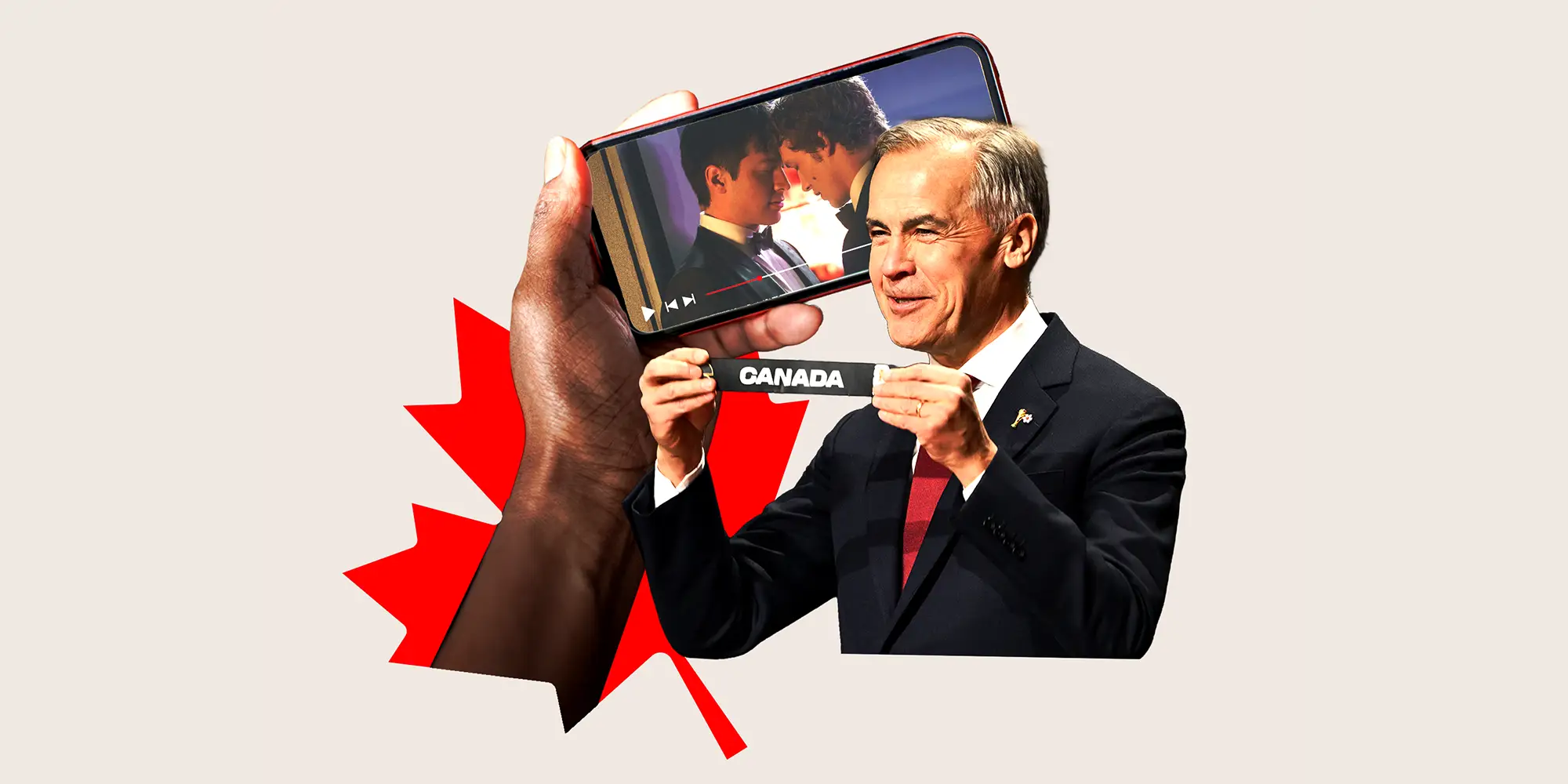
To get the bad out of the way, its most important ally — the United States — has grown increasingly antagonistic, with renewed tariff threats and talk of annexation coming from the White House. On the upside, Canada is signaling it can stand more firmly on its own. Canadian Prime Minister Mark Carney has identified a “rupture” in North American integration and is moving his country in a more self-sufficient direction — both economically and politically. There’s a recognition that Canada and the US will always be deeply intertwined — Americans aren’t suddenly going to stop watching “Heated Rivalry” or “Schitt’s Creek,” and the Toronto Maple Leafs aren’t going to stop traveling south of the border — but some level of unwinding may now be unavoidable.
“Every country has to take care of itself,” says Tony Stillo, director of Canada Economics at Oxford Economics, “and Canada’s putting Canada first.”
—
In a speech at the World Economic Forum in Davos in January, Carney struck a determined, defiant tone toward the US and a decades-old rules-based international order that, in his view, is now falling apart. “Canadians know that our old comfortable assumptions that our geography and alliance memberships automatically conferred prosperity and security — that assumption is no longer valid,” he said. In turn, he’s made the choice to take on “the world as it is, not wait around for a world we wish it to be.”
The pope himself, I think, would struggle to find the patience to deal with the US administration right now.
Carney is walking a fine line. He is right that the US is no longer as reliable a partner as it once was in the economy, security, and trade. And as much as President Donald Trump has turned the divide into a chasm, the fracture has been forming for years, as both Democratic and Republican administrations in the US have taken a more protectionist stance.
At the same time, Canada can’t just walk away. Exports account for a third of Canada’s GDP, and more than 75% of its exports go to the US. By comparison, exports are about one-tenth of the US’s GDP, and around 16% of its exports go to Canada. Many of the two countries’ biggest industrial sectors, including automotives and energy, are almost irreversibly interwoven. The uncertainty emanating from the US has a big impact on Canada’s economy — as the saying goes, when the US catches a cold, Canada gets the flu.
There is also a short-term impetus to keep relations amicable. The US-Mexico-Canada trade deal (formerly known as NAFTA) is up for review mid-year, and the US, thanks to its sheer size, has more leverage.
“The prime minister’s in an impossible situation. It is incredibly challenging for any Canadian on the international side right now to both vigorously defend our economy and to do that without escalating an already volatile relationship,” says Dan Kelly, the president of the Canadian Federation of Independent Business. “The pope himself, I think, would struggle to find the patience to deal with the US administration right now.”
Canada is trying to reduce its reliance on the US through a series of policies aimed at growing and integrating its domestic economy. The federal government removed internal trade barriers that prevented goods and even workers from flowing between provinces. The IMF estimates that fully eliminating them would boost real Canadian GDP by 7%. Many Canadian consumers are opting to buy Canadian products where possible. Under Carney, the country established the Major Projects Office as part of a push to advance nation-building ventures and streamline regulatory approvals for ambitious programs in mining, energy, ports, and rail.
“The government isn’t trying to just invest, they’re trying to catalyze and incentivize private money to come in,” Stillo says.
These are steps in the right direction, but the major projects will take years to build. This is a long-term undertaking.
“We have high-talent workers. We’re the most educated in the OECD. We have real innovation in areas like AI and quantum computing, and we have natural resources — critical minerals, LNG, oil and gas — most countries would absolutely love to have,” says Matthew Holmes, the chief of public policy at the Canadian Chamber of Commerce. “We have all the preconditions to be an energy superpower and a major player economically, but we need to get our domestic economy fundamentals.”
Kelly tells me about a third of CFIB’s members, which are small- and medium-sized businesses, have started to do more business internationally in countries beyond the US, and a third are doing more internal trade. A recent business survey from the Bank of Canada found that sentiment remains “subdued,” though firms’ overall outlook has improved slightly.
We’re just looking to take a couple of eggs out of this basket and spread them around the world.
Part of the problem Canada faces is that any move it makes to cultivate ties elsewhere may elicit an outsize reaction from its neighbors to the south. Just look at its recent trade negotiations with China. Carney visited China in January and subsequently announced that Canada would allow 49,000 Chinese electric vehicles into the Canadian market at a 6.1% tariff rate, while China agreed to lower tariffs on Canadian canola seed. When Trump caught wind of it, he threatened to put 100% tariffs on Canadian goods coming into the US. Canada has tried to calm the situation, emphasizing that it’s not entering a free trade agreement with China, it’s just settling some preexisting disputes. The tit-for-tat also comes as Canadian oil sales in China surge, as it pushes into Asia.
“We’re not running into the arms of China,” says Julian Karaguesian, a course lecturer in McGill University’s economics department. “We’re just looking to take a couple of eggs out of this basket and spread them around the world. And China’s the largest economy in the world after the United States.”
Canada has trade opportunities outside the US and has set a goal to double non-US exports over the next decade. It already has a robust set of free trade agreements and is the only G7 nation to have them with all other G7 members. It’s also likely looking toward India and MERCOSUR, a trade bloc in South America.
Commerce Secretary Howard Lutnick has downplayed the ongoing spat, calling it “political noise” coming out of the prime minister. He said Canada has the “second-best deal in the world” with the US, behind Mexico. Lutnick also indicated that getting too close to China could hurt Canada amid the USMCA talks set for the summer and create a “road map” for overhauling the entire deal. Given the constantly changing nature of the US and Canada’s relationship as of late — and Trump’s ever-shifting focus on a variety of issues — the possible scenarios for USMCA negotiations run the gamut, from minor adjustments to a total breakdown in talks.
“With USMCA, the gloves are going to be off,” Karaguesian says.
None of this is to say that Canada is in sterling shape. Its economy is growing at a lackluster pace, and its labor market is doing OK, but not great. Productivity has been lagging for years. It would surely prefer the US were not so adversarial. At the same time, the country and its leaders are clear-eyed about what’s happened and are laying out a plan for what’s next, internationally and domestically. Holmes, from the Chamber of Commerce, says Canada has had a sort of “it’s the economy, stupid” moment under Carney.
Peter Morrow, an economist at the University of Toronto, says that Canada is doing better than was feared a year ago. “There were a lot of concerns about dramatic levels of protectionism in the United States and all but complete collapses of manufacturing in Canada,” he says. “The realized tariffs have not been as dramatic as they might have been otherwise,” he says. The effective tariff rate on Canadian goods coming into the US is still under 10%. Carney has a “very good relationship with reality,” Morrow says, and as much as economic nightmare scenarios haven’t come to pass, the geopolitical outlook is worse than expected, given the instability of the NATO alliance and the deterioration of the global rules-based system that’s been in place since World War II.
Most of the economists and business people I spoke to for this story agreed that Canada coming into its own was a long time in the making. From Bush’s “you’re with us or against us” mentality post-9/11 to Obama’s “Buy America” push to Biden’s industrial policy, America has been acting like a less friendly friend for a while. Trump has taken it to an extreme, often failing to differentiate between international friend and foe. If it nudges Canada further out of America’s shadow, the thinking goes, so be it. Carney’s declaration that the global economy’s middle powers need to band together and his suggestion that the US cannot be trusted is a sentiment he’s not alone in — he’s just saying it out loud.
“Carney is saying things that obviously encapsulate well how many, many countries, companies, and leaders are feeling, including many parts in many parts of the United States,” Kelly says, adding that Carney’s economic background and focus are also a plus. “For a decade, anything economic was kind of issue number 500 on the Trudeau government’s list of priorities. And now it seems very much like ensuring our economy is in high gear is the top job for the prime minister.”
One of the main pieces of certainty Canada can have, at least in the immediate future, is that there’s going to be a lot of uncertainty coming from the US. In many ways, America has become a threat actor and cause of decline. This has fostered a novel level of pro-Canadian sentiment within the country’s borders and also boosted Carney’s profile on the international and domestic stage — his approval rating jumped to 60% in a recent poll.
This is also landing at what’s culturally a bright moment for Canada. Canada’s men’s hockey team is favored to win gold at the coming Winter Olympics, following up its victory in 2025’s Four Nations tournament. Its women’s team will likely be in contention for a medal as well. The gay hockey romance “Heated Rivalry,” out of Ontario, is everywhere. Tourists are turning up in Hamilton, Ontario, where the show is partially filmed, to check out some of the spots featured. The town is inviting them in.
“All these kinds of things to brand Canada’s reputation as a welcoming place to everyone is not unhelpful,” Kelly says. Especially as the US is moving in a different and much more unwelcoming direction.
Emily Stewart is a senior correspondent at Business Insider, writing about business and the economy.
Read the original article on Business Insider
The post Canada is having a moment — and the world is finally paying attention appeared first on Business Insider.