The universe is unfathomably vast, and for the astronomers trying to understand it, that means having to gather a commensurately mind-boggling amount of data. Wouldn’t it be nice if there was something that could help speed through looking for patterns in all the trillions of galaxies out there, and their quadrillions of stars?
The term “AI” has become a catch-all these days for all kinds of dubious tech of varying degrees of automation and reliability, but certain types have found a very practical and welcome use among astronomers. Using a custom-built AI tool, for instance, a team of scientists at the European Space Agency have identified over a thousand “anomalies” in an archive of Hubble space telescope images that have gone unnoticed for decades, according to a NASA release.
Their work, described in a new study published in the journal Astronomy & Astrophysics, is the first systematic search for astrophysical anomalies across the entire archive.
“Archival observations from the Hubble Space Telescope now span 35 years, offering a rich dataset in which astrophysical anomalies may be hidden,” said lead author David O’Ryan, an ESA astrophysicist, in a NASA statement.
To make the discoveries, the researchers used their AI tool, which they’re calling AnomalyMatch, on nearly 100 million snippets of Hubble images that were only a few pixels on each side. In less than three days, the neural network identified over 1,300 anomalous objects, more than 800 of which had never been documented in scientific literature.
The result is a veritable cosmic freak show. According to NASA, most of the anomalies were from galaxies colliding with each other, in violent and hugely disruptive events called galactic mergers.
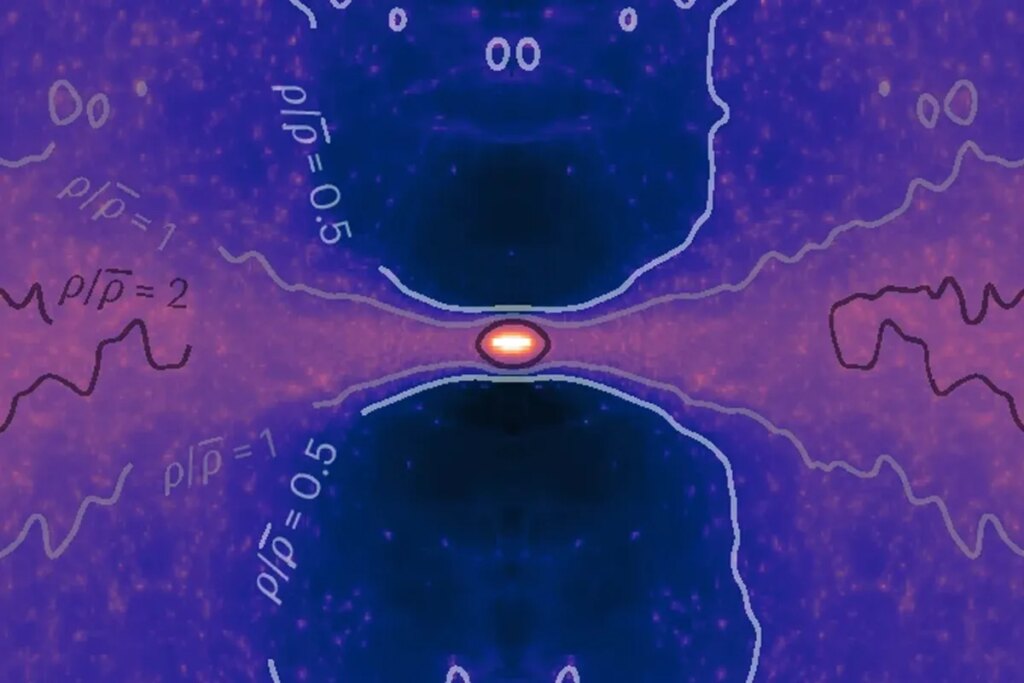
The AI tool also flagged a distinct type of realm known as a jellyfish galaxy, which are defined by their numerous streams of star-forming gas that appear to dangle from one side of the galaxy’s main disk, giving them the appearance of tentacles. Other oddities include edge-on planet-forming disks that look like hamburgers, and so-called gravitational lenses, in which the light of a massive foreground object like a galaxy bends the light behind it to act almost like a magnifying glass. And some of the unearthed objects defined classification altogether, NASA said.
“This is a powerful demonstration of how AI can enhance the scientific return of archival datasets,” Gómez said. “The discovery of so many previously undocumented anomalies in Hubble data underscores the tool’s potential for future surveys.”
The clever automated anomaly hunter comes as NASA faces brutal cuts under the Trump administration, with entire buildings being closed even at its most historic facilities, and mass layoffs. The administration has also eagerly deployed AI across the federal government, including government-tailored versions of OpenAI models, and an AI tool to help accelerate the approval of drugs.
That said, astronomers have been toying with AI solutions for a while now. Typically leveraged to interpret large datasets like in this latest work, it’s also been used to identify potentially habitable exoplanets and refine images of black holes. While the field’s old guard emphasize caution while using these tools, it’s clear they have their uses.
More on space: These Snapshots of the Moment a Star Exploded Will Fill You With Cosmic Dread
The post AI Discovers Hundreds of Anomalies in Archive of Hubble Images appeared first on Futurism.