There was a time when a wedding dress was meant to do all the talking. One gown, one aisle, one defining image. Brides said yes to “the” dress, after all.
But increasingly, for some brides, it’s less about that one dress — and more about many different looks.
As some modern weddings evolve into cinematic, multiday experiences that include welcome parties, after-parties and farewell brunches, “we’re no longer designing a wedding dress,” said Shawne Jacobs, the creative director and owner of Anne Barge. “We’re designing a wedding wardrobe.”
Pnina Tornai, the lead designer at Kleinfeld Bridal and veteran of TLC’s “Say Yes To The Dress,” said that this trend isn’t simply about changing dresses. “It’s storytelling,” she said. “Weddings move so fast. Brides want to stretch the moment and express every version of themselves.”
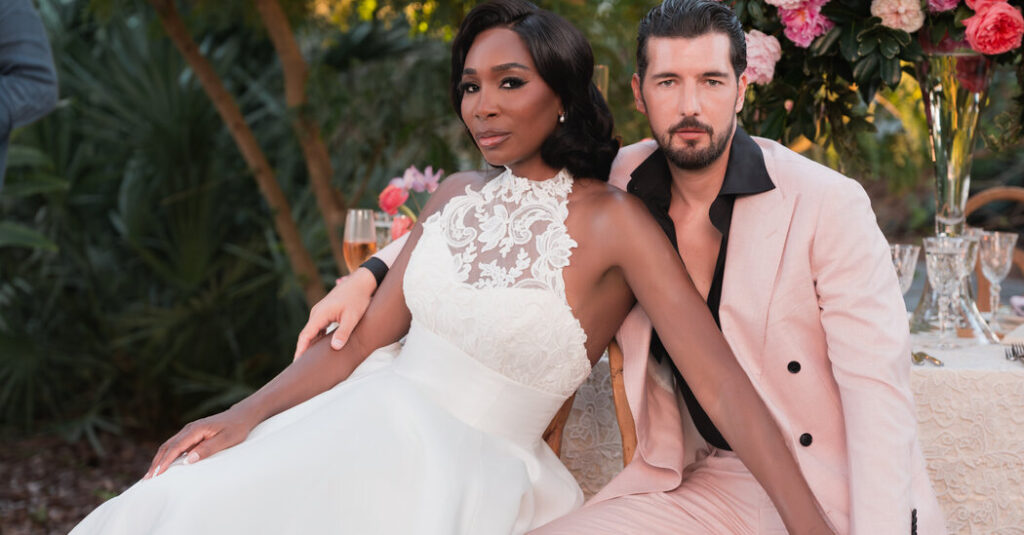
That philosophy was on display during Venus Williams’ five-day celebration of her wedding to Andrea Preti in Palm Beach, Fla., in December. For the rehearsal dinner, Ms. Jacobs’s team at Anne Barge designed a custom ball gown, one of multiple looks Ms. Williams wore throughout the celebrations. The bride also wore designs by at least nine other designers, including bridal looks by Mrs. Tornai, Georges Hobeika, Nadia Manjarrez, Jaclyn Whyte, Natali & Meital, Woná Concept, Kim Kassas, Julie Vino and Morilee New York (twice).
On her podcast, “Stockton Street,” Ms. Williams explained her logic: “I didn’t want to pick one dress — so I added more events.” The strategy, while out of reach for many couples, has become a form of creative expression for those who have the resources to do so.
Mrs. Tornai designed a fitted crepe gown for Ms. Williams to wear to prepare for her rehearsal dinner. “Brides used to wear robes while getting ready,” Mrs. Tornai said. “But a pre-rehearsal dress is really a first!”
For some brides, multiple outfit changes aren’t a fantastical whim or a trend — they’re tradition. Ruchika Devalapalli, 31, a movie studio executive in Los Angeles, wore nine outfits during her four-day Hindu wedding in Phuket, Thailand, in November. “For us, it was cultural,” she said. “Indian weddings have multiple events, and each one has its own energy.”
Ms. Devalapalli chose to blend Indian craftsmanship with Western silhouettes. Outside of the ceremony and sangeet, the pre-wedding party, most of her looks were Indo-Western or fully Western, curated to match the destination’s luxurious resort vibe. Many of her looks were designed by Indian designers, like Bhawna Rao, Mishru, Anamika Khanna, Gaurav Gupta and Rahul Mishra, a nod to the couple’s culture on their most important day, as well as non-Indian designers like Thierry Mugler, Staud and Jacquemus.
Her sangeet look — a custom Rahul Mishra lehenga designed with stars, fish and planets — was revised to Mishra’s patented shade of blue with corals at the bottom after her mother reminded her that black and white are traditionally discouraged in Hindu weddings. “That’s where tradition and creativity met,” Ms. Devalapalli said.
The Social Media of It All
Showing off on social media has amplified this shift. “If you wear the same dress all night, it becomes boring. People just swipe,” Mrs. Tornai said. “If you’re changing dresses, people will say, wow that’s a new dress, how many dresses did she wear? It’s like being on a red carpet. It’s an event.”
She added that restraint still matters. “Three is usually the sweet spot. The ceremony dress is sacred. The second look is still important. The third is where you let loose.”
Social media also creates more choice while shopping. Today’s brides are navigating a landscape shaped by Pinterest, Instagram, and TikTok, where inspiration is endless and sometimes overwhelming. “You can go try on 10 dresses in a store, leave, go on your phone and see 150 more different dresses that don’t look anything like what they’ve tried on,” Ms. Terranova said. “And now, here we are.”
Kristen Victoria Anderson, a 32-year-old content creator from Toronto with 1.4 million YouTube subscribers, felt four outfit changes were essential to capturing her identity at a castle wedding outside Barcelona in October. “One outfit couldn’t hold all the versions of me,” she said. “I wasn’t changing clothes. I was changing chapters.” She was also posting to her channels, including a one-hour video on her channel.
She said her day unfolded like a story line: a timeless Eva Lendel ceremony gown, followed by a custom diamond dress by Fjolla Haxhismajli for a dramatic reveal at the reception, then a playful Babyboo corseted mini for the after-party, and finally a romantic Aston Bridal lace dress for dancing.
“Since my wedding was at a castle, I leaned all the way into the fantasy,” Ms. Anderson said. “The outfits evolved the same way the day did.”
Her husband, Reafe Anderson, a 33-year-old content creator and business owner, matched her energy with three looks of his own, proving that outfit changes are no longer just a bridal phenomenon. “We both understood the assignment.”
Bridal Stylists Are in Demand
Behind these multi-look events is a growing role: the bridal stylist. Professionals like Lindsay Terranova and Jackie Avrumson help brides approach weddings the way fashion editors approach red carpets — strategically.
“Brides don’t want to feel trapped in one version of themselves,” said Ms. Avrumson, the owner of NYC Bridal Stylist. “They want to move, breathe, dance and still feel like the best-dressed person in the room.”
Ms. Avrumson traces the shift to the post-Covid era, when micro-weddings and delayed celebrations normalized second looks. Brides who married in mini dresses in their backyard, she said, often wore them again later, at larger celebrations — alongside another bridal look, which helped the trend take hold.
Ms. Terranova, founder of the Boston Bridal Stylist, said wedding stylists manage the logistics, transporting dresses, accessories, shoes and helping with the actual changes.
Each outfit change can take 15 to 30 minutes, depending on accessories, makeup and hair. Ms. Anderson rehearsed her outfit changes like choreography with her maid of honor and hairstylist. Ms. Devalapalli worked with her wedding stylist, Shifa Firoz, getting direction from a detailed look book she worked on for one year, outlining every hairstyle, makeup tweak and accessory change. On the day of the ceremony, she changed three times.
“It felt like backstage at a runway show,” Ms. Devalapalli said. “Chaotic, glamorous — and worth it.”
The post Why Brides Are No Longer Saying Yes to Just One Dress appeared first on New York Times.