In 1988, shortly after the release of his film Beetlejuice, the director Tim Burton highlighted a cast member who he felt stole the show: Catherine O’Hara, who played the snobbishly over-the-top matriarch Delia Deetz. “Catherine’s so good, maybe too good,” he marveled in an interview with the Los Angeles Times. “She works on levels that people don’t even know. I think she scares people because she operates at such high levels.”
O’Hara, who died today at the age of 71, spent much of her career being the kind of star Hollywood underestimated. Before Beetlejuice catapulted her to greater fame, the Toronto-born O’Hara was best known for being a cast member at the improv theater the Second City, which led to her being cast as a regular on the beloved Canadian sketch series SCTV. The actor was an unparalleled comic performer who could push her most flamboyant characters—spoiled Moira Rose on Schitt’s Creek, wobbly Cookie Fleck in Best in Show—to their theatrical extremes. Yet the work she put into her career often went beyond the confines of broad comedies. If anything, O’Hara’s brilliance came from her ability to unearth the oddball in anybody.
Like many Millennials, I first encountered O’Hara in 1990’s Home Alone. The blockbuster holiday film followed a young boy, Kevin (Macaulay Culkin), who is accidentally left behind by his family when they jet off to Paris for Christmas vacation. O’Hara played Kate McCallister, Kevin’s mother, and at first glance, the role appears serious, if not downright unsympathetic: Kate is so harried that she fails to realize she’s abandoned her 8-year-old until she’s on the plane to Europe. As she tries to make it back to Kevin, she encounters eccentric traveling companions, leaving her the straight woman trapped in a nightmare of her own making.
[Read: The bombastic matriarch of Schitt’s Creek]
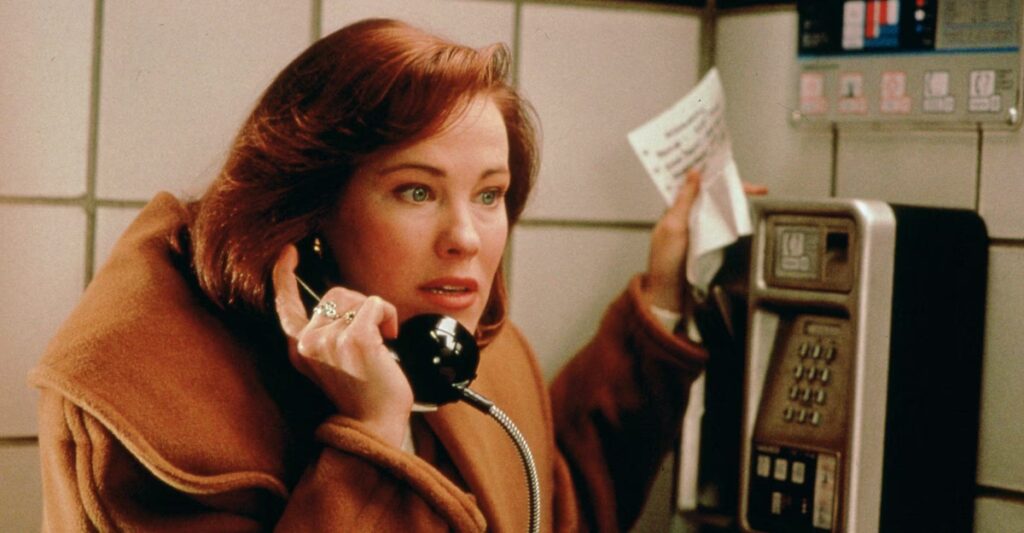
The movie’s biggest laughs come from Kevin’s hijinks, which involve setting up complex booby traps to fend off a pair of burglars targeting his family’s home. But O’Hara’s performance is also essential to Home Alone’s appeal. When Kate panics mid-flight, she turns the name Kevin into a gasp-screech—Keeev-uhn!—that’s just as memorable as the moment Culkin slaps his face after putting on aftershave. When Kate calls the local police so they can check on her son, she slows down her words, as if trying her best to sound like she has it together. The move only makes her subsequent frustration—the staccato delivery of the line “Pick up!” into the payphone—that much funnier.
My favorite O’Hara moment from the film, though, comes when she’s almost speechless. Trapped at another airport, Kate is pulled aside by Gus Polinski, a polka musician played by O’Hara’s fellow SCTV alum John Candy. Candy improvised much of the dialogue:Gus telling Kate about his band’s bona fides while she stares back blankly, and chuckling politely as she tries to comprehend what this stranger wants. Eventually, Kate grasps that Gus is offering her a ride home; she beams so widely, her expression imbues the scene with boundless warmth—the kind that helped turn Home Alone into an annual rewatch for so many around Christmastime. You believe her when she says she’d be happy to listen to Gus’s crew play polka music the entire time; everything on her face screams joy, relief, and gratitude, grounding the movie even as the plot grows more absurd.
O’Hara didn’t seem to think much of her Home Alone performance. In a speech honoring Culkin when he received a star on the Hollywood Walk of Fame in 2023, she recounted seeing two boys fighting the need to leave a screening of Home Alone for a bathroom break until her face appeared, because, as she recalled them saying, It’s just the mom. “Bright boys,” she quipped.
Except those boys were wrong. The mom in Home Alone resonates because she’s not just the overworked, underappreciated parent the film sets her up to be—a subversion O’Hara epitomized throughout her career. She had a talent for subtle versatility, the kind that auteur directors picked up on by casting her in movies as different as Heartburn and After Hours. In her most ridiculous assignments, she ensured that her characters were rooted in something familiar, while in her most straightforward roles, O’Hara found ways to cut loose. Consider her most recent appearances: In the Hollywood-skewering comedy The Studio, O’Hara turned a laughable veteran executive into a sympathetic figure. In the postapocalyptic drama The Last of Us, O’Hara translated her character’s thinly veiled resentment into impeccably deployed zingers. She nabbed Emmy nominations for both performances last year.
O’Hara never anticipated such variety; after SCTV, she had trouble figuring out where she belonged as an actor. “Most of the offers I got were to do the work I’d already done,” she said in 1988. “I didn’t want to keep on repeating myself. The problem is that it’s very tough to get a shot at doing something else, especially when you’re not sure what ‘something else’ is.” She never did define that “something else.” Instead, she kept challenging what it could be.
The post Catherine O’Hara Found the Eccentric in Anyone appeared first on The Atlantic.