This weekend, as the 68th Grammy Awards celebrates the rich tapestry of American music here in Los Angeles, we should be mindful of an enormous problem that has persisted for many decades in our industry. AM/FM radio corporations make billions of dollars each year playing our music — but under U.S. law, they are not required to compensate the performers.
That’s right. Every artist who performs at the Grammys this weekend will be paid nothing when their music plays on AM/FM radio. And I’m talking about all artists: Elvis, Sinatra, Bruno Mars, Taylor Swift. While radio station owners pay songwriters and copyright holders, they do not pay performers, thanks to a loophole in copyright law and a powerful broadcast lobby that has protected it. The industry argues that radio offers “free promotion” for artists — but let’s be real: Fewer people than ever are discovering new music on AM/FM radio.
Last year alone, AM/FM radio corporations made nearly $14 billion selling ads. Artists got zero for the music that keeps listeners tuning in.
This is un-American. Even Russia and China require that artists be compensated for radio plays. Our country stands with Cuba, Iran and North Korea in allowing radio owners to avoid paying artists.
In the U.S., the law already ensures performers are paid when their music is played on TikTok, YouTube, Sirius-XM and all other music delivery platforms. It’s only AM/FM radio that gets a loophole.
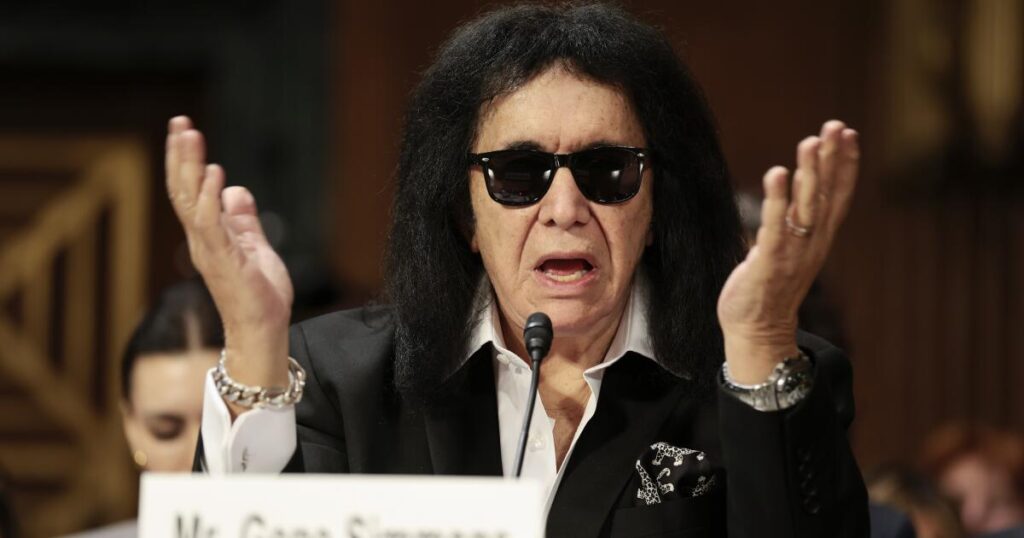
The good news is that Congress can fix this. Last month, I was invited to testify during a Senate hearing on the American Music Fairness Act, a bipartisan bill co-sponsored by Sens. Alex Padilla and Adam Schiff (D-Calif.) that would close the radio loophole and ensure performers are paid fairly.
At a time when Democrats and Republicans don’t see eye to eye, we all still believe that every American who works hard deserves to have that hard work honored with fair pay. When it comes to radio, that’s an ideal that’s been supported by every presidential administration for the past 50 years including, reportedly, President Trump, and by the Recording Academy, the host of the Grammys. It has long championed the right for performers to be paid for our work.
It’s also a value I first came to understand as an 8-year-old immigrant to this country, who could not even speak a word of English. I’m proud to say that I’ve had the chance to pursue my own American dream.
But the challenges that I faced are different from the ones facing artists who are just starting out today, in part because they don’t receive the same revenue from album sales that performers received in the ’70s, ’80s and ’90s. I’m worried we’re pulling the ladder up behind us.
The argument that radio offers free promotion no longer makes much sense. More people discover new music today on social media or streaming platforms. Meanwhile, radio keeps playing the old hits, laughing all the way to the bank.
My own kids, Nick and Sophie, are successful artists in their own right. I want them, and every new artist coming up today, to have the same opportunities that I had when I co-founded Kiss with Paul Stanley, Ace Frehley and Peter Criss. We owe it to the next generation of artists to ensure that their own American dreams remain attainable.
The music business has been turned upside down by technology, making it harder than ever for artists to make a living. It doesn’t have to be that way.
The American Music Fairness Act will fix a broken system and force big AM/FM radio corporations to finally start paying artists what they have earned.
It’s no wonder that 70%of Americans support this bill. Congress should listen to them and pass this bill without delay.
Close the radio loophole. Stand up for the next generation of artists. Send the American Music Fairness Act to the president’s desk to be signed into law.
Gene Simmons is the bassist and co-lead singer of Kiss.
The post Radio should be required to pay performers for their music appeared first on Los Angeles Times.