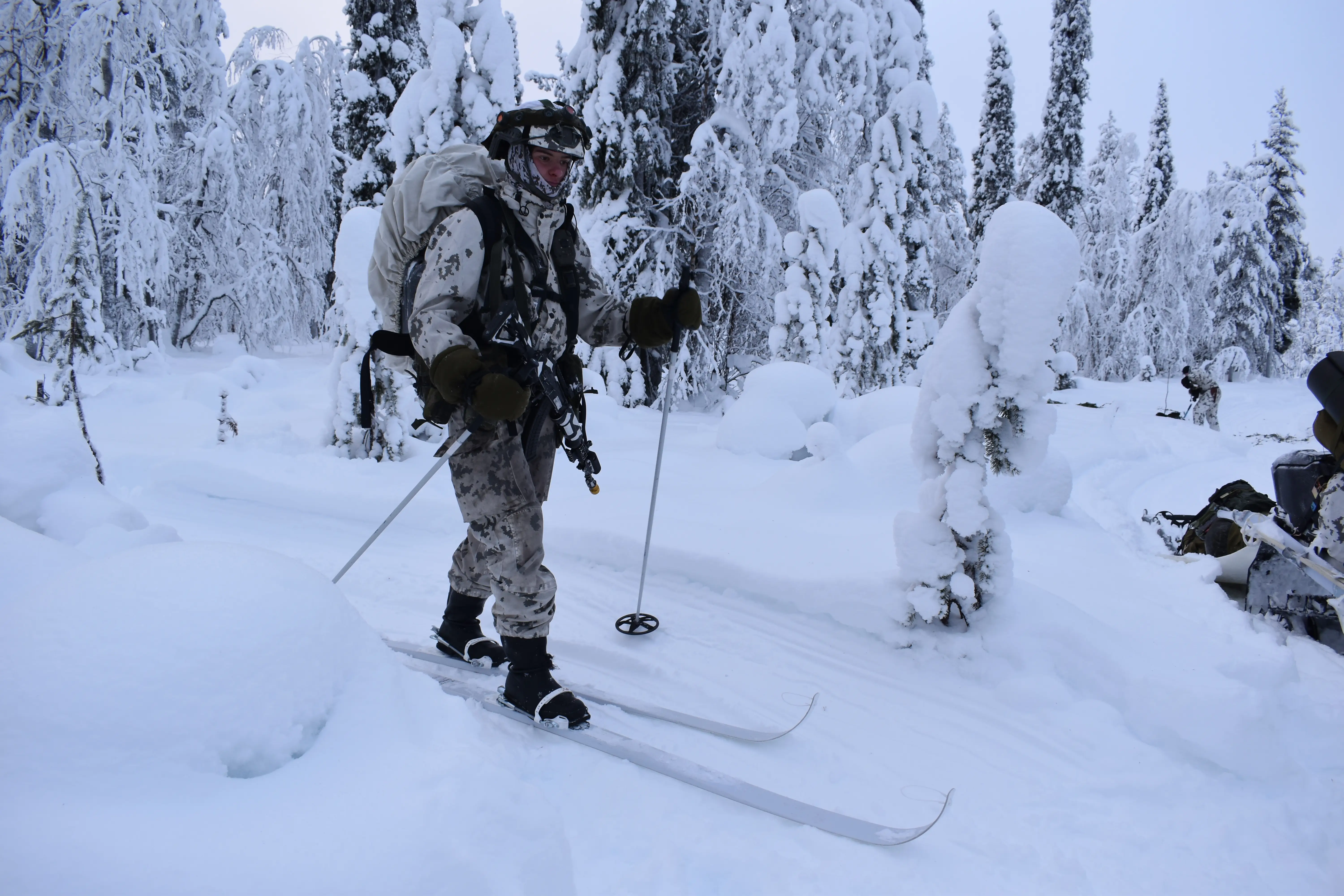
SODANKYLÄ, Finland — Two soldiers moved cautiously through the snow-covered forest, their camouflage blending into the trees as their skis glided silently over the ground.
Spotting an unaware enemy, they knelt and lined up a shot. Rifle fire erupted through the woods, the metallic smell of spent casings hanging in the cold air.
A firefight kicked off, and a battle was underway.
The encounter took place during a recent winter combat exercise involving roughly 20 NATO troops, beginning with an assault on skis and snowmobiles before shifting into a simulated firefight using blanks and lasers instead of live ammo. The drill was part of a monthlong course led by Finland’s Jaeger Brigade that trains allied forces in Arctic warfare and cold-weather survival.
Business Insider observed the battle’s start at a training site 75 miles north of the Arctic Circle in Finland’s snow-blanketed Lapland region. It pitted a small platoon of NATO soldiers against an “enemy” force that was three times larger and composed of conscripts from the Jaeger Brigade.
As the strategic Arctic region becomes increasingly important to both NATO and its adversaries, exercises like this are designed to sharpen allied troops’ abilities to fight on frozen battlefields. The environment is harsh and unforgiving, with sub-zero temperatures routine. And while fighting is simulated, it reflects real-world threats.
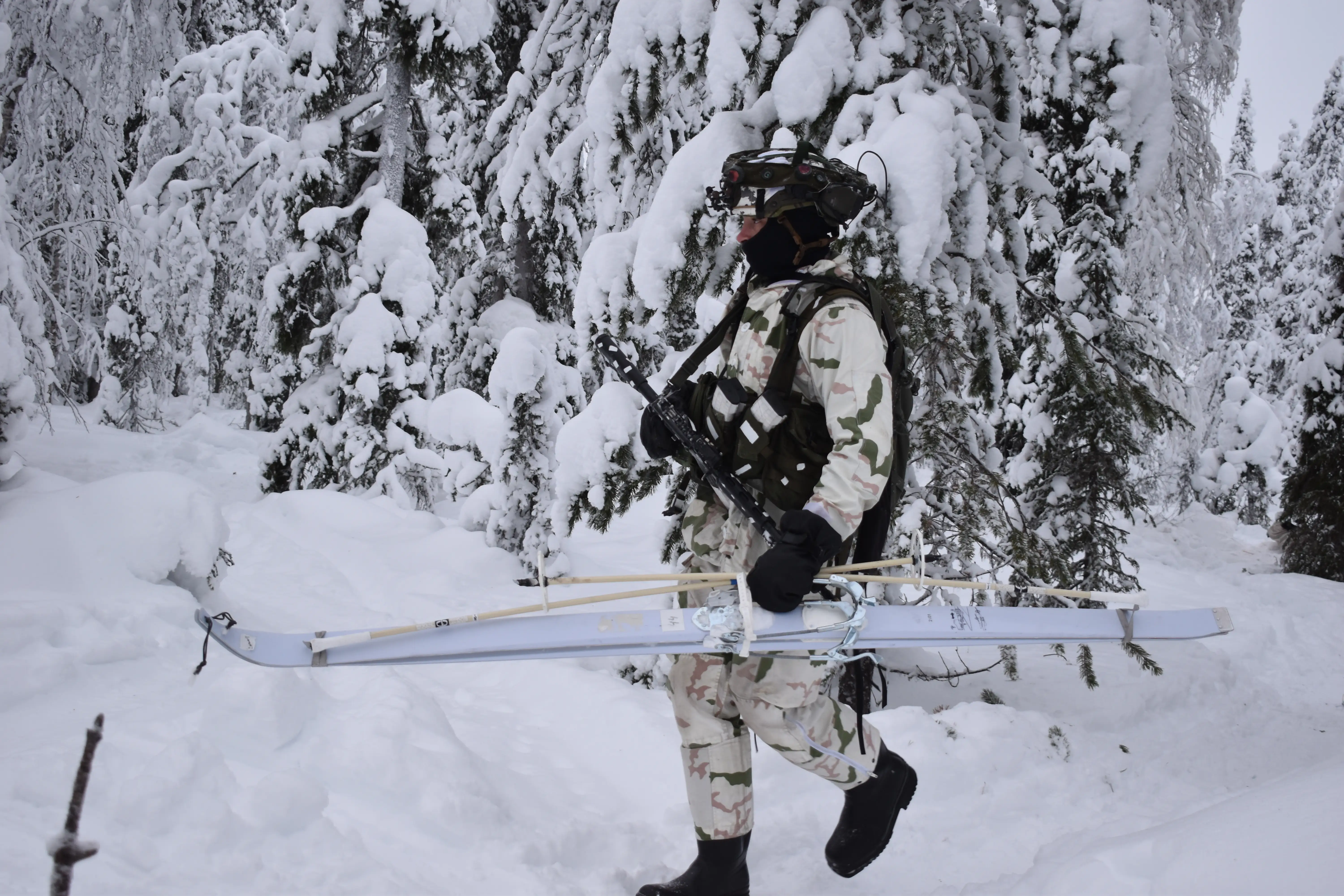
Maj. Mikael Aikio, the Jaeger Brigade’s Arctic section leader overseeing the course, told Business Insider that using lasers makes the training feel more realistic. “At least there is some kind of fear of getting hit,” he said.
‘You can’t get anywhere’
Arctic security has become a focal point for NATO in recent years as Russia and China grow more active in the region, seeking to project power, establish new trade routes, and expand their access to natural resources.
NATO leadership, concerned by certain Russian and Chinese behavior, has stressed the need for greater investment in collective Arctic defense to prevent Moscow and Beijing from gaining more military and economic influence in this strategic area.
Finland — roughly a third of which sits above the Arctic Circle and has a long history of cold-weather combat — is well positioned to train Western forces in Arctic warfare and has led annual courses for more than a decade. That training has taken on new urgency for NATO.
The training Business Insider observed this week is ongoing, with participants hailing from Finland, the US, the UK, France, Italy, and Canada. The idea is that they can take what they learn in Lapland and use it to instruct or advise their units back home.
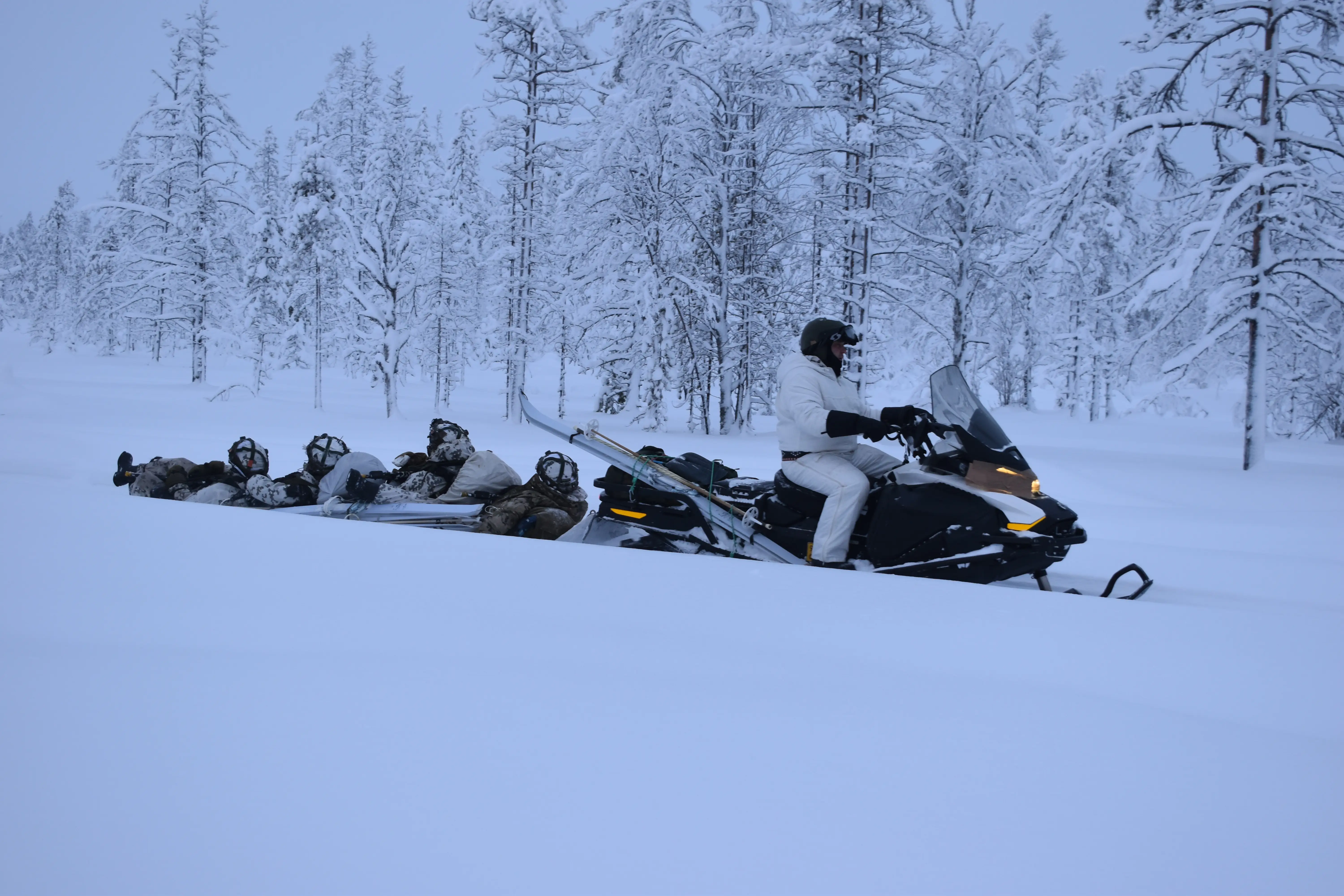
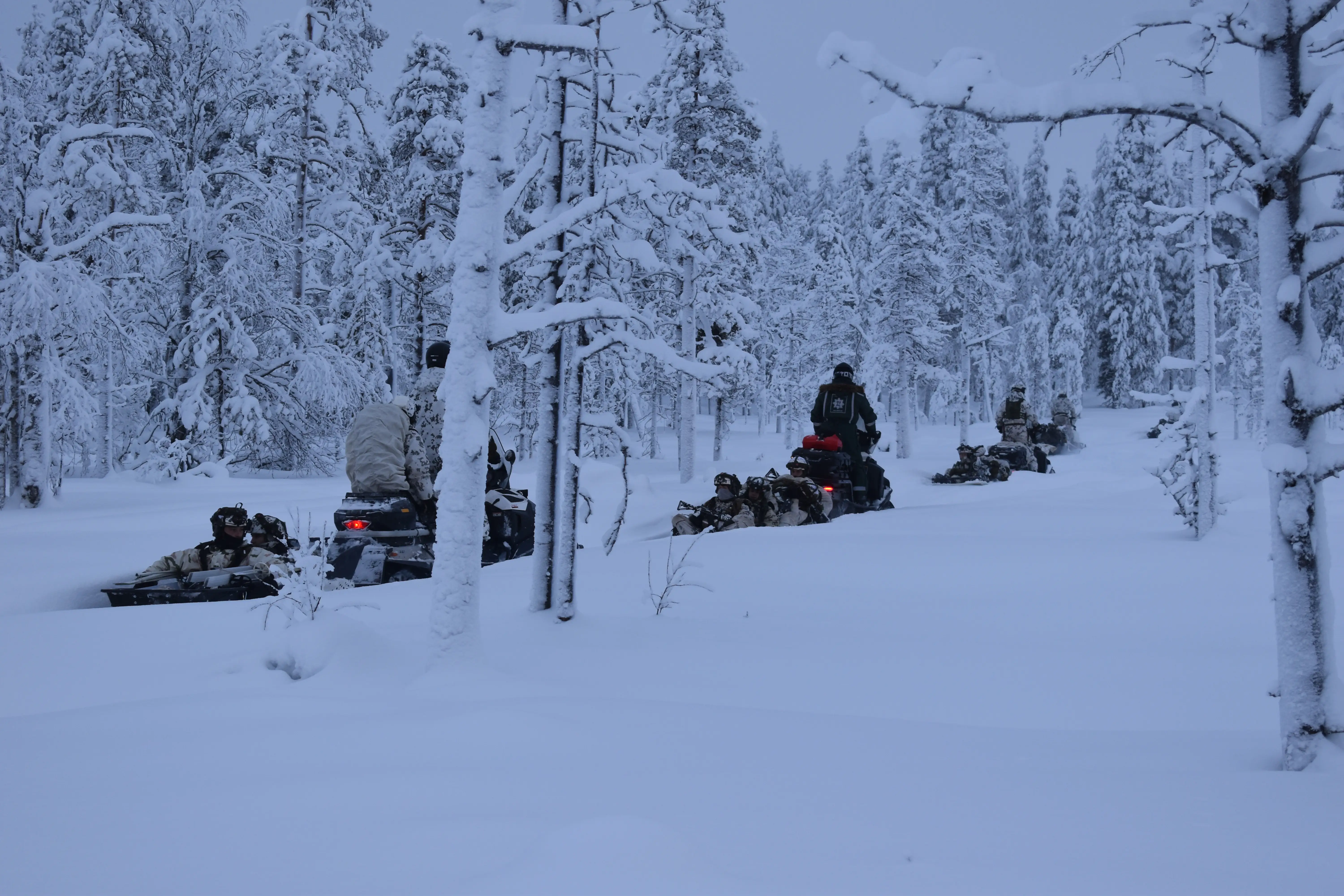
The course is divided into three phases over four weeks, starting with cold-weather survival and winter movement training, then teaching maneuvers such as attacking on skis and building snow foxholes, and ending with low-mountain activity above the tree line.
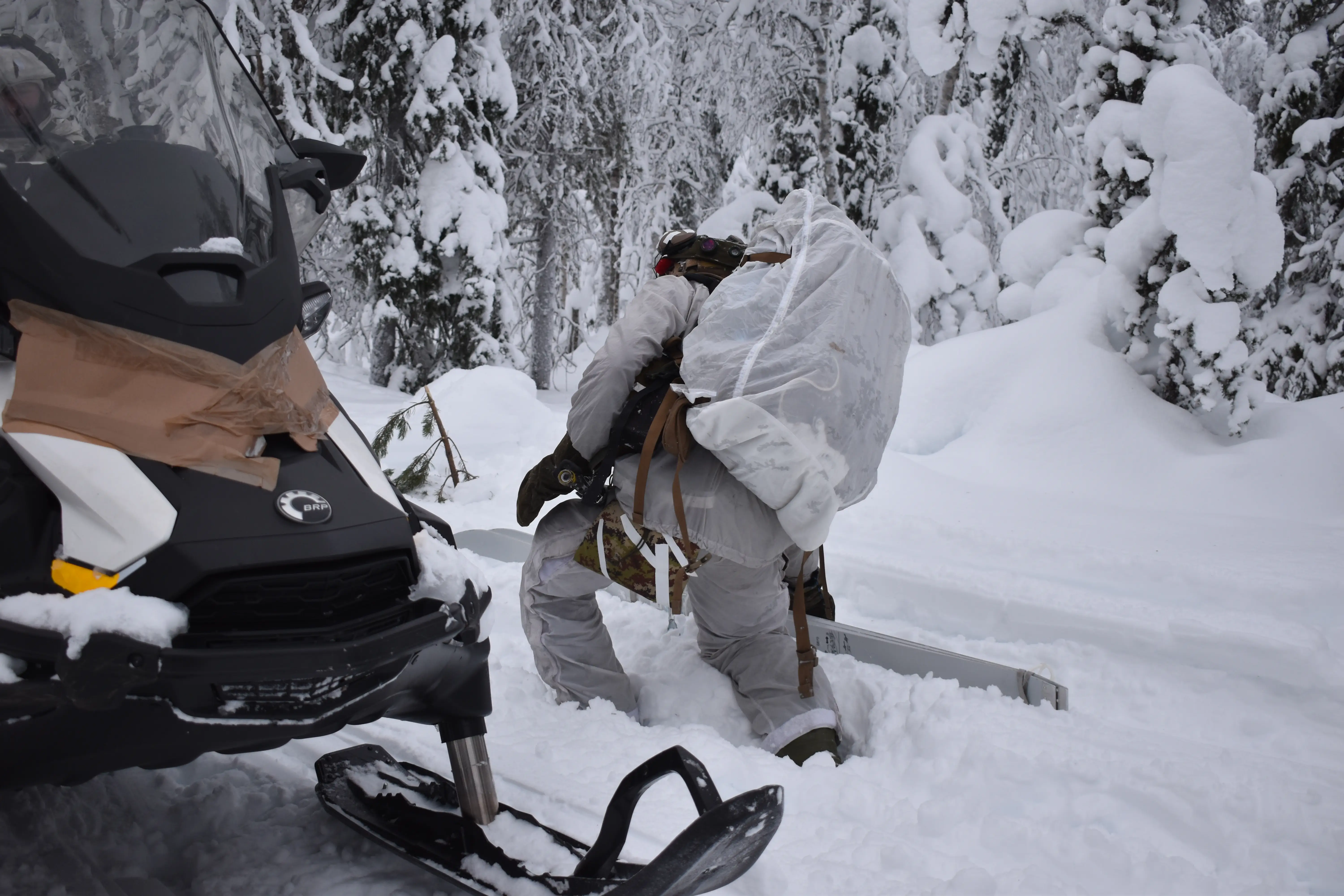
The second phase includes the combat exercise Business Insider had the opportunity to observe. The NATO platoon, known as the Blue force, began by crossing several kilometers of forest on snowmobiles before dismounting and skiing to the top of a small hill. Their objective was to effectively assault and capture territory defended by the Red force, the Finnish conscripts.
Maneuver in these environments used to be limited to skis, still a crucial tool for soldiers needing to traverse deep snow that otherwise would make ground assaults impossible. Modern snowmobiles lighten the load, allowing soldiers to travel farther faster with less overall effort, preserving energy for the fight.
“You can’t get anywhere,” said Aikio, the Jaeger Brigade major, said of the snow’s effect on traditional assault elements. The Arctic demands some unique warfighting skills that aren’t really used anywhere else.
Learning to ski in these conditions can be challenging for soldiers, especially if they have no prior experience. They’re also weighed down by cumbersome gear, such as packs, helmets, vests, and guns, making it more difficult.
“It’s hard to move with the skis,” said Finnish Lt. Laura Lähdekorpi, one of the soldiers in the winter warfare course. She told Business Insider that recreational downhill skiing has helped her to improve balance.
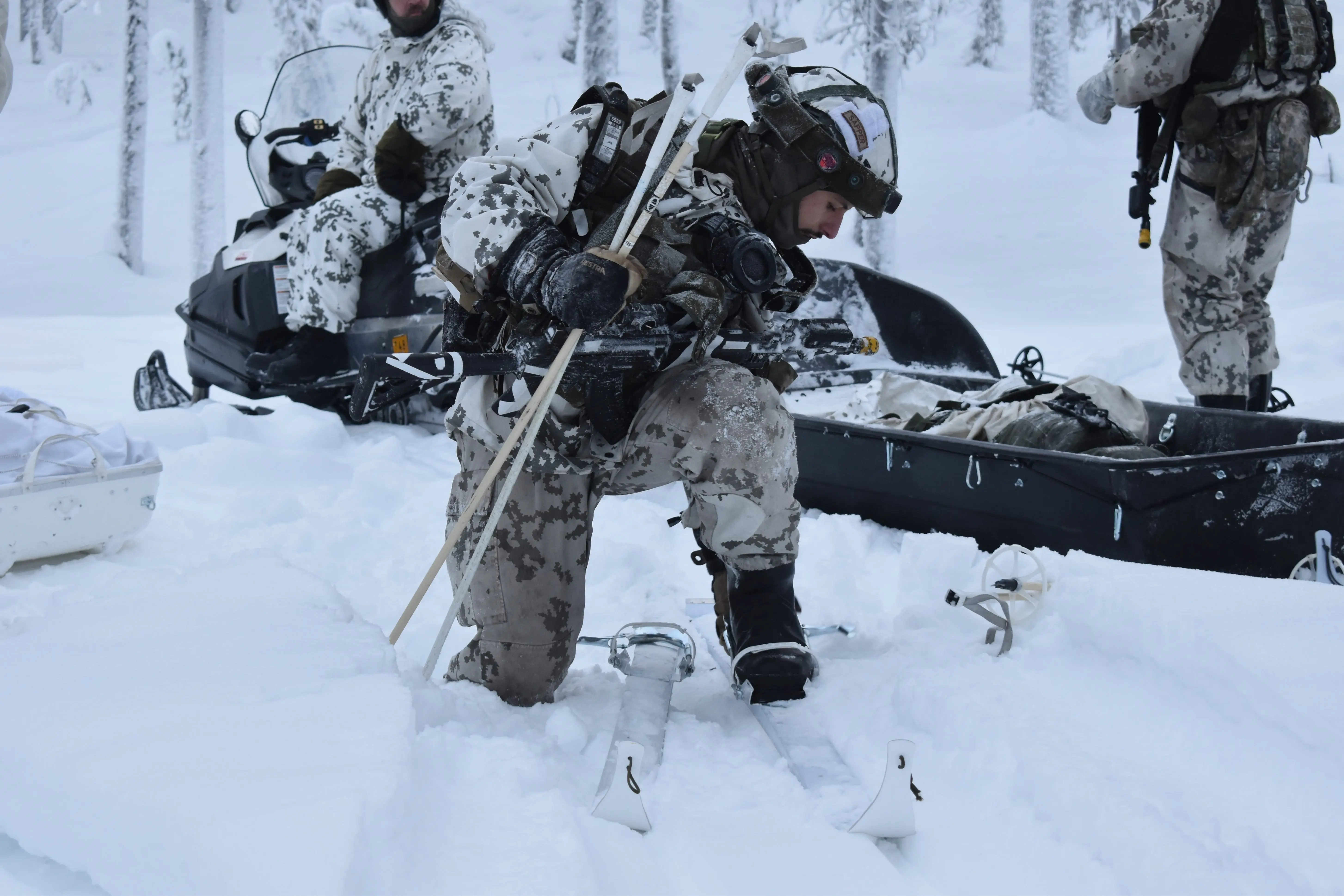
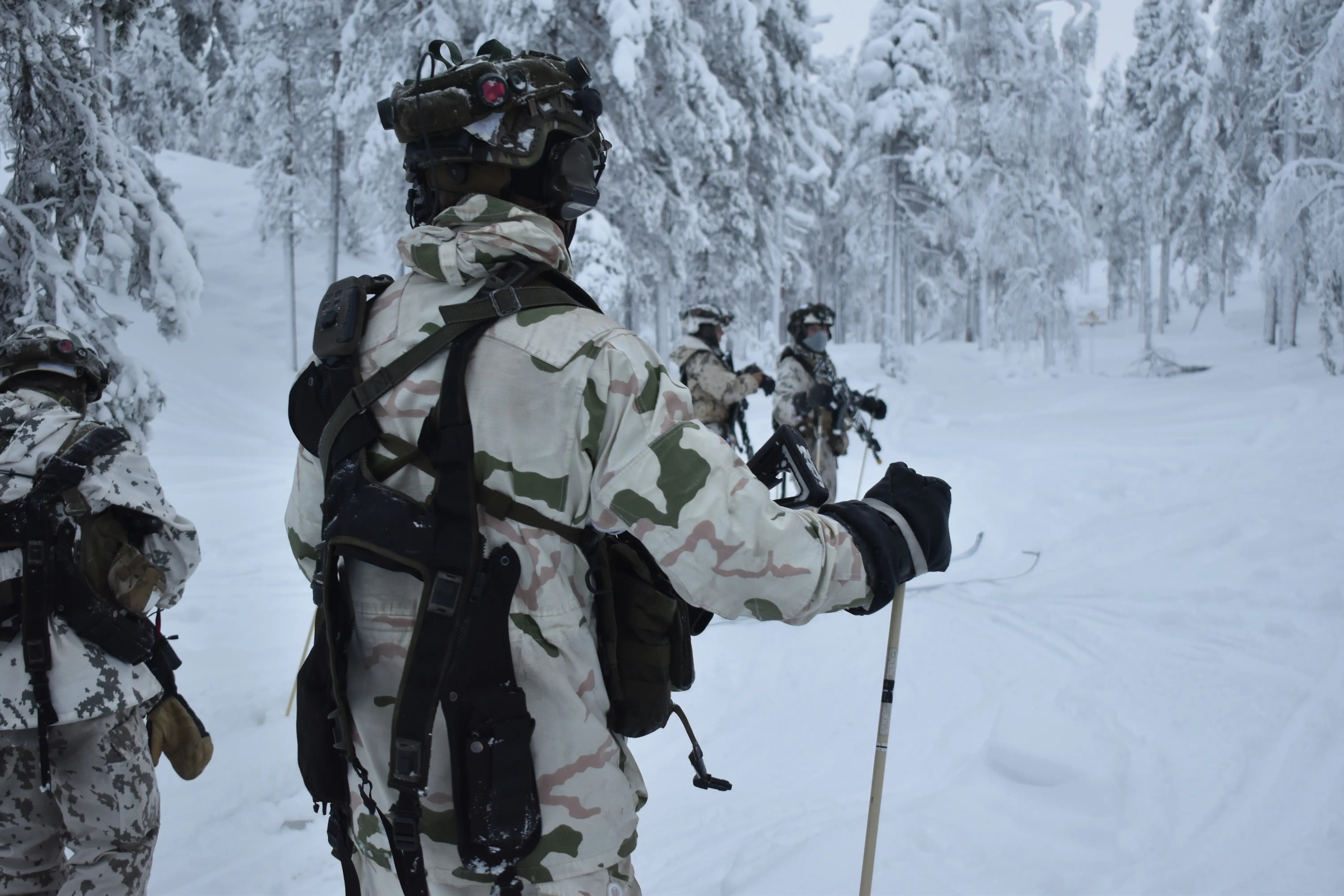
Canadian Cpt. Vincent Lemelin, another soldier in the course, said he grew up skiing; however, the ones he’s been using in Finland — long and designed to act as snowshoes — are very different from what he’s used to.
“The fact that the skis are this long requires some adaptation, but it does give an advantage to already have the skills,” Lemelin said.
“In this operating condition, even a good skier, at some point, especially at night, will start struggling because you’re getting tired,” he said. “When you get tired, you’re also less confident.”
A high-stakes game of laser tag
The assault began as daylight faded away. The Blue force used drones to collect targeting data, which it relayed to a nearby control van that then simulated artillery strikes against the Red force. Then the NATO troops advanced toward the Finns.
Soldiers carried rifles loaded with blanks and equipped with transmitters that fire laser tracks when they pull the triggers. They wore vests and helmet straps able to detect any incoming laser signals.
If a shot found its mark, the vest on the opposing soldier announced to them that they had been “killed” or “wounded,” depending on where on the body they got hit by the laser. Then they took off their helmets to signal that they were out.
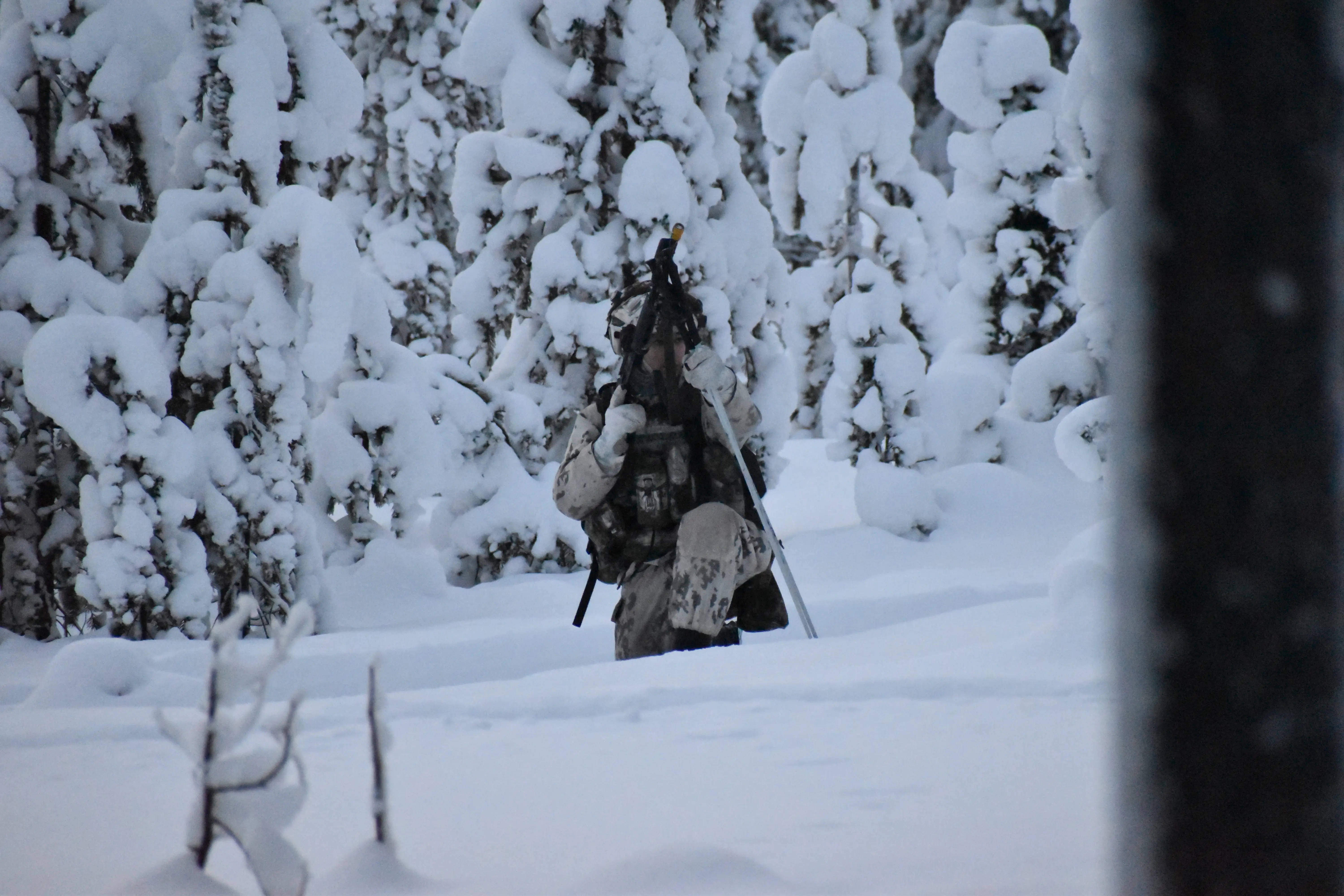
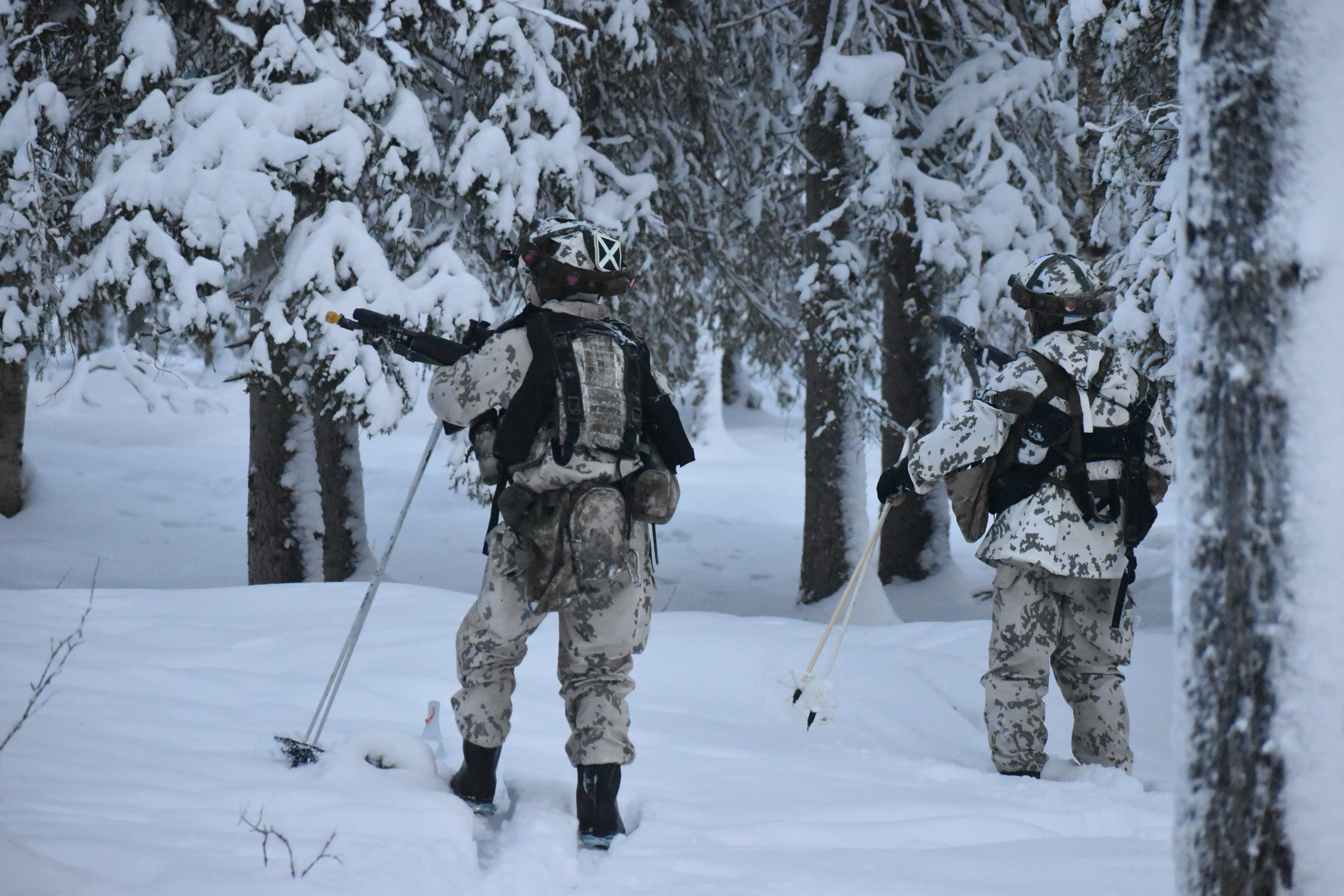
Though the system resembles laser tag, troops take it seriously. It reflects the consequences of armed conflict, forcing soldiers to respond to simulated injuries and sudden losses, much like they would in real combat.
“If we fight without this, everyone can just walk straight into the woods,” Lähdekorpi said. There’d be no way to tell if someone was hit or killed. This tech pushes soldiers to hide, move discreetly, and communicate more effectively.
The laser system isn’t a perfect match for combat, Aikio acknowledged. “If you have snow, or branches, or anything that’s blocking the laser, it will not work. And that’s not realistic, but it’s much better than nothing.”
For some NATO soldiers who come to these training exercises, it might be the first time they’ve operated in the harsh Arctic environment. Rising tensions between the West and Russia have fueled concerns that a future war between the two could unfold across frozen battlefields, making it critical that troops from Italy to the US are prepared for that possibility. A fight against China, another Arctic rival, could likewise involve Arctic activity.
Finland shares an 800-mile-long border with Russia, is one of NATO’s front-line countries, and has long been training for the possibility of renewed conflict in the Arctic, even before it joined the alliance in 2023. The Finns have fought the Russians before. It’s been decades since the last round of hostilities, though.
“Now we are in NATO,” Aikio said. “We want to support our allies so that they can also fight and work here in our conditions — in our terrain.”
Read the original article on Business Insider
The post Snowmobiles, skis, and laser tag: How NATO soldiers train for Arctic assaults appeared first on Business Insider.