When Donald Trump won re-election in 2024, there was one campaign pledge that voters across the political spectrum felt the most confident he’d make good on: controlling illegal immigration and making the country safer. About 55 percent of Americans approved of Mr. Trump’s approach to immigration upon his return to the White House, my polling found.
One year later, however, the public’s assessment has turned negative, having flipped to 55 percent disapproval in my own most recent polling, whose dates included last Saturday, the day Alex Pretti was killed by federal border agents in Minneapolis.
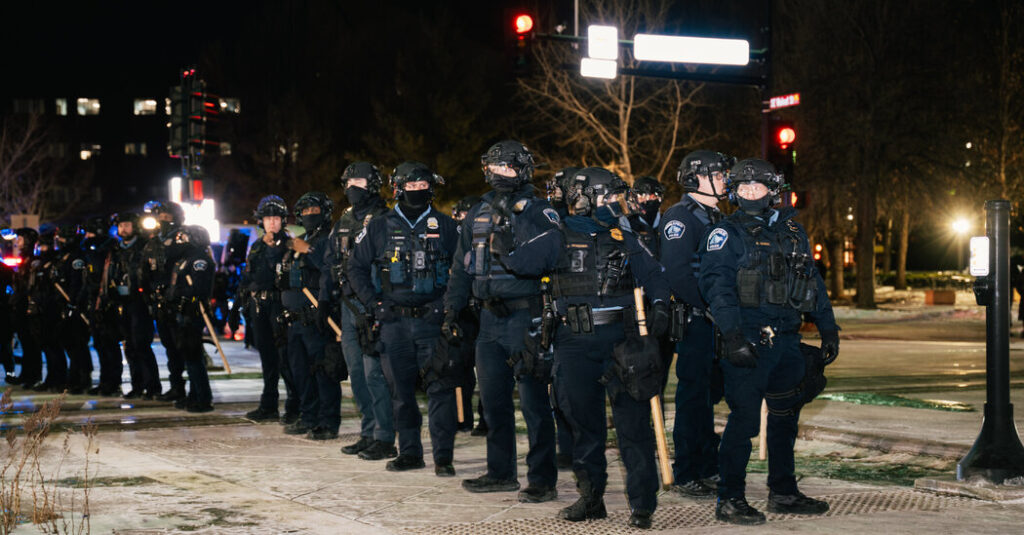
Driving this is Americans’ belief that Mr. Trump’s policies are not delivering on the safety and security he promised — in fact, now quite the opposite. On one side of the ledger, there is a decreasing sense that roundups and deportations by federal agents are focused on true security threats. On the other, there is rising anxiety that the presence of an armed federal force in cities is actively making daily life less safe for people who live there.
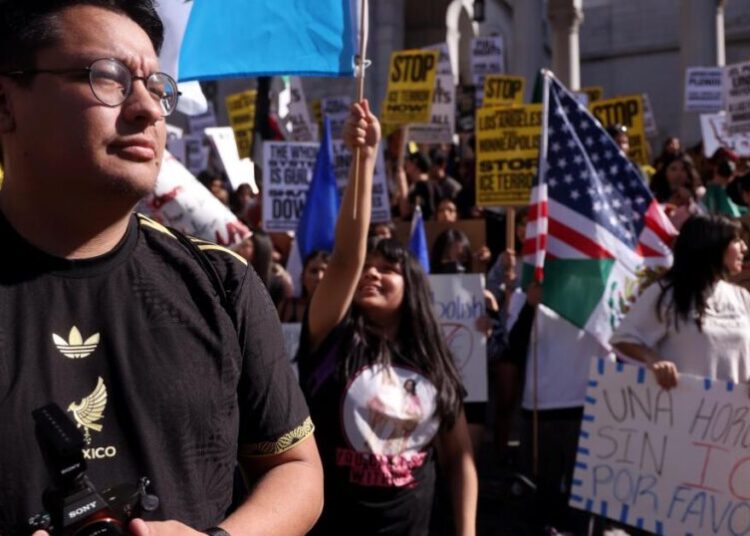
As a result, what was once an issue that Mr. Trump could rely on as a political asset — winning over even some of his skeptics — has now curdled into a tragic debacle. Americans are seeing horrifying video clips of clashes with ICE agents that instill a sense of fear, not of immigrants, but of their own government.
Immigration is an issue on which Mr. Trump held a solid advantage throughout the 2024 election, with 53 percent of voters in the exit polls of key states saying they trusted him more, compared to only 44 percent who preferred Kamala Harris. At the heart of his campaign were calls to deport criminals living in the United States illegally.
And indeed, at the start of Mr. Trump’s second term, that goal was broadly popular: Some 63 percent of voters overall — including nearly four in 10 who had voted for Ms. Harris — said at the time that they hoped deporting undocumented immigrants who had committed other crimes or had outstanding deportation orders would be one of Mr. Trump’s highest priorities. But that consensus faded when voters were asked in the same survey about deportations that go beyond those with criminal convictions or removal orders; only 41 percent felt deporting all illegal immigrants should be a high priority.
Even within Mr. Trump’s own party, there has been considerable disagreement over how widespread to make deportation efforts. Or, as Representative Maria Salazar, Republican of Florida, put it this week, “One thing is the gardeners, another thing is the gangsters. One thing is the cooks, the other thing is the coyotes,” a reference to the smugglers paid to guide migrants across the border.
While illegal immigration is an economic concern for some — Vice President JD Vance often points to immigrant labor as depressing wages for citizens — Mr. Trump has more often focused on the issue as a matter of law, order and security. When a horrific episode like the 2024 murder of the Georgia college student Laken Riley occurs at the hands of someone who should not have legally been in the country, it galvanizes those who say the United States has a too-soft approach to immigration that puts everyday Americans at risk.
Mr. Trump is now discovering that sending masked ICE agents to apprehend immigrants in public spaces is having an equivalent effect in the opposite direction, and many Americans who were vital to his electoral coalition now feel less safe, rather than more.
In October, I asked voters about that. At the time, voters were fairly split, with 36 percent saying the agents’ actions made them feel more safe and only 34 percent saying it made them less safe. Since then, many of those in the middle have come off the sidelines. My most recent survey, which was initiated after the shooting of Renee Good and was still being conducted during the shooting of Mr. Pretti, showed a jump to 45 percent of voters saying they now feel less safe as a result of ICE’s raids.
When I look at the groups that moved away from Mr. Trump, some of the biggest changes were among Black voters, independent voters and voters in urban areas, all of which Mr. Trump prided himself on adding to his new Republican coalition. Crucially but perhaps unsurprisingly, the group with the largest increase in feeling unsafe was Hispanic voters, who skyrocketed from 32 percent feeling less safe in October to 58 percent today. Latino voters have generally been supportive of Mr. Trump’s policies on border security, but in Times/Siena College polling last week, they said that ICE has gone too far.
In part, this is related to a voters’ increasing belief that ICE is aiming at people well beyond the criminals and the coyotes. It isn’t just that the tactics being used feel dangerous, it is that the targets increasingly are not. In October, by just a five-point margin, voters leaned slightly toward thinking that ICE was focused more on people who are peaceful and not a threat to public safety; by January, that had widened to a 14-point gap, with only 38 percent of voters thinking ICE is mostly going after criminals.
Mr. Trump’s decision to change course in Minnesota, both in terms of personnel and his rhetorical approach, suggests he is aware the issue has gotten away from him. Many voters counted on Mr. Trump’s immigration policy to keep them safe, and they no longer feel they are. An issue that was once something of a political safe space for the president no longer is, either.
Kristen Soltis Anderson, a contributing Opinion writer, is a Republican pollster and the author of “The Selfie Vote: Where Millennials Are Leading America (and How Republicans Can Keep Up).”
The Times is committed to publishing a diversity of letters to the editor. We’d like to hear what you think about this or any of our articles. Here are some tips. And here’s our email: [email protected].
Follow the New York Times Opinion section on Facebook, Instagram, TikTok, Bluesky, WhatsApp and Threads.
The post The Polls Are Clear. Americans Don’t Want This. appeared first on New York Times.