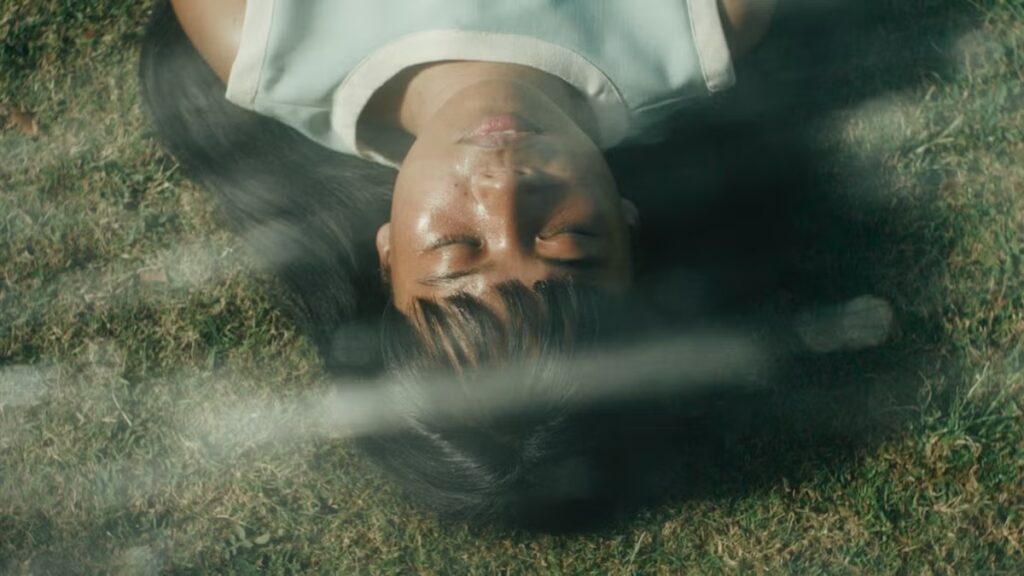
Both everything and nothing happens in “Filipiñana,” the cutting, confident, and ultimately formally captivating feature debut from writer-director Rafael Manuel. The everything in question is the way structures of power are both maintained and reintrenched at a golf and country club outside Manila, Philippines, that serves as a synecdoche for the country itself. The nothing is the way everyone else just keeps going through the motions despite the continual sense that something is profoundly out of balance.
One feeds the other as collective inaction allows for the inertia of a quietly sinister status quo to continue unrestrained in each beautiful yet haunting visual the film brings to life. This ensures that when action against this status quo is taken, no matter how small it may be, the ripple effects shake you out of the reverie in which it seems most of the other characters remain trapped.
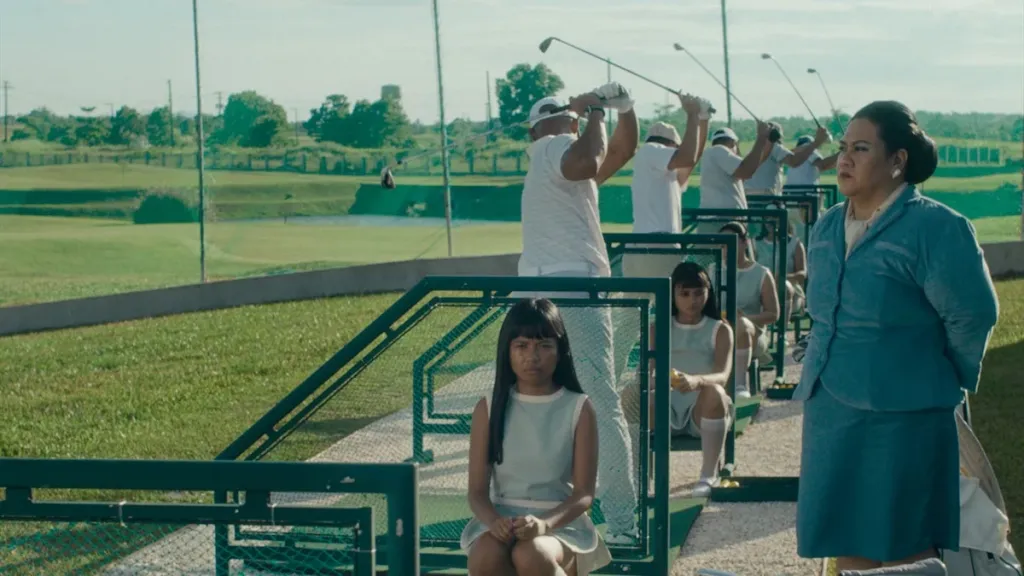
Playing out almost as one grim extended fever dream over the course of a single stiflingly hot day, the film accompanies the 17-year-old girl Isabel (Jorrybell Agoto) on a seemingly insignificant journey to return a golf club. She’s meant to give it to the president of the club where she works, but her journey takes on a far more slippery significance just as she realizes she can’t continue down the same path she has been on until now.
There are some other characters making their way through the purgatory-esque golf course, such as a rich industrialist and his niece, who is returning from America, as well as Isabel’s fellow workers who serve as effective contrasts to the absurdly wealthy club members. They all embody the contradictions and cruelties of their little world, with the visiting young expat proving to be most critical to revealing how easily supposed values can be compromised on. However, the film primarily hinges on the actions of Isabel as she begins to subtly disrupt the natural order of the club.
She’s a character of few words whose actions are no less critical as she increasingly takes more and more quietly radical action. She seems driven by an unspoken yet powerful desire for something more for herself than merely setting up the tees for wealthy men. There is a grounding, deeply emotional care to how Manuel observes Isabel as she attempts to make sense of what exactly is going on in her world and how she can make it a better one.
Beautifully shot by cinematographer Xenia Patricia, who also worked on last year’s spectacular “Zodiac Killer Project,” “Filipiñana” frequently consists of largely static tableaus that are so perfectly, poetically rendered that they almost resemble paintings. Be it when a figure is standing alone in the tall grass looking down at the world with a slightly tormented expression, or the fantastic final shot that lingers for several unbroken minutes, Manuel takes his time in letting everything unfold before you. Life moves at a different, more intentionally laborious pace in his film just as the specter of death seems to increasingly be lurking just out of frame.
Though the film has drawn comparisons to Michael Haneke and David Lynch, Manuel also cites the late, great Jacques Tati, and it’d be easy to make the case for “Filipiñana” as the more reserved, mirror image of Tati’s classic “Playtime” in how it holds the rhythms of modern life up to the light. One other comparison that felt most relevant was the sublime recent “Universal Language,” both in the similarly wonderful way it was shot and in how it shifted into being a reflection on home and memory in his final act.
“Filipiñana” ends up being much more about displacement where the ongoing yet unseen violence has become just another part of the operations of the club. In one unexpectedly affecting monologue near the end, it makes explicit that the workers keeping things moving at the club are those who have been removed from their lives and histories. Just like the uprooted pine trees that keep getting brought in after the one before them died, life seems perpetually out of reach in this place.
It’s all part of the artificiality of the club that makes it feel like a simulacrum of life. We only begin to see reality for ourselves closer to the end, with Manuel pointedly holding us at a distance just as Isabel begins to get closer to seeing the cracks forming in this faux, oddly frightening world. That she is not always certain about what exactly is amiss only makes it that much more disquieting.
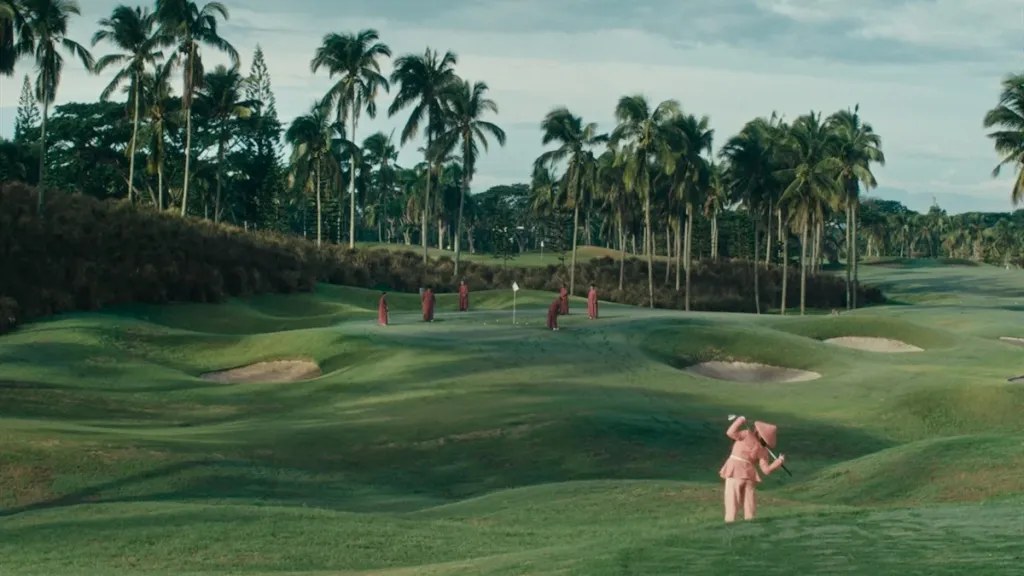
The way this unfolds will likely test the patience of those not accustomed to what can be broadly called “slow cinema,” but it was on a second watch that I found myself utterly and completely riveted by the deliberate, devastating way “Filipiñana” unfolded. It’s a film of restrained, yet no less shattering, unease that, for all the artificial beauty that exists in the club, also invites you to look closer and ponder what ugliness lies beneath that all have grown accustomed to.
It holds a potent, petrifying and poetic power that culminates in a breaking of the poisonous spell that, until this moment, had held the entire film in its grasp. In these flooring final moments, it movingly ponders what it means to take a leap of courage and swim upstream against the casually cruel waters everyone else is swimming in. Everything and nothing has changed in the world of the film, though it remains a work of art that may change those watching it just as Isabel herself does in the end.
Check out all our Sundance coverage here
The post ‘Filipiñana’ Review: Rafael Manuel’s Riveting Feature Debut Knows Where the Bodies Are Buried appeared first on TheWrap.