Welcome to Current Events Conversation, where each week we round up some of our favorite responses to one of our student writing prompts.
Is it OK to alter photos of yourself to look better online?
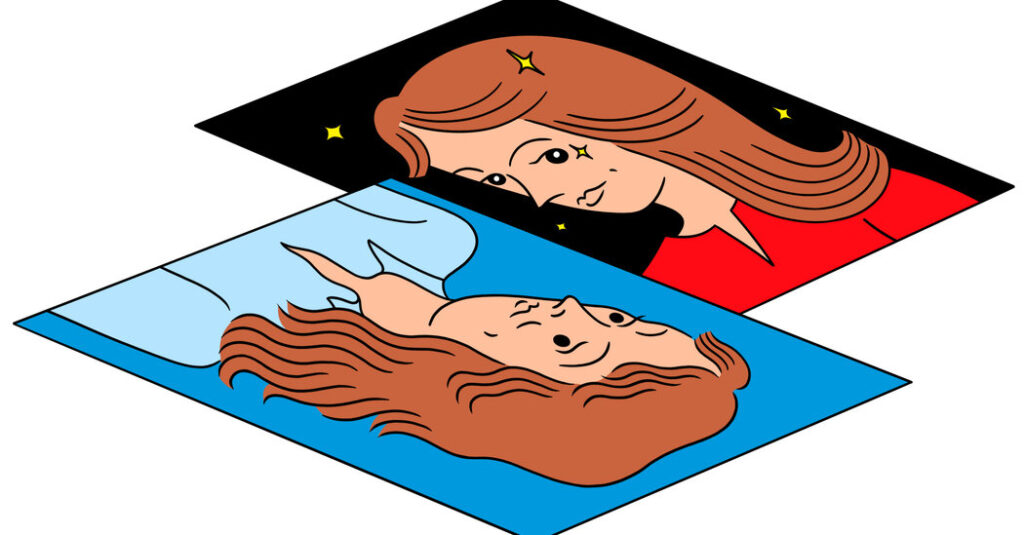
Erasing acne, bulking muscles and smoothing stray hairs is easier than ever in the age of photo editing tools, filters and artificial intelligence. Does making these minor tweaks cross any ethical lines? How far is too far when it comes to enhancing photos of yourself?
We invited teenagers to weigh in on these questions, inspired by a similar query to The New York Times Magazine’s Ethicist advice column, in which a reader’s husband took issue with her posting an A.I.-generated headshot. Was she being dishonest by not disclosing the digital enhancements, she asked.
The responses from teenagers were a fascinating look into a generation that has grown up “steeped in the internet,” as one writer put it. Some students argued that photo editing is just a modern version of wearing makeup or finding good lighting. Others, however, expressed deep concern that A.I. is “sucking everything human” out of the images we see online and that even minor editing is fueling a cycle of insecurity that makes it especially difficult for teenagers today to embrace their flaws.
Thank you to everyone who joined the conversation this week, including students from Templeton High School and Sparta, Ga.
Please note: Comments have been edited and condensed.
Many students argued that minor editing is acceptable, but there is a line.
In my opinion, editing crosses the line when it significantly changes a person’s appearance and creates a false impression. Small adjustments like lighting, color correction, or minor blemish removal are usually harmless. However, when editing changes body shape, facial structure, or age, it can become misleading.
Altering images can become dishonest extremely quickly. For example, if someone uses filters or editing to bring out their eye color, makeup, or other features of choice, there is no issue. However, if the person uses editing to change their features’ structures, that is where the line is crossed. Altering features such as eye shape, jaw shape, or height provides a false image to the viewer of the picture. This “false advertising” can lead to backlash that does nothing but harm the subject of the picture, because it places a label of dishonesty on the person.
While I agree that sometimes improving certain things in photos like messy backgrounds or using a filter for better lighting is a good use of A.I., I disagree with completely generating new photos. At that point it’s no longer a photo of you but instead an eerie robotic recreation.
Some teenagers defended the practice, comparing it to other common ways people enhance their looks in real life.
Everyone has the right to improve their appearance. Some people believe it is cheating or dishonest to edit or filter photos before posting them on social media platforms. However, I disagree. In daily life, it is common for people to wear makeup and dress up to look better, and editing or filtering photos works in the same way. We simply want to present our best side to others. Even after editing, the person in the photo is still ourselves.
If the photo still looks like you and isn’t being used to manipulate others, I don’t think it’s that serious. We already live in a world where many celebrities, influencers, and even normal, regular people post edited photos all the time without disclosure. As long as A.I. is used to enhance rather than impersonate, or manipulate others, I believe that it’s acceptable and appropriate to use.
— Valeria, Glenbard West High School
I think the actual editing of the photos isn’t the issue, the lack of disclaimer is the problem. So, yes I think it’s OK to alter and edit your photos however you please, as long as you state that the photo is edited.
— Ronnie, Templeton High School
I think that digital editing tools do not “change the game’” of self-image and comparison nearly as much as adults think they do. Even in real life, the majority of people (particularly women) are “edited” in some way, through makeup, shapewear, etc. As Appiah wrote, “the distinction between natural and artificial isn’t as sharp as we often assume.” Before the internet, teen girls were comparing themselves to equally staged and altered images of movie stars and models who pay and are paid fortunes to look that way. The real question is, why are beauty standards for women ridiculous enough to demand bending reality? Because that misogynist reality hasn’t changed, A.I. editing tools are just its latest manifestation.
Others expressed worry about the psychological toll of comparing one’s real self to a digital “ideal.”
Social media makes it feel like everyone has perfect skin, perfect hair, and no flaws at all. When you see that all the time, it’s easy to feel insecure and want to fix things. But the problem is that most of those “perfect” pictures are edited too, so it becomes this cycle where no one feels good enough. As a teenager growing up with social media, it can definitely affect how you see yourself. It makes you compare yourself to people who don’t even look like their own photos. Overall, I think it’s better to embrace your natural beauty instead of trying to look like an A.I. version of yourself.
— Gabriella, Montclair High School
An example of the negative effects of altering photos is in the bodybuilding world. Many teenagers that are into this niche often follow influencers who often edit their physiques to look better than they actually are and since teenagers also want to achieve similar physiques, they often stumble upon steroids and start destroying their health. Overall, I believe that it’s not okay because it makes people chase unrealistic standards and could lead to both mental and physical issues in the future.
I love loving myself. I bet you love loving yourself, too. Still, would I be happy seeing myself as fake? Would you? In my opinion, I hate being fake. My mom always uses filters — yeah, great for her, but when she starts using them on me? I feel weird. Horrible, even. It doesn’t look like me, and I certainly don’t feel like whoever it is in that photo.
— Yaeli, Julia R. Masterman, Philadelphia PA
Growing up with social media being a part of everyday life I’ve seen the beginning of filtering your face. The earliest I can remember was Snapchat with filters and it was pretty cool. Your face could be a dog or any filter they have out there. For a couple of years I’ve stopped using filters on my face because I want to see the beauty in my face without seeing someone who isn’t me. And I grew more confident within myself.
I understand that everyone wants to look their best on the internet and in public, but at the same time, we need to be okay with our true selves. If you’re constantly worried about what other people are going to think or do, then you won’t live your life in a fun and fulfilling way. Instead, you will be living in a life of constant fear, regret, and nervousness. That is no way to live, and it all can start with a simple tweak of a selfie.
— Matthew, Glenbard West High School
For some, the problem with altering photos isn’t just honesty, it’s that it takes away from the authenticity photos are supposed to present.
I find that the use of Photoshop or A.I in pictures just defeats the sole purpose of a photo. I believe that photos are designed for us to look back on our memories, whether our faces looks good or not. Adding Photoshop or A.I. just because someone is unhappy with how they look ruins the authenticity of the picture.
— Adele, Central Coast California
I agree that A.I. can do a lot of good for enhancing or generating photos, a point that needs emphasizing since so many people still ignore the value that A.I. brings. However, by doing this, the natural aspect of human-taken photos are taken away. When you see a nature picture made with A.I., it is still really pretty, if not even prettier than the natural version of it. But a completely natural photo is still more valued than the A.I. photo, because it still retains that human aspect. It conveys more than just the beauty of nature; the photo is real, which makes it cooler.
— Rehan, Glenbard West High School
Finally, students shared what it’s like to grow up in a world where they have to question what’s real.
As a teenager growing up in a time where I can hardly tell if anything is real, I find myself troubled by the amount of times I’ve had to ask myself “Is this video real?” or “Did she edit her face to be slimmer?” I feel awful when I think someone’s image is fake, when it totally could’ve been real.
As a teenager growing up in a time where it seems like everything online is photoshopped, edited, or enhanced, I feel like you can’t trust anything. Everything feels fake and stiff, like the A.I. sucked everything human out of the picture.
— Lena, Masterman School, Philadelphia, PA
I believe that we are reaching the stage where we are finding the virtual representation of ourselves much more important than the real one. Obviously, one might say that a picture is a lot like wearing good clothes or makeup so that we can be at our best. However, unlike the former, technology has the potential to set a completely unattainable ideal of beauty where the only ones who can achieve it are impossible beings. There has to be a point where technology is harnessed so that we do not forget where we came from.
In online spaces where influencers photoshop images of their surgically altered faces to promote hundred-dollar beauty products, the pressure to fit into society’s expectations can be immense. And in these same platforms, we must question with every scroll if there is a live user behind the screen or if the content we consume is artificially generated. The combination of growing insecurities and readily available generative A.I. makes creating the perfect selfie seem like a sound solution. But in an era of constant illusions and posts made by robots, it is important to reward what makes us human: our individuality. So perhaps the frizzy hair, acne, and wrinkles don’t deserve to be erased from pictures, but rather celebrated. Because authenticity can be a refreshing reminder that, at the end of the day, we are human. And maybe in 2026, the world needs that.
Learn more about Current Events Conversation here and find all of our posts in this column.
The post What Teenagers Are Saying About Altering Photos to Look Better Online appeared first on New York Times.