Lukoil, one of Russia’s largest oil companies, said Thursday that it was in talks to sell its foreign assets to an American investment firm, ending months of geopolitical turmoil after the Trump administration imposed sanctions on Lukoil last year to put pressure on Russia to end its war in Ukraine.
Carlyle, a Washington-based investment firm, will take over all of Lukoil’s overseas assets except for its operations in Kazakhstan, the oil company said in a statement.
Lukoil did not disclose the financial terms of the deal and said it was still in talks with other prospective buyers. “The agreement is conditional upon Carlyle’s due diligence and regulatory approvals,” the investment firm said in a statement.
Any deal would have to be approved by the U.S. Treasury Department, which is responsible for enforcing U.S. sanctions.
“Now is the time to stop the killing and for an immediate cease-fire,” Treasury Secretary Scott Bessent said in an October announcement that described Lukoil and Rosneft, Russia’s biggest oil producer, as part of “the Kremlin’s war machine.”
In October, the European Union also introduced sanctions against Russia that included phasing out Russian fuel imports in the 27-nation bloc, adding to the pressure on the Kremlin.
Lukoil, the only major Russian company still in private hands, has been struggling to find a buyer for its non-Russian assets since the sanctions were imposed. The restrictions have put in a major dent to Russia’s oil revenues, which are a major component in financing the government and the military.
The latest sanctions, combined with lower oil prices and recent attempts by the United States and European nations to target oil tankers in Russia’s “shadow fleet,” led to a 25 percent drop in Russia’s oil and gas exports last year, according to Russia’s finance ministry.
The lower oil prices have even prompted Lukoil to approach the Russian government for a tax break, according to reports in the Russian media this week.
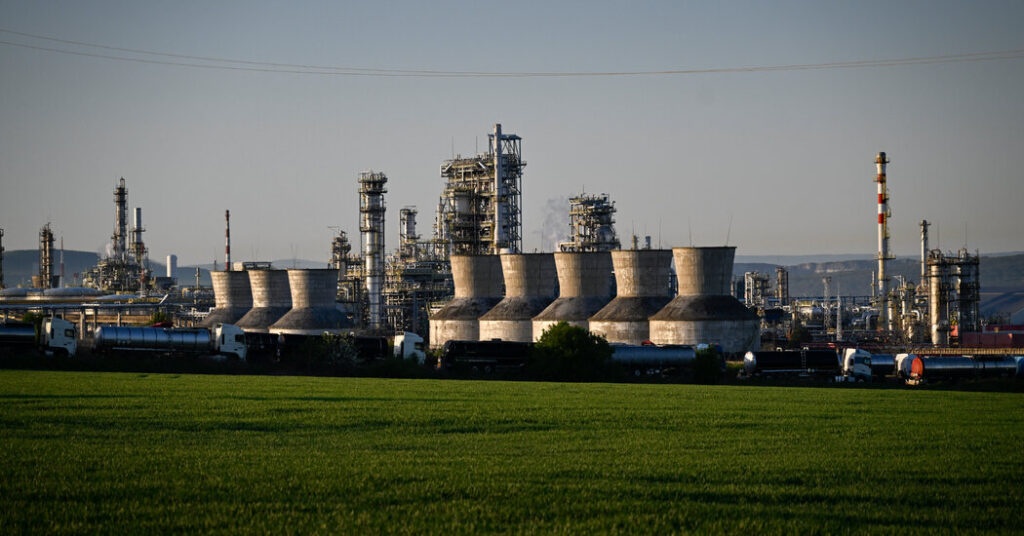
Lukoil’s foreign assets are estimated at about $22 billion. The company has over the years bought up oil fields and refineries around the globe, from Iraq and Egypt to Bulgaria and Romania. It also owns 200 U.S. gas stations, in New Jersey, New York and Pennsylvania. The stations are typically operated by individual franchisees.
Lukoil last year fielded an offer from Gunvor, an oil trading firm founded by a friend of President Vladimir V. Putin of Russia, but the deal fell through in early November after the Treasury Department called the company “Kremlin’s puppet.”
Lukoil has a 5 percent stake in a major oil field called Tengiz in Kazakhstan, which is operated by a Chevron-led joint venture, as well as interests in other properties in the oil-rich country. The Kazakh government wants to take over these assets.
In the early days of Russia’s full-scale invasion of Ukraine in 2022, Lukoil called for an end to the war, and its supporters argued that sanctions against a company with such a vast foreign portfolio would set off economic shock waves around the world, especially in countries like Bulgaria, where the Lukoil refinery is crucial to the local economy.
Carlyle said it recognized that some of Lukoil’s facilities were of “critical importance to nations’ infrastructure and domestic energy security.”
Stanley Reed reports on energy, the environment and the Middle East for The Times from London. He has been a journalist for more than four decades.
The post Russia’s Lukoil in Talks to Sell Some Assets to U.S. Investment Firm appeared first on New York Times.