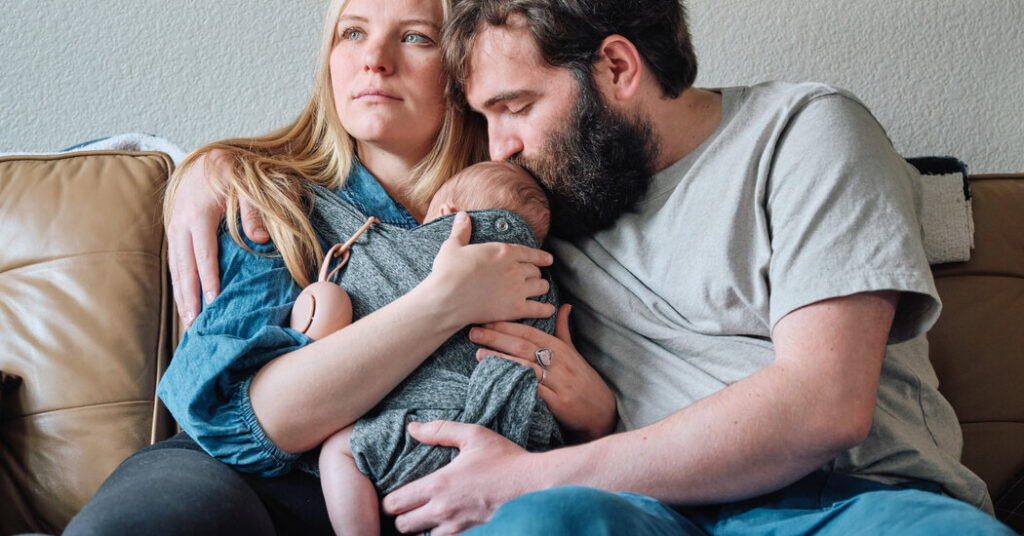
A father in North Carolina is delaying taking his infant son to see his parents. A mother in Washington State is switching pediatricians. And some parents are vaccinating their babies against measles early.
They are among a growing number of parents coming to a painful realization: It is getting harder to keep their children safe from vaccine-preventable illnesses.
Under Health Secretary Robert F. Kennedy Jr., the Centers for Disease Control and Prevention has removed immunizations against six diseases from its routine childhood recommendations. The doctor Mr. Kennedy recently appointed to lead an influential vaccine advisory panel has suggested that vaccines against measles and polio should be optional. These shifts threaten to accelerate a decline in vaccination rates and an increase in infections. Measles is on the rise. Whooping cough surged last year, too.
The chances of contracting those diseases remain low in most of the country, and vaccines are still available and broadly covered by insurance. But the heightened risk has frightened some parents into action. More than 200 parents responded to a New York Times request to share how they were dealing with the C.D.C.’s changes, many of them expressing anger and anxiety.
Some are abandoning the C.D.C. as a source of information in favor of the American Academy of Pediatrics, which is sticking with a broader vaccine schedule. Others are agonizing over where to turn and said the autonomy Mr. Kennedy was advertising, for parents to determine which vaccines were right for their children, felt like a burden.
“I’m not a doctor, and I don’t want to have to do all the research,” said Cori Folkman, 48, a mother of two near Seattle, who is switching her children to a pediatrician who was vocal about sticking to the A.A.P. schedule. “I want to be able to rely on my doctor to know.”
Looking for Guidance
Cameron and Sabrina Scully, parents to a 2-month-old in Denver, said they felt rattled by the abrupt shifts. The C.D.C. stopped recommending the hepatitis B vaccine at birth just days after the Scullys’ son received it. In September, when President Trump told pregnant women to stop taking Tylenol, Ms. Scully had taken some that morning.
The couple know that the evidence for vaccines is solid, just as they know Tylenol is the safest painkiller during pregnancy. But it was hard not to question themselves, they said, when an agency they had always trusted was suggesting the opposite. They were sure the evidence was sound, right? Mr. Kennedy didn’t know something they didn’t?
“It is really stressful when you feel like you’re doing all the right things throughout pregnancy to have a healthy child, and then all of a sudden the rules change,” Ms. Scully, 30, said. “How do you know who to turn to? Because we’re certainly not conducting our own scientific research here.”
The Scullys have decided to stick to the American Academy of Pediatrics’ broader vaccine schedule.
The stress they described was widespread, even among parents with zero doubts.
Idaho has some of the lowest vaccination rates in the country. Still, until recently, Mary Taylor, who lives in the state with her 1- and 4-year-old children, felt confident their pediatrician would say what shots the kids were due for at each appointment. Now she is realizing that if she wants the full schedule, she may at some point have to keep track of things herself.
When are boosters called for? In what month should she request flu shots? Years from now, when her children are old enough for the meningitis vaccine that the C.D.C. no longer broadly recommends, will she remember? Will anyone bring it up if she doesn’t?
It’s “one more thing I have to add to the mental load of being a mother in America,” Ms. Taylor, 36, said.
Seeking Early Protection
Erin Chapman, 37, is planning to take her family to Disney World soon. But she wasn’t comfortable bringing her 6-month-old son to a crowded theme park, or on a plane, without protection from measles.
So she asked her pediatrician if he could get his first measles, mumps and rubella vaccine before the recommended age of 1. Several parents told The Times they had done that, and Dr. Sean O’Leary, the chair of the American Academy of Pediatrics’ Committee on Infectious Diseases, said he had heard of many such requests.
Dr. O’Leary said there were no indications that early vaccination was unsafe. But he said he generally wouldn’t recommend it unless measles is spreading where a child lives or is traveling, because the M.M.R. vaccine is likely to be less effective in children under 1. And any child who gets an early dose still needs the two-dose series starting at 1, he said.
Ms. Chapman said she was uneasy about deviating from the schedule. But declining vaccination rates and increasing measles infections made her feel she had no choice. Her pediatrician has agreed to administer the shot in February.
“That I would have to ask more of my child because other people won’t is really frustrating,” she said.
It’s not just the M.M.R. shot. Some are also seeking early vaccination against HPV, a virus that can cause cancer, because they are worried it won’t be accessible later. The first vaccine in that series is normally administered at age 11 or 12.
Other parents don’t have the option of seeking protection early.
Lauren, 37, has an immunocompromised son who cannot produce antibodies in response to vaccines. (She asked to be identified by her first name only, to protect his medical privacy.) Her son, who is 3, receives immune-boosting infusions but still relies on herd immunity, the protection created when enough people are vaccinated that a disease can’t easily spread.
“It feels like these factors are outside of our control,” she said of the maintenance of herd immunity. “It’s a big source of anxiety.”
Staying Home
Since measles started surging, Zachary Huckel-Bauer, 38, and his wife have been restricting their family’s activities.
Because their 9-month-old son is not yet vaccinated against measles, they didn’t fly to visit Mr. Huckel-Bauer’s parents for Christmas. After a measles case was reported near where they live in North Carolina, they kept their 4-year-old home from a class field trip. He’d had his first M.M.R. shot but not his second, and they were worried about him bringing the virus home to his unvaccinated brother.
Even if the risk of infection is low, “the long-term potential consequences of a measles infection can be life-altering, so it’s just not something that we want to play around with,” Mr. Huckel-Bauer said, adding that his declining trust in other members of his community had made him and his wife feel “more isolated than ever.”
Other parents are keeping their children out of day care or preschool; still more would like to do so but can’t, financially or logistically. The Scullys, for example, don’t have family nearby, and day cares that required vaccines were too expensive, so their son will attend a facility without such a requirement.
That worries them, but “what can we do?” Mr. Scully said. “I don’t want to be putting him at risk, but I also don’t want to be living a life governed by fear.”
Annabelle, a mother of a 4-year-old in western New York, said she and her husband decided not to have a second child in large part because they weren’t confident they could protect him or her. (She asked to be identified by her first name because her husband, a legal permanent resident, is applying for U.S. citizenship.)
“Feeling like society doesn’t have your back, your community doesn’t have your back, isn’t willing to make a small personal sacrifice to get vaccinated to protect your baby — it just doesn’t feel safe,” she said.
Maggie Astor covers the intersection of health and politics for The Times.
The post Parents Navigate a Fracturing Vaccine Landscape appeared first on New York Times.