Years ago, a disheveled woman with signs of mental illness appeared in a village in northern China. One man decided to bring her home and, over the next 13 years, he had several children with her. He was later detained on suspicion of rape.
Recently, prosecutors reached a conclusion that stunned many Chinese. They determined that the woman’s mental illness left her unable to defend herself from sexual assault, but said the man had not committed any crime.
The prosecutors argued that, because the man had lived with the woman for a long time and had children with her, his conduct was “fundamentally different from rape,” according to a copy of the decision obtained by The New York Times.
The decision in Heshun County, a rural area of Shanxi Province, provoked widespread outrage. On social media, critics said it suggested that when a sexual relationship produces children, the authorities are willing to overlook a woman’s possible lack of consent.
Further stoking anger was the fact that prosecutors did charge two other male villagers with raping her, specifically citing a doctor’s assessment that the woman, identified by her surname, Bu, had “no sexual self-defense capacity.”
The term comes from Chinese official guidelines about how to evaluate women with mental disorders who are potential victims of rape; it means that the woman has “lost the ability to recognize and protect her own right to sexual inviolability.” Chinese criminal law does not explicitly define sexual consent, but says that rape involves “violence, coercion or other means.”
For many women, the prosecutors’ decision confirmed their fears about how far the government will go to promote childbearing. As China’s birthrate plunges, the government told women to see starting a family as a patriotic duty. Marital rape is not defined as a crime in China. (Prosecutors said the man, identified by the surname Zhang, held a wedding celebration for himself and Ms. Bu but did not say if they were ever legally married.)
Ms. Bu’s story first came to light in 2024, when a woman in Heshun contacted a blogger who specializes in helping Chinese people find lost relatives. The woman said that her uncle had been living with a woman — who was known only as Hua Hua — for over a decade, but no one in the family knew anything about her background.
The blogger soon announced that he had discovered Hua Hua’s birth family. Her surname was Bu and, 13 years earlier, she left her home in the city of Jinzhong, 90 miles away. At the time she disappeared, she was a 32-year-old university graduate who had been hospitalized multiple times for schizophrenia, her brother told Chinese news outlets. Her family had reported her missing.
According to a government investigation, Ms. Bu eventually arrived in Heshun County, where she encountered Mr. Zhang. He “took her in,” the police initially said.
On social media, people accused the police of using a euphemism for human trafficking or illegal detention. After public pressure, the government detained Mr. Zhang on suspicion of rape, saying that he had known she had a mental illness.
Then, last week, several Chinese outlets reported that prosecutors had decided not to charge Mr. Zhang.
“His subjective intent was to form a family,” the prosecutors wrote in their decision.
They also said that Mr. Zhang had given away one of Ms. Bu’s children in exchange for about $5,700, but concluded that the transaction amounted to private adoption, not child trafficking.
“The aforementioned actions are conspicuously minor and caused minimal harm,” the decision said.
On Chinese social media, commentators said the authorities cared only about protecting men and the traditional family.
Reached by phone, a worker at the prosecutors’ office in Heshun declined to comment. Two of Ms. Bu’s relatives also declined to comment, with one saying that his phone was being restricted.
The government has long turned a blind eye to the trafficking of women, especially because of the country’s surplus of tens of millions of men, many of whom cannot find wives.
“For women with mental disabilities, whether or not rape has occurred no longer depends on their capacity for consent, but rather on whether the other party has successfully packaged the sexual relationship within a seemingly normal, stable and socially acceptable relationship,” a lawyer, Yan Senlin, wrote in a post that was later censored.
But prosecutors did charge the two other villagers who they said had gone to Ms. Bu’s home multiple times and raped her.
“The defendant knew that the victim had a mental illness and had sex with her multiple times,” the indictment of one villager said. “The circumstances are egregious. He should be held criminally responsible for rape.”
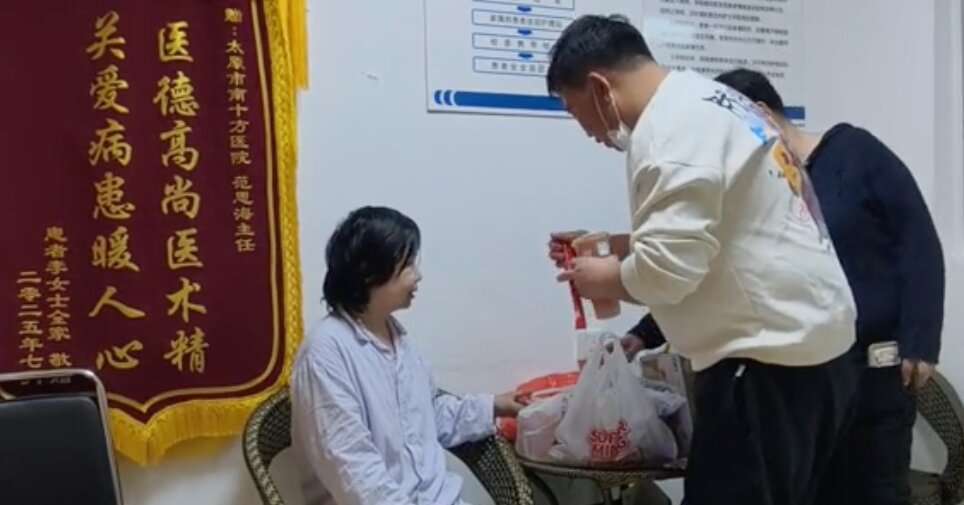
A hashtag about Ms. Bu was censored after being viewed more than 160 million times on the social media platform Weibo. But videos posted by her sister-in-law on social media show that she is with her family, receiving medical care. In the videos, Ms. Bu smiles and answers questions.
“After one year of treatment, Hua Hua is clearly improving,” one caption said.
Siyi Zhao and Joy Dong contributed research.
Vivian Wang is a China correspondent based in Beijing, where she writes about how the country’s global rise and ambitions are shaping the daily lives of its people.
The post She Couldn’t Defend Herself, But He Wasn’t Charged With Rape appeared first on New York Times.