In 2009, I was a Marine in Helmand province during the height of the shift to counterinsurgency operations. We were heavily armed and trained for violence, as Marines are expected to be.
But when we encountered local Afghans, we took off our helmets. We removed our sunglasses. We put a hand over our hearts, we looked the Afghans in the eye and said Salaam Alekum, or “peace be upon you.” If the situation allowed, we sat down. We drank tea. We talked. This wasn’t weakness or wokeness. It was strength, discipline and strategy.
We were still Marines. When it was time to fight, we did so decisively. But we also understood something essential: You cannot intimidate your way into lasting security. You cannot terrorize a population into cooperation. And you cannot claim moral authority if your posture communicates only contempt or fear.
That approach was a reflection of guidance from the strategic and operational levels. Our senior leaders understood that how we looked, spoke and behaved at the tactical level mattered enormously. Tone was policy. Posture was strategy.
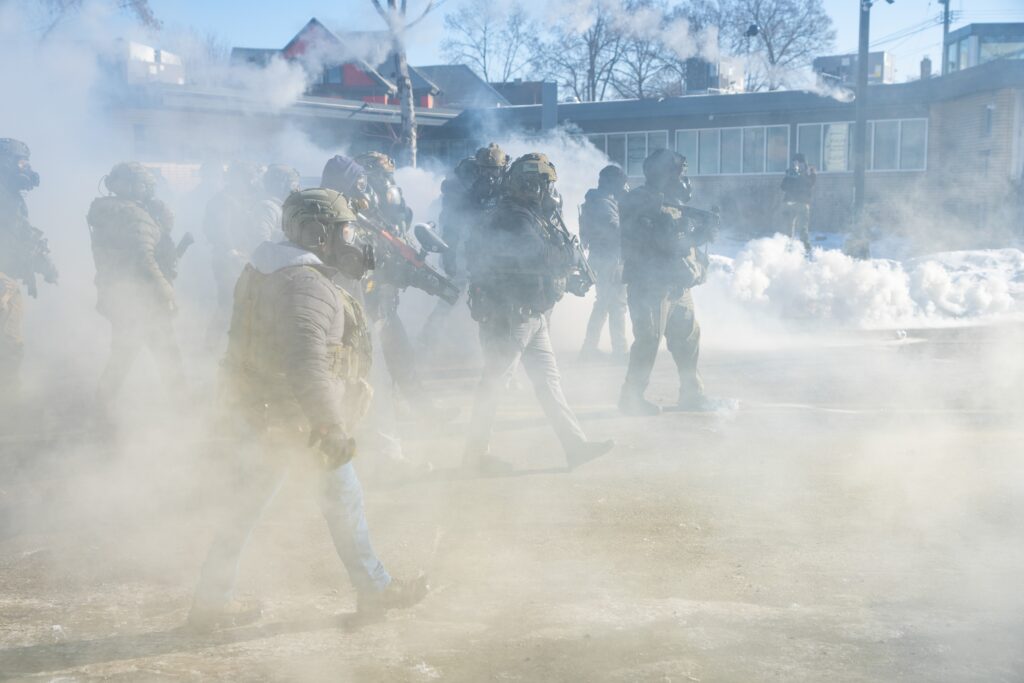
I reflect on those lessons as I watch an anti-immigration agenda in the United States that has gone badly off course. Masked officers in military-style gear, conducting raids with theatrical dominance rather than measured authority. Communities treated as hostile terrain rather than neighborhoods. I find this not only disturbing but also strategically incoherent.
In Afghanistan, we understood that showing up as faceless, armored enforcers was a fast way to lose the population’s trust. We knew that intimidation buys compliance only temporarily, and resentment compounds faster than control.
If Marines could understand this in a war zone, we should be able to understand it in our own country.
Gus Biggio, Wooster, Ohio
Reform or withdraw
Immigration and Customs Enforcement does necessary work and should not be abolished. It needs only a few changes: Recent events have shown that some ICE agents have either been poorly trained or lack the ability to perform responsibly. Comprehensive review of the qualifications of recent hires and extensive retraining are needed to avoid further harmful acts by personnel. Shootings, arbitrary arrests and other acts that warrant investigation must be subject to a clear process that includes cooperation between federal and local authorities. And arrests and searches must focus, as promised, on the “worst of the worst” criminals and be subject to judicial review.
ICE needs competent leaders to restore public trust. Leaders who have attacked the character of those shot to death by its agents should be fired promptly and publicly.
Until these actions are taken, ICE forces should be withdrawn from the cities where their actions have increased disorder.
Lawrence Broadwell, Chevy Chase
Stop the collapse of credibility
Phillip Toledano’s Jan. 18 online Opinion commentary, “What comes after ‘seeing is believing,’” treated the collapse of photographic credibility as an inevitable and even philosophically liberating development. That framing is deeply troubling.
Photographs have never been immune from manipulation, but for more than a century, they have carried a presumption of good faith and verifiability, grounded in professional norms, transparency and consequences. That presumption is what allows images to function as evidence in courts, newsrooms and the public square.
The suggestion that we should simply move on from that framework may be an interesting provocation for an artist, but it is disastrous for journalists, historians, human rights investigators and anyone who relies on visual documentation to challenge power. We are already seeing governments and bad actors exploit this moment, dismissing authentic documentation as fake while flooding the zone with synthetic imagery. If anything, this moment demands a doubling down on provenance, labeling, standards and professional accountability, not a quiet acceptance that seeing is no longer believing and that meaning alone is enough.
At the National Press Photographers Association, we recently warned against government manipulation of press images and reaffirmed the ethical obligations of accuracy, transparency and accountability that underpin visual journalism. Our Code of Ethics and initiatives such as Writing With Light exist precisely because meaning without credibility is not liberation. For journalism, it is surrender.
Mickey H. Osterreicher, Buffalo, New York
The writer is a photojournalist and general counsel for the National Press Photographers Association.
The opposite of ‘restoring truth’
Regarding the Jan. 24 news article “Park Service removes slavery exhibits from historical site in Philadelphia”:
In my 25 years of work developing public exhibits, I have held National Park Service as a gold standard for exhibitry. I often refer to the NPS’s Harpers Ferry Center editorial style guide when I’ve had questions about the nuances of careful communication.
Every exhibit involves choices — which stories to include, which to leave out. The panels at Independence National Historical Park in Philadelphia discussed George Washington’s ownership of enslaved people, details about their lives and the broader history of slavery. That story deepens the visitor’s experience of that place, those people and that period of American history. Those panels did what the National Park Service is entrusted to do: tell complex stories in ways that honor history and the intelligence of the readers of those stories.
Removing the slavery-related panels does a disservice to park visitors by obscuring an awareness that our first president lived with hypocrisies and unethical actions.
I am deeply disturbed by the removal of these panels at a site which had been targeted by President Donald Trump in an executive order on “restoring truth and sanity to American history.” Erasing shameful stories of our history undermines our collective ability to learn from our mistakes and step to higher ground together.
Alexandra Murphy, Bristol, Vermont
The post I was a Marine in Afghanistan. ICE’s tactics are strategically incoherent. appeared first on Washington Post.