This idea was submitted by Michele Haiken, who teaches eighth-grade English at Rye Middle School in Rye, N.Y. It comes from her forthcoming book “New Realms for Writing, Second Edition: Inspire Student Expression With Digital Age Formats,” to be published this spring.
Do you teach with The New York Times? Tell us about it here, or browse our full collection of reader ideas.
If you’re looking for a way to connect students’ love of movies with meaningful literacy work, The New York Times’s “Anatomy of a Scene” is a powerful instructional tool.
In this short-video series, directors narrate a single scene from their films, explaining what choices they made and how those choices shape the moment. You’ll hear, for example, how Jon M. Chu created a feeling of “childlike wonder” during the “Wonderful” song sequence in “Wicked: For Good,” how Guillermo del Toro used color to introduce characters in “Frankenstein” and how James Gunn showed the human side of “Superman.”
In under five minutes, students get a glimpse of the decision making behind storytelling, filmmaking and craft. They also see how professionals talk about their creative choices.
For teachers, these videos become mentor texts and mini-lessons in the crafts of writing and directing, along with analysis. Each “Anatomy of a Scene” gives students an accessible model for speaking and writing analytically about a moment in a text. And perhaps most important, the series normalizes the idea that stories are intentionally constructed to communicate a specific point of view.
The Assignment
To evaluate learning at the end of our first reading unit using graphic novels, I have my eighth-grade students create their own analyses in the style of “Anatomy of a Scene.” Students read different graphic novels in book clubs, and then they each choose a powerful scene in the texts to analyze, similar to how directors explain the scenes highlighted in the Times series. Above is an example of what the final product looks like.
Below are concrete steps you can use to bring this strategy to your classroom for any kind of textual analysis, as well as some student-created examples.
The Steps
Step 1: Watch ‘Anatomy of a Scene’ as a mentor text for analysis.
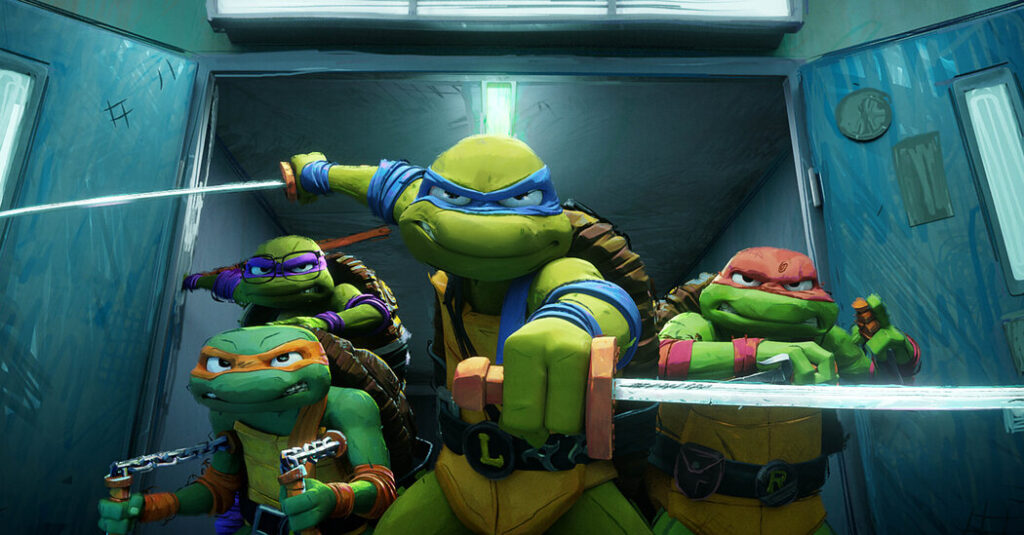
I start by having students watch multiple “Anatomy of a Scene” videos to see the similarities in the format and language that directors use. Some of my favorites to share with middle-school students include “Spider-Man: Into the Spider-Verse,” “Inside Out 2,” “Black Panther,” “Harry Potter” and “Teenage Mutant Ninja Turtles: Mutant Mayhem.” You can find more student-friendly films listed at the bottom of this article.
As students watch, I ask them to listen for three things:
-
The choices the director describes
-
Why those choices matter
-
The language the director uses to talk about the work
Students use Window Notes to keep track of their viewing, thinking and questions.
Once students have viewed at least four videos, we break down the formula. We note how the directors first introduce themselves and the movie scenes. We also discuss how some directors talk about characterization whereas others highlight visual elements like the placement of people in the scene, colors and symbolism. We notice how they then connect those elements to the films’ larger themes.
Watching these videos helps students build a vocabulary of analytical language. Directors mention film terms like framing, pacing, tension, composition, symbolism, transitions and conflict. Many students rarely hear professionals talk about their craft in such specific ways; this demystifies the process and opens up accessible language they can borrow for their own reflections and writing.
Step 2: Make an ‘Anatomy of a Scene’ for a chosen text.
Once students understand how directors break down their work, they can begin doing it themselves in their own analyses, modeled after “Anatomy of a Scene.”
Depending on your classroom focus and goals, you might have students choose a scene from a shared class text, an independent reading book or even a piece of their own writing. The output can vary as well: They can annotate the text, script a short narration, storyboard it digitally or create a two- to three-minute voice-over video.
Here’s what it can look like:
-
Analyze the creator’s choices. The goal of the analysis is to explain the choices the author made and why they matter, just as a director does in the Times series. Ask students to consider, for example, what the characterization, setting and word choice make readers feel or understand.
-
Create a script and storyboard. I have created a template for this project, pictured above, which you can make a copy of here to adapt and use with your own students. The sentence starters can help students craft a precise narration.
If storyboarding or making a video, students can use a simple storyboard template to map out which images they’ll show and how their narration will guide viewers through the scene.
-
Record and produce. Tools like Google Slides, Screencastify, Canva or iMovie make digital storytelling accessible for students.
Step 3: Reflect on the process.
Another meaningful element of this series is how naturally it leads to metacognition. The directors featured in “Anatomy of a Scene” discuss their behind-the-scenes decisions and, sometimes, the revisions they made or would have made. This is exactly the kind of reflective talk we want from students.
During the creation process, students can complete 3-2-1 reflections to draw connections between the “Anatomy of the Scene” videos they have viewed and the projects they are creating.
After they create their own scene breakdowns, invite students to reflect on their process with these questions:
-
What did you hope your audience would understand?
-
What choices did you intentionally make?
-
What would you revise now that you’ve talked through it?
This reflection helps build the habits we want students to carry into all of their writing and creative work.
The Results
Through this process, students are not just retelling or summarizing — they are interpreting, curating and communicating like filmmakers, critics and scholars.
Here are two more examples, in addition to the video at the top of this article, of what my students have created for our graphic novel unit.
Video by Abby on “The Faithful Spy” by John Hendrix
Script by Dylan and Arianna on “Run” by John Lewis, Andrew Aydin, L. Fury and Nate Powell
The emotions of Sammy and the gas station owner stick out because they show feelings and strong emotions. Sammy is timid and very scared, while the gas station owner is angry. The illustrator uses a close-up picture of Sammy’s face to really showcase the understanding of the tenseness that he’s feeling. When Sammy says, “Haven’t you heard of the Civil Rights Act?” it directly references the legislative change that should have ensured equal access. This scene shows that Sammy is fearless, resilient, and deeply committed to his cause. When Sammy yells for the store owner to come and shoot him on the bus, even in a life-threatening situation, indicates his willingness to suffer any level of personal risk for the fight for civil rights. Sammy’s actions highlight an important aspect of character development because he turns a stressful and deadly situation into a symbol of perseverance and courage.
The “Anatomy of a Scene” series gives students a powerful, real-world model for how experts talk about their creative decisions. The more students practice explaining choices and effects, the more confidently they analyze texts and speak about their own work.
More Student-Friendly ‘Anatomy of a Scene’ Clips
“Avatar: Fire and Ash” “Wicked: For Good” “Superman” “Jurassic World Rebirth” “How to Train Your Dragon” “A Minecraft Movie” “The Little Mermaid” “Dune” “In the Heights” “Cruella” “Mulan” “Trolls World Tour” “Pokémon Detective Pikachu” “Shazam!” “The Lego Movie 2” “The Hate U Give”
The post Turn Movie Magic Into Literary Analysis With ‘Anatomy of a Scene’ appeared first on New York Times.