This column is from the fall 2025 issue of VICE magazine, THE BE QUIET AND DRIVE ISSUE. Subscribe to get 4 print issues of the mag each year here. Read the previous instalment of Attention Casino here.
Visions, in the religious or spiritual sense, are not thought to be composed by their beholders but conjured by the incomprehensible mechanics of the universe and then received by their seers as signs of meaning. I feel this way about a photograph of the singer Julio Iglesias that surfaces from time to time on social media. Clad in a blue singlet aboard a private plane, Julio stares, through mirrored shades, at a bucket of Kentucky Fried Chicken. He also has a bottle of Lafite Rothschild on the go, and a clock-sized tortilla de patatas. How much he ate we can only guess, but what we consume from the image is the sense of a life free from certain constraints hurtling past the rest of us 30,000 feet above the earth. There flies freedom: 300 million albums and a thousand calories deep.
I am writing this in northern Europe in the first week of September. At the tail end of summer every sunset, each now earlier than the last, seems to say farewell not just to the day’s light but to the promise of light itself. Likewise, each passing aircraft contains the specter of Julio, getting out while the getting’s good, as if, through defying the seasons, we might defy—and so become—gods. But I wonder if the reverse is true? Does facing the weather, embracing the seasons even as they seem to turn their back on us, invite a rare and raw connection to the grand reality we are created by, while these seasonal deserters are the misdirect, the fall?
This is not an argument against travel or cultural commerce. Northern Europe’s liaison with its southern counterpart is an essential, ever-rebooting affair. Even the austere Germanic heavyweights of the 18th and 19th century, Nietzsche and Goethe, rebuilt their ideas once they had paddled in the tideless power of the Mediterranean. You can plot the journeys of the British DJs of the mid 80s to the Balearics and back on the same graph, and any region of the world will have its version of the same. What I am wondering here is if our ancestors’ worship of the sun was more creditable than our modern pursuit of it. At least the pagans believed in what they were doing, and were down for winter. We seem to have become, for all our technology, more childish, in that we believe in far less than our forebears, but appear far more upset when something we like starts to fade—perhaps in part because we think if we had been a bit more sensible, fortunate, or sold a few more records, we too could pull out our wallets and flee the shortening days.
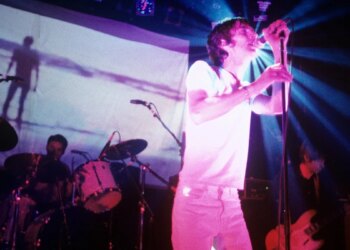
On the back of this Oasis-inflected, already faded season I find their lyric, “Cos people believe that they’re gonna get away for the summer” returning to me. There is a case with any lyric, and any art, for leaving it unanalyzed, but I can recall hearing “Champagne Supernova” in 1995 and wondering quite what it was communicating. My interpretation at the time was that holidaymakers were missing the point in that hedonistic era because you could (it seemed) behave as though you were on holiday all year round, no matter where you were. I wonder now if it is saying something about the fleeting aspect of our scheduled escapism, that the ‘away’ we crave is only ever partially and impermanently attained, by travel, intoxication, or even both at the same time. Thirty years later, when the costs and effects of travel and the complexities of the world seem ever more demanding, might the radical or even spiritual alternative be to stick around and welcome winter as it delivers us from the false gods, if not the flickering images, of endless gratification.
This is the great thing about weather: in the age of artificiality, it is non-negotiably there.
We cannot speak of recent weather without invoking ideas about climate change. If this is the Anthropocene era—which is to say one in which human activity has planetary impact—then according to a certain strand of thinking climate change and its attendant weather are a vast, unconscious, and unstable work of art. This is sticky terrain; art ought not have innocent victims. You can dig into the composer Karlheinz Stockhausen’s comments on 9/11 for more of this. Whilst contemporary interpretations of 9/11 gave rise to the phrase, “too soon,” the grim subtext of modern weather is often “too late.” Nevertheless, this world is our expression. If, as it seems, God or simply the idea of God, has stepped aside and said, in a sense, ‘Go ahead humans, see what you can make of it,’ then this era with its fires and floods does seem like a derivative riff on the Old Testament. We should try harder, not just for survival, but for one last piece of original content. Either way, it is our exhibition now, as artist and curator. Who are we to run away from it?
“According to a certain strand of thinking, climate change and its attendant weather are a vast, unconscious, and unstable work of art”
Yet run we do, and the rest of the world competes to receive us. In 2017 the Norwegian island of Sommarøy, which boasts a three-month winter of total darkness, entered the fray. Predictably, it was their months of unbroken daylight they were selling. Not content with pitching the idea of sunlit beach parties at 2AM, Sommarøy (population 304) announced that they were abolishing time. There would be no framework at all for what happened when. This proved unfeasible and, having garnered some headlines, was revealed as a ploy by the tourist board. I am aware of this story because someone I drink with insisted that there was a place in Scandinavia where time did not exist and it seemed important to him to believe that this was true. (He is not about to go there, escapism works by itself. Throw in some lager and the need to go anywhere at all is quite redundant.)
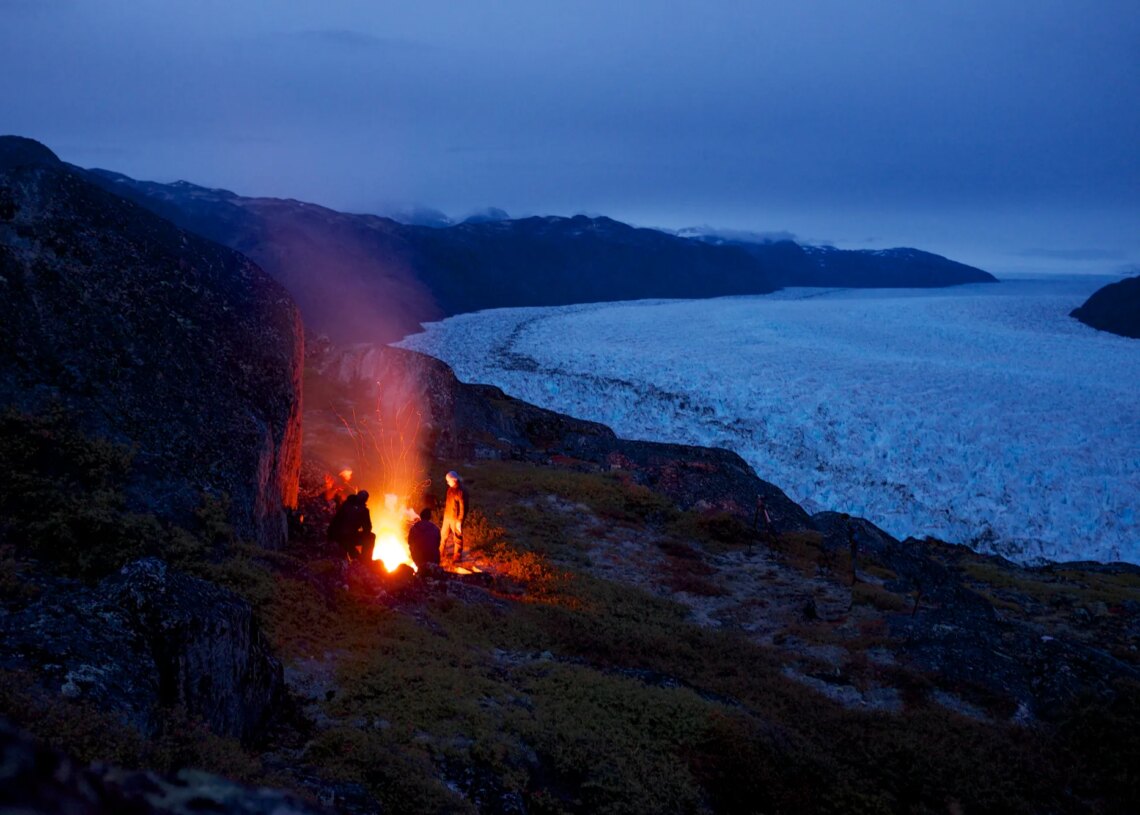
The term “activist” has been deployed into near redundancy lately, but Jerry Mander, an American author and advertising creative who is not much cited these days, can lay a tangible claim to that title. His 1978 book, Four Arguments for the Elimination of Television makes for a troubling read today. Mander didn’t live to see the full force of our devotion to the screen but he saw it coming. There is a great phrase in the book, “sensory cynicism.” By this he means that once what was seen could be taken as real because, like something touched—or the weather in September—it was non-negotiably there, and this is a foundation stone of our sensory awareness. The rise of visual media, television, and so on has made it necessary for us to retrain ourselves from infancy that that which we behold is not necessarily so. It is this innate downgrading of the senses that Mander calls cynicism, and it is the innate heightening of the senses that comes with exposure to ‘bad’ weather that I am pitching as the cure. Think Wim Hoff on dry land. We don’t need to jump into any cold water, we just need to stop running and wishing ourselves away. Or, having invoked Oasis once already, Be Here Now.
Sommarøy’s mistake might have been pitching their summer rather than their winter; a short holiday in total darkness might be the sharper corrective, the ultimate mini break from a cult of avoidance whose air miles and Airbnb legacy is already a blight on those without the means or will to flee. Another of Mander’s prescient works is called In the Absence of the Sacred, and he is onto something with the title alone. In the conundrum of our relationship to one another, our weather, our literal and figurative cosmology, we should address who and what we look up to, lest we be guided by the wrong stars.
“Someone I drink with insisted that there was a place in Scandinavia where time did not exist”
Pointing at planes has become shorthand for a kind of stupidity but we still reach out to aircraft with our hearts. The question is, who do we picture on board? At the sharp end of the avoidance culture are the super-rich seekers of sun and immortality (despite their contraindications), skating the globe from one curated psychedelic adventure to the next with an eye on leaving the planet altogether. We should forget about them. Like the top end of the Premier League, the case for simply letting them get on with it in a zone of their own while the rest of us attend to what we love about the game seems compelling. I am not talking about the Julios of this world however, the honest brokers. That man could make my parents dance. He can stay up there forever. No, this is a column about attention. This is about what we look away from, the objects of our adoration, and keeping our feet on the ground.
This column is from the fall 2025 issue of VICE magazine, THE BE QUIET AND DRIVE ISSUE. Subscribe to get 4 print issues of the mag each year here. Read the previous instalment of Attention Casino here.
The post Can the Weather Bring Us Closer to Reality? appeared first on VICE.