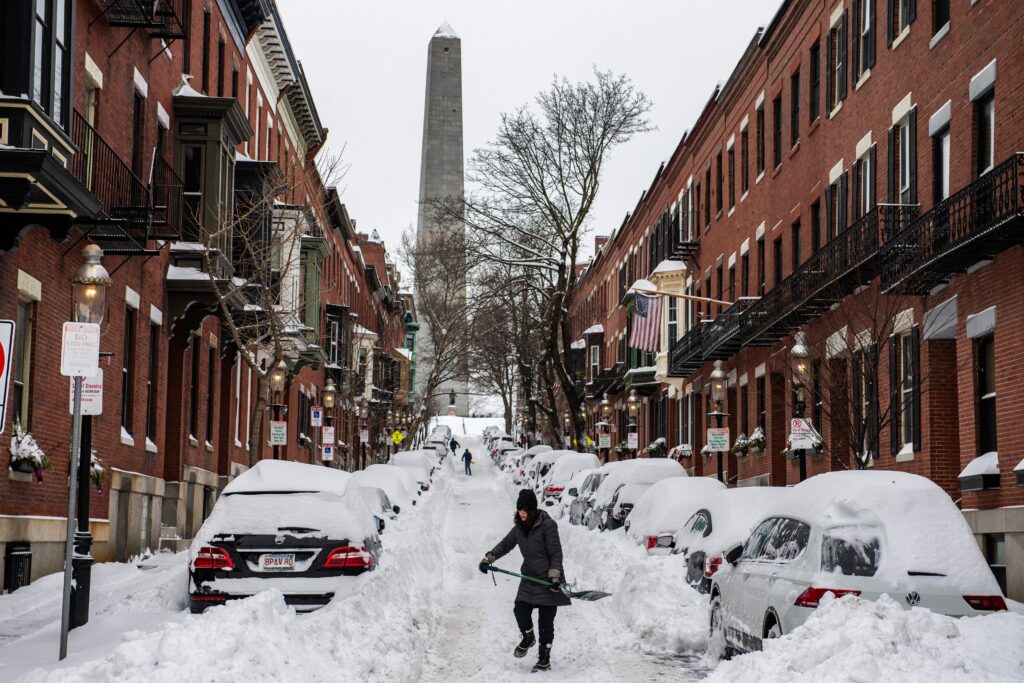
In chilly New England, blue states can thank oil for keeping the heat on at home during this week’s cold snap.
The region’s grid operator, ISO New England, expressed concerns that energy generation could “experience difficulty due to emissions/air permitting limitations, or other operating constraints.” Energy Secretary Chris Wright granted an emergency order to temporarily maximize its access to power generation sources. Translation: To keep the power on, the region had to temporarily ditch emissions constraints and lean on fossil fuels.
At midday on Monday, 63 percent of New England’s power came from oil and natural gas, with another 18 percent derived from nuclear power. Only 6 percent came from renewable sources, and another 6 percent from hydropower. The region doesn’t usually rely on oil, which has higher carbon emissions than natural gas. But when cold temperatures raise the prices on natural gas — which has a dual mandate in the winter to heat homes and generate energy — oil can be a cheaper alternative to power the grid.
The episode threw cold water — er, a foot of snow — on the notion that solar, wind and hydro can entirely replace fossil fuels as quickly as some activists hope.
Decreasing carbon emissions is a worthy goal. Eliminating them entirely isn’t just a costly endeavor, it’s impossible anytime soon.
That puts progressive leaders in an awkward position. In Vermont, the state is legally bound to reduce emissions 80 percent by 2050 from 1990 levels. In Massachusetts, the state is mandated to reach net-zero emissions by 2050, but they’re already hitting snags. Earlier this month, the Bay State put a pause on its costly “Clean Heat Standard” due to high electricity prices.
Gov. Maura Healey (D), who once touted her role in blocking two natural gas pipelines from the region, told power generators to “do whatever you need to do to keep power flowing to people’s homes during this time.” We can’t help but wonder if some extra natural gas capacity would have cut down on the need to burn oil this week. Either way, Healey has fossil fuels to thank for preventing widespread power outages.
Ambitious climate mandates raise costs and weaken power grids. Leaders in blue states know they need fossil fuels for now, whether they like them or not. There’s nothing like a cold snap to chill impractical takes.
The post For now, New England needs fossil fuels appeared first on Washington Post.