I study the political consequences of protest and state violence. So when federal immigration agents killed Renee Good and Alex Pretti in Minneapolis this month, I was reminded of Jimmie Lee Jackson.
On the night of Feb. 18, 1965, police officers and state troopers attacked civil rights demonstrators in Marion, Ala. Jackson, a 26-year-old woodcutter, fled with his mother and grandfather into a cafe. Troopers followed them inside and began beating his mother; Jackson tried to protect her. The state trooper James Bonard Fowler shot him in the stomach. Eight days later, Jackson died. His killing incited the march from Selma to Montgomery, Ala., and his death helped pass the Voting Rights Act.
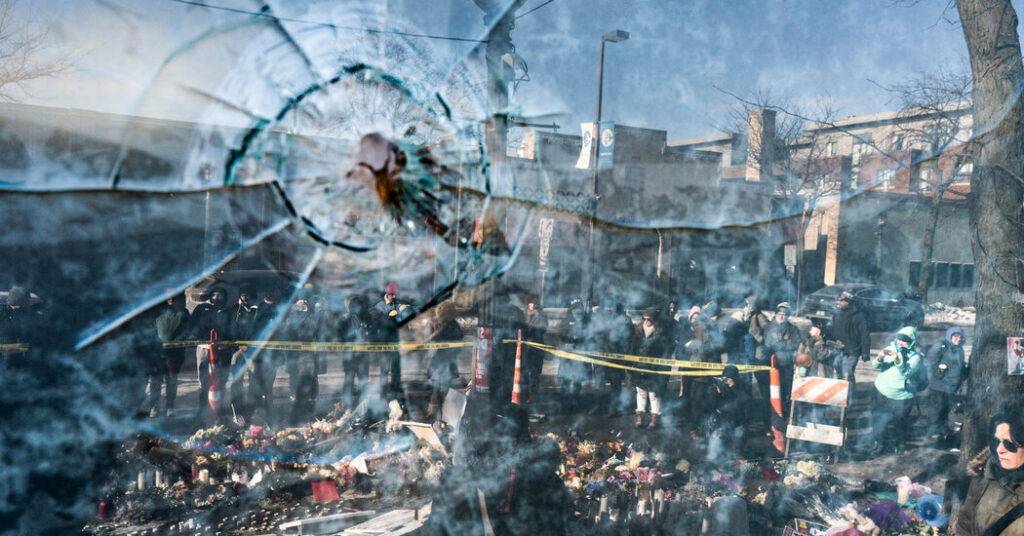
Sixty years later in Minneapolis, we had two civilians (one, like Jackson in 1965, trying to protect someone else) killed in the same month and a militarized occupation of an American city.
What we are seeing is the weakness of strong states. Regimes that rely on repression face a challenge: The more force they deploy, the more they risk exposing their own brutality to politically persuadable observers. Overreach doesn’t just project strength; it also undermines legitimacy.
The Trump administration believed that deploying thousands of federal agents would make for winning visuals. As an NPR report observed, in President Trump’s second term, “content is governing and governing is content.”
But spectacle cuts both ways. The same cameras that broadcast enforcement operations also capture repression. Winning a physical fight isn’t the same as winning an argument.
Consider Birmingham, Ala. In the early 1960s, Bull Connor’s fire hoses and police dogs were meant to restore order during civil rights demonstrations. Instead, they revealed the brutality of segregation to an international audience. Movement leaders chose Birmingham strategically, thinking Connor would overreact — and he obliged. John Lewis called it dramatizing injustice. Connor thought he was defending a way of life, but he was digging its grave.
In 2020, following the murder of George Floyd, I ran experiments with my colleague Ali Valenzuela testing this dynamic. Subjects read news articles about a Black Lives Matter protest that was either peaceful, marked by protester violence or marked by police violence. Descriptions of protester violence lowered support for protesters, and descriptions of police violence lowered support for police officers. This held across partisan lines.
Now the Minneapolis deaths are shaping public opinion. One poll found that 82 percent of American voters have watched a video of the killing of Ms. Good. Majorities say the shooting was unjustified.
A new New York Times/Siena poll finds Mr. Trump’s approval rating dropping to 40 percent. That disapproval has grown more intense since her killing.
In a recent CNN poll, 56 percent of respondents said the shooting of Ms. Good was an inappropriate use of force; 51 percent said ICE enforcement is making cities less safe. Immigration has been Mr. Trump’s signature issue. Now 58 percent disapprove of his handling of it, and 62 percent say they have little or no trust in the federal government to investigate Ms. Good’s shooting fairly.
Perhaps most striking, a Jan. 24 YouGov poll — conducted after the Pretti shooting on Saturday — found that 46 percent of Americans now support abolishing ICE, compared with 41 percent who oppose it. The partisan breakdown reveals how dramatically the ground has shifted; 76 percent of Democrats support abolition, but so do 47 percent of independents. Even among Republicans, nearly one in five supports eliminating the agency.
The Wall Street Journal editorial board called for ICE to “pause ICE enforcement in the Twin Cities,” writing that the Trump homeland security adviser Stephen Miller’s “mass deportation methods are turning immigration, an issue Mr. Trump owned in 2024, into a political liability for Republicans in 2026.” On Monday, Chris Madel, a Republican candidate for governor in Minnesota who had been providing legal counsel to the ICE agent who shot Ms. Good, ended his campaign, saying he could not support “retribution on the citizens of our state.”
Key Democrats in the Senate, including Chuck Schumer, the minority leader, announced they would block legislation that contains funding for the Department of Homeland Security, imperiling a spending deal needed to avert a government shutdown.
Yes, the Minnesota protests have been occasionally chaotic — objects thrown, water poured on roads. Scholars typically define violence by either side in terms of injury, death, property damage and arson. By those benchmarks, the current protester tactics have been overwhelmingly nonviolent — nothing comparable to Minneapolis in 2020, when a police station burned, let alone the 1960s.
The political question is not whether there has been disorder, but rather whom the public holds responsible for the killings in Minneapolis.
In 1965, inspired by the call of the Rev. Dr. Martin Luther King Jr., Viola Liuzzo, a Detroit mother of five, drove to Alabama for the Selma march. She was shot dead on the highway while driving a fellow activist after the march.
This month, Renee Good was killed in her car after stopping for immigrant neighbors. Alex Pretti was killed coming to a woman’s aid. Visible state violence against sympathetic civilians was the beginning of the end for Jim Crow. It may be a turning point now, too.
Omar Wasow is an assistant professor of political science at the University of California, Berkeley, and a co-director of the Jack Citrin Center for Public Opinion Research.
The Times is committed to publishing a diversity of letters to the editor. We’d like to hear what you think about this or any of our articles. Here are some tips. And here’s our email: [email protected].
Follow the New York Times Opinion section on Facebook, Instagram, TikTok, Bluesky, WhatsApp and Threads.
The post ICE’s Brutality Is Its Weakness appeared first on New York Times.