The day after Christmas, Bishop Matthew Hassan Kukah rushed to a special children’s Mass early in the morning, unaware that his diocese of Sokoto in northwest Nigeria had been struck by missiles during the night.
He glanced at his phone after the Mass ended and found a text from a friend at the Vatican. It said, the Americans have bombed Sokoto. His heart raced.
The city of Sokoto is in a region that has been overwhelmingly Muslim since the 19th century, when it was a Muslim caliphate. The bishop was aware that President Trump had been loudly blaming Muslims for what the president called a “Christian genocide” in Nigeria.
Bishop Kukah feared that his small Roman Catholic flock in this Muslim region was ground zero for a U.S. war on Islam. He worried that all his work building bridges between the faiths had gone to waste.
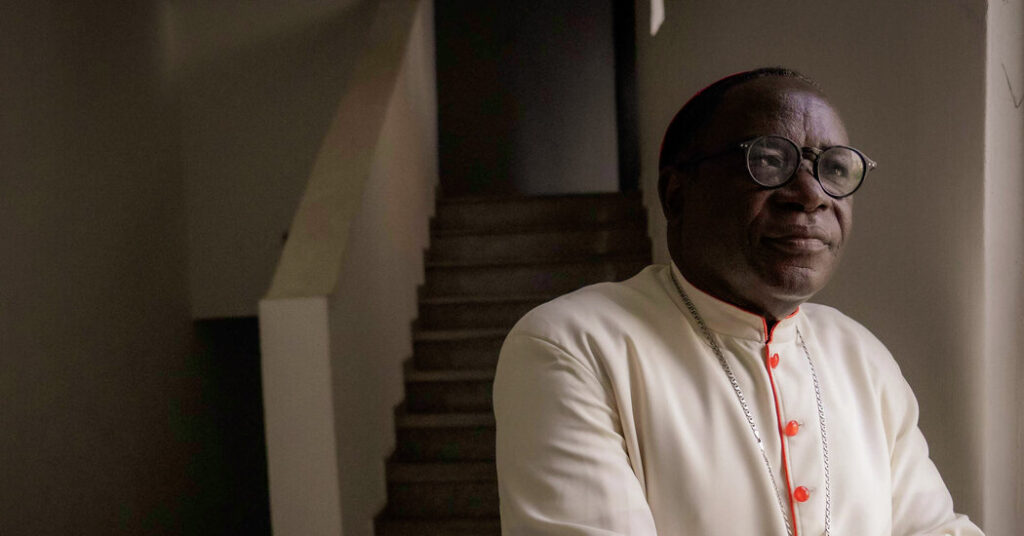
“When you say Sokoto has been bombed in an environment that is already so hysterically charged, it means you have declared war against the Muslims,” he said, sitting at the breakfast table in his quiet compound in Sokoto. “This is their headquarters.”
Several hours later it became clear that missiles had struck miles outside the city of Sokoto, aimed at Islamist extremists in their hide-outs. Bishop Kukah was relieved. The targets were the criminals causing the real problems in Nigeria, he said.
Mr. Trump said in a social media post that the missiles were aimed at “ISIS Terrorist Scum in Northwest Nigeria, who have been targeting and viciously killing, primarily, innocent Christians.”
For months the bishop has been trying to tone down the fiery talk from Washington and certain quarters of Nigeria of what they called a Christian genocide in the country. Rather, he and many other Nigerians say, it is a complicated cycle of violence in a nation of some 240 million people that is evenly split between Muslims and Christians, and is victimizing both communities.
Bishop Kukah said that some priests and parishioners in his diocese had been kidnapped. One of his young seminarians was murdered, he said, after defending his faith to his Muslim captors.
He said he was losing a battle for permission to build a chapel on the campus of a local university named for a celebrated Muslim leader. And he has tried and failed to help parishioners who are civil servants get promotions after being passed over, he said, because of their Christian faith.
All are clear signs, he said, of Christian persecution.
“This has been my life,” he said.
But the bishop points out that the targets of violence in Nigeria are not just Christians. Many Muslims have also been victims of horrific acts, he said. A lack of general security, not just religion, is to blame.
His message was amplified in October when he stood in a Catholic university hall in Rome and told an audience of church leaders and religious freedom activists from across the world that Nigeria’s worsening security crisis was caused by a complex mix of terrorism, religious persecution and criminal violence.
“Today, the floods of blood in Nigeria have no boundaries. This is why the debate over what is happening to us has become so confusing within and outside Nigeria,” the bishop told the audience. “Although we cannot find the right words, the simple truth is that Nigerians are dying for a living.”
His remarks drew immediate blowback from some Nigerians.
Thompson Udenwa, a Nigerian civil rights activist, questioned the bishop’s “sudden change of tone” about the persecution of Christians. Raphael Oluwaseun Fagbohun, the presiding bishop of the Old Catholic Apostolic Church in Nigeria, which is independent of the Roman Catholic Church, demanded a public apology.
“Bishop Kukah has not only betrayed the Christian faith but also the trust of the nation,” Bishop Fagbohun said in a New Year’s message to his flock.
The criticism was frustrating for Bishop Kukah, who has spent his entire career preaching nuance in a society of extremes. He has written or contributed to more than a half-dozen books. He has held fellowships at Harvard and Oxford, and delivered dozens of addresses at university convocations. He has mediated a violent conflict between militants and oil executives in the Niger Delta and served as a United Nations appointee to usher in peaceful elections. All of it has been dedicated to exploring the gray areas of society.
President Ahmed Bola Tinubu, Western diplomats, scholars and others refer to him as “the conscience of a nation.”
I had knocked on the metal gate of his modest, tree-filled compound in Sokoto one morning earlier this month, and he welcomed me to his breakfast table as he wrapped up a call with a retired diocesan cook.
“You are 81 now, I know, but I see your voice is sounding very, very strong — well done,” the bishop told the man, and promised to send a cash gift.
Bishop Kukah, a soft-spoken 73-year-old with a gaptoothed smile and a penchant for self-deprecating tales, said he first got the urge to join the seminary as a little boy, when a priest drove a pickup truck through his tiny village in Kaduna State. He and his friends clung to the truck, hopped in the back and stayed there until the priest made them get out. In his boyish mind, priesthood came with a pickup truck. He decided then and there he would become a priest.
He became a seminarian at age 24 and, after earning a reputation as a moderate voice, has been tapped by the Vatican through the years to serve in roles tied to peacemaking, human rights and interfaith dialogue. His position and his curiosity have taken him across the globe — just last month he visited Egypt and explored the Library of Alexandria. He is a furious consumer of news, academic papers and literature of all kinds, including The New Yorker.
“Ten thousand words!” he said about articles in the publication. “The arrogance! It’s like reading a short book!”
In 2012, he founded the Kukah Center, a policy research organization housed in a small office complex in the capital, Abuja, that focuses on interfaith dialogue and good governance.
Bishop Kukah said he spent recent weeks trying to elaborate on — but not back down from — his remarks in Rome. He issued an official statement from the Kukah Center and sat for radio interviews, explaining that the government’s inability to enforce security was at the root of the problem.
There are signs that some Nigerians are receptive to the bishop’s message.
At a crowded book talk in Abuja earlier this month where Bishop Kukah was introducing the author, an audience member stood and praised the bishop for his nuanced views.
The room erupted in applause.
The post In Nigeria, a Catholic Bishop Navigates a Nation of Extremes appeared first on New York Times.