When Tesla shareholders approved an unprecedented $1 trillion pay package for Elon Musk last year, they bet on Musk’s ability to drive up the stock price, hit new performance milestones and establish Tesla as a robotics and artificial intelligence juggernaut.
But those who believed the pay package would lead Musk to make a clean break with the political activity that had left the company in turmoil were mistaken.
In recent weeks, Musk has fired off X posts with inflammatory positions. He promoted a conservative activist’s allegations of fraud in child care facilities in Minnesota, and launched into conjecture on the killing of Renée Good by an ICE officer, alleging it was in self-defense. Musk has argued White people are a “a rapidly dying minority” and appeared to claim South Africa was better off during apartheid. He has raised repeated alarms about a genocide of White people, echoing white supremacist talking points. Musk has signaled he intends to remain involved in politics, including during the 2026 midterm elections.
That political engagement and online identity are separate from his Tesla work, analysts say, but they’ve become intertwined to the company’s detriment. Tesla’s stock price has fallen as Musk’s public statements and corporate scandals have amassed controversy, and this month the company posted an underwhelming annual deliveries report, indicating sales are down. The company has now lost itsstatus as the world’s leading seller of EVs.
Tesla’s continued struggles demonstrate the breadth of the backlash Musk’s political involvement ignited last year, and its potential to trigger lasting brand damage. A Yale University study last year estimated Musk’s political activity cost Tesla sales of more than 1 million vehicles.
The effect has been highly visible in Europe, where anger has mounted over Musk’s support of far-right party AfD. Tesla sales in the region have fallen sharply, news outlets have reported, with December sales in some countries plunging around 70 percent, despite the fact that sales of electric vehicles edged past those of gas cars in the European Union last month.
The damage to Musk’s global standing was highlighted by his cool reception at the World Economic Forum in Davos earlier this month. Musk strutted across the stage to muted applause.
“That was not a large applause,” presenter Larry Fink, the CEO of Tesla investor BlackRock, told the crowd, commanding them to “start again.”
A slightly more enthusiastic audience cheered for a few seconds.
Musk faces a tall task in righting Tesla — and delivering on the promises he has made to investors, who’ve seen the company in somewhat of a holding pattern since Musk became more intimately involved in politics in late 2024.
David Meier, senior investment analyst at the Motley Fool said Tesla’s strategic focus on autonomous driving and robotics is promising, but investors’ patience is being tested.
“We need to start seeing some dollars; we need to start seeing some revenue,” he said. “It’s one thing to talk about it. The rubber has to meet the road.”
Gene Munster, managing partner at Deepwater Asset Management, said investors have grown to expect Musk will express often inflammatory views.
“It’s just a commentary on how tough people’s skin is at this point,” he said.
Tesla and Musk did not immediately respond to a request for comment.
For years, customers bought into Tesla not only for its sleek and sporty electric vehicles, but for what they represented with its mission “to accelerate the world’s transition to sustainable energy.”
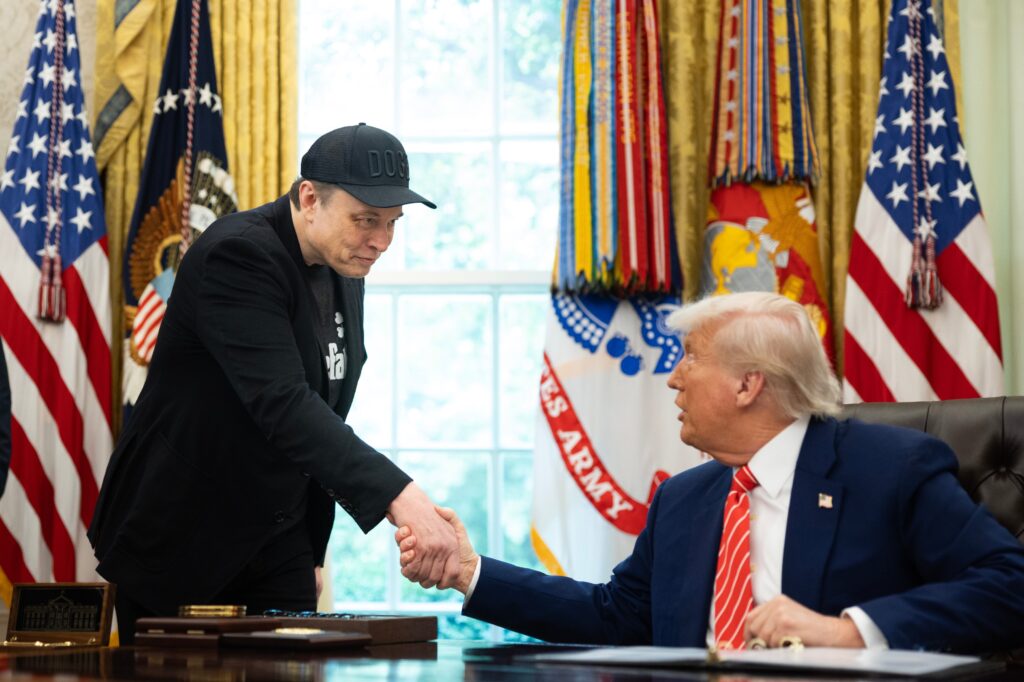
But after Musk joined the Trump administration last year, Tesla storefronts became the site of political protest, vandalism and violence.
The fierce blowback showed up in earnings reports: Tesla reported a decrease in revenue, profits and vehicle deliveries in the first half of 2025, the period aligning with Musk’s term in the Trump administration. In particular, it recorded an abysmal first quarter of 2025 — a 71 percent decline in its profits, when compared to the same period a year prior. A feud with Trump only further complicated matters for Musk.
By the end of the year, Tesla had recovered somewhat, but its production and deliveries still lagged behind those in 2024, indicating demand and sales of the cars remain in a slump.
That urgency to see the company progress beyond its embattled auto business is widespread. According to a Barclays analyst report this week, the fundamentals of Tesla’s business “remain challenged.” Its 2026 U.S. sales are expected to fall, according to the report, owing partly to the end of the U.S. federal tax credit for electric vehicles. Tesla’s overall growth opportunity lies in bets on robotics and autonomous vehicles, it said.
But to the extent Tesla’s auto business underpins those ambitions, lackluster sales could pose lasting problems for a company that has already suffered from Musk’s political involvement.
Tesla reports quarterly earnings on Wednesday, where it is expected to lay out aspects of its road map for 2026. Part of that process will involve efforts to rid Tesla of the albatross that is Musk’s political involvement, analysts said.
“I think there’s still an overhang,” said Munster, referring to the effect of Musk’s political work. “We’re really only six months out of when things started to back off a bit.”
The backlash is a “headwind” on the brand that will eventually diminish, he predicted. Munster said investors will be paying close to attention to whether Tesla’s deliveries — a signal of sales — resume growing in 2026, or if the slump persists.
When Tesla’s board made its push to retain Musk late last year, board chair Robyn Denholm framed the trillion-dollar compensation package — which relies on Musk meeting business milestones and vastly increasing Tesla’s valuation — as a necessary facet to keep Musk motivated and focused on the company.
“Though it’s no question that Elon has other pursuits, he has proven that one of the many things that make him unique is his ability to stretch his capacity beyond normal limits and remain successful at Tesla,” she wrote. “However, if we fail to foster an environment that motivates Elon to achieve great things through an equitable pay-for-performance plan, we run the risk that he gives up his executive position.” Shareholders overwhelmingly approved the measure.
Beyond the impact of his politics or the views themselves, Meier, the Motley Fool senior analyst, said Tesla shareholders want Musk to refrain from spreading himself thin.
“I believe they want to see him focus,” he said.
The post Tesla bet big on Elon Musk. His politics continue to haunt it. appeared first on Washington Post.